Essays & Stories
Slow reading on language and the world.
Long-form essays on language learning, retold folk tales with vocabulary notes, and science pieces written the way we'd want to read them. Hand-edited, sources cited, no streak guilt.
From the Magazine
Long reads, with effort.

MagazineHistory8 min read
The shipping container
On 26 April 1956 a converted oil tanker sailed from Newark to Houston carrying 58 metal boxes. The boxes contained whatever their owners had paid to ship; the ship's captain did not know and did not need to. Within fifty years, every consumer product you have ever bought has spent part of its life in a container exactly like one of those 58.
Read the piece →
MagazineScience8 min read
Haber-Bosch
In 1909 a German chemist demonstrated a tabletop apparatus that pulled nitrogen out of the air and combined it with hydrogen to make ammonia. Industrial scale-up followed. The process now feeds approximately half of all humans alive — and made modern explosives and nerve agents possible. The chemist's wife killed herself the day after the first chlorine attack at Ypres.
Read the piece →
MagazineScience8 min read
The transistor
On 16 December 1947, three physicists at Bell Labs in New Jersey demonstrated a tiny device that amplified electrical signals using a sliver of germanium and two gold contacts. The device was about the size of a fingernail. Every electronic object that has been built since — every computer, every phone, every microwave oven, every car — contains its descendants.
Read the piece →
MagazineScience6 min read
How John Leal saved more lives than any doctor
On 26 September 1908, a public-health doctor in Jersey City began secretly adding calcium hypochlorite to the city's drinking water. He did it without consulting his board. He did it in apparent violation of his contract. He was sued. He was the most important benefactor of public health in American history.
Read the piece →MagazineScience8 min read
The Wow! Signal
On a summer night in 1977, a radio telescope at Ohio State picked up a 72-second burst from the direction of Sagittarius that has never been heard since. Forty-eight years later the leading explanation is still 'we do not know'.
Read the piece →MagazineScience7 min read
In 1998 the universe was found to be falling apart faster
Two competing teams measured the brightness of distant exploding stars, expecting to see the expansion of the universe slowing down. They saw the opposite. The result, repeated and confirmed, has not been explained yet.
Read the piece →The Longform Desk
Quiet essays. Slower reading.
The year without a summer
In April 1815, a volcano in the Dutch East Indies erupted with a force ten times Krakatoa's. The next year's growing season failed across the northern hemisphere. Frost came in July; the price of bread doubled; a teenager in Switzerland wrote Frankenstein during a fortnight of indoor weather; the painters of the period started doing strange things with the sky.
Continue reading →Goldbach's conjecture
In a 1742 letter to Leonhard Euler, an obscure Prussian mathematician wrote down a simple-sounding claim about prime numbers. Two hundred and eighty-three years later, computers have verified it up to numbers with sixteen digits and no exception has been found. Nobody has been able to prove it.
Continue reading →Why we age
The standard view through the 20th century was that aging just happened — the body's components wore out, and that was that. The last three decades of research have unwound that picture. Aging is now understood as a regulated process: ten interlinked mechanisms that the body produces, that other organisms have partly opted out of, and that drug development is starting to target.
Continue reading →Diogenes lived in a jar and asked Alexander the Great to step aside
In the 4th century BCE, a former bank-runner from Sinope embarrassed the philosophers of Athens by living in poverty, refusing all social conventions, and pointing out their hypocrisy in public. He may have been one of the most influential thinkers of the ancient world. Most of what we know about him is anecdotal and probably embellished. None of his own writings survive.
Continue reading →The first complex life
Before the Cambrian explosion, there were the Ediacarans. For roughly thirty million years before the first hard-shelled animals appeared, the seafloor was occupied by soft-bodied organisms that resemble nothing alive today. Their fossils survive because the conditions that preserved them — and erased almost everything else — never existed again.
Continue reading →The Great Stink
In the summer of 1858, the smell of the Thames forced Parliament to adjourn. The Members in Westminster could not breathe. Within three weeks they passed an emergency bill funding a sewer system that took twenty years to build. The engineer who built it, Joseph Bazalgette, accidentally saved more lives than any doctor of the period.
Continue reading →What Beethoven heard
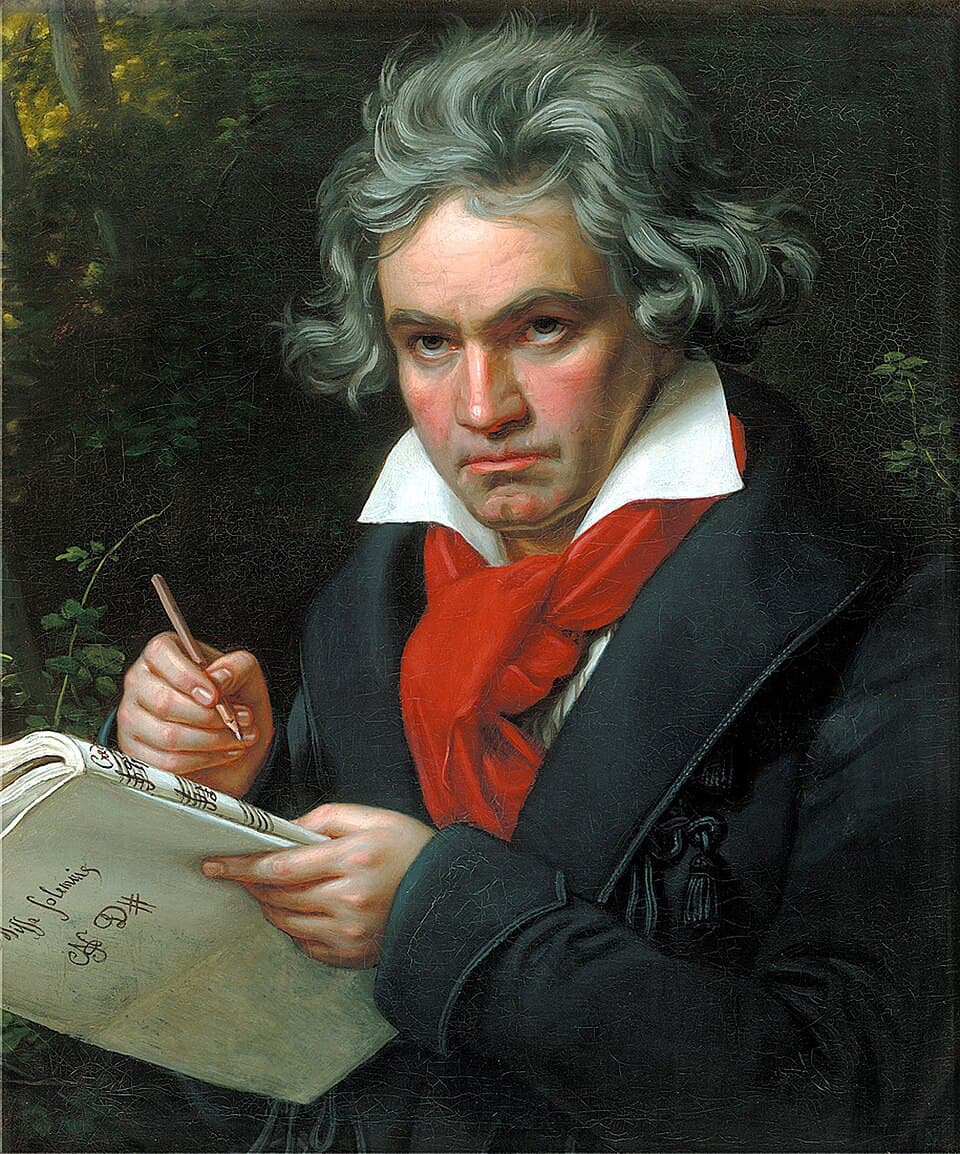
He started losing his hearing in his late twenties. By 1818 he was completely deaf. In that decade he wrote the Ninth Symphony, the late string quartets, the Hammerklavier sonata, and most of his greatest music. The question of how is one of the more interesting puzzles in the history of music.
Continue reading →Brunelleschi's dome
In 1418 the cathedral chapter of Florence held a competition to find someone who could finish the cathedral. The crossing had been left open for a century because no one knew how to span it. A goldsmith named Filippo Brunelleschi won — without disclosing his method — and built a dome whose construction technique is still partially unexplained.
Continue reading →Borges and the library that contains everything
Jorge Luis Borges wrote a 1941 story about a library whose hexagonal galleries contain every possible book of 410 pages. The story is six pages long. It is the most precise statement of what infinity does to meaning that anyone has written.
Read essay →The Chinese Room
In 1980 the philosopher John Searle imagined a thought experiment to show that running a program is not the same as understanding. Forty-five years later the question has become urgent in a way Searle did not foresee.
Why we cry
Tears of grief, joy, frustration, beauty, and rage. We are the only species whose eyes leak in response to emotion, and biology still does not fully know what the leak is for.
Reading the scrolls that Vesuvius burned
When Vesuvius erupted in 79 CE it carbonised a library of Greek philosophical texts in a villa at Herculaneum. The scrolls survived; opening them shattered them. In 2023 a 21-year-old computer-science student read one of them with a neural network.
Methods
6 essaysWhy spaced repetition actually works
Ebbinghaus drew the forgetting curve in 1885. We've been arguing about what to do with it ever since — and most of what people call 'spaced repetition' isn't.
What “fluency” actually means
Listening, reading, conversation, and working fluency are four different goals with four different timelines. Confusing them will cost you years.
Comprehensible input vs. output
What Krashen got right about how languages are acquired, what Swain added by listening to immersion students who still couldn't speak, and what the practical learner should do with the disagreement.
How polyglots actually maintain five languages
The viral clips show the speaking. They don't show the slow weekly work that keeps the speaking possible.
The 'native-like' illusion
Why adult learners will always sound like adult learners — and why that has almost nothing to do with whether you should be proud of your language.
The case against language streaks
Two hundred days of a Duolingo streak doesn’t mean what the number suggests. An argument against gamified consistency.
Speaking
1 essayReading
2 essaysWhat I learned from rereading the same novel four times
Four passes through the same Spanish novel taught me what reading in a foreign language is actually for — and why finishing once is rarely finishing at all.
How to read your first novel in a new language
Most learners quit on page twelve. The fix is almost entirely in what you choose to read first — and how you let yourself read it.
Practice
1 essayLinguistics
2 essaysThe Pirahã do not count
In an isolated Amazonian community, a linguist with theological training found a language that appears to have no number words, no recursive grammar, no past tense, no creation myths, and almost no words for colour. His conclusions split linguistics.
Why German has three genders and English has none
Grammatical gender is older than the languages that have it. The strange thing is not that German has it — it's that English lost it.
Language history
2 essaysAn English architect cracked Linear B by treating it like a crossword
Mycenaean palace records had survived three thousand years on clay tablets that nobody could read. In 1952 Michael Ventris — an amateur with no university training in linguistics — proved the script was early Greek. He had three years to live.
The Brothers Grimm and the invention of modern German
The Grimms collected fairy tales because they were trying to do something larger — define a German people that did not yet have a country. The dictionary they started is still being finished.
Stories
5 essaysThe wit of Nasreddin Hodja
Four short Turkish anecdotes about a 13th-century village judge who has been making people laugh for eight hundred years — with notes on the vocabulary and the Sufi turn underneath each joke.
The world's first novel was written by a Japanese court lady around 1010
Murasaki Shikibu wrote a thousand-page work of psychological fiction at the Heian court a century before any European novel existed. The book has been continuously read for a thousand years. We know almost nothing about its author.
Issun-bōshi, the one-inch boy
A Japanese folk tale, eight hundred years old, retold from the Otogi-zōshi sources — with a glossary of the period vocabulary you'll meet if you read it in Japanese.
Anansi and the pot of wisdom
A West African folk tale, retold from Ashanti sources — with notes on the Twi words English borrowed across the Atlantic.
The selkie wife
A Hebridean folk tale, retold from Carmichael's late-19th-century field collections — with a short note on the Gaelic words English never quite borrowed.
History
32 essaysMary Anning was the most important palaeontologist of her century
A working-class woman from Lyme Regis who left school at ten, taught herself comparative anatomy, and supplied the specimens that built the Natural History Museum. The gentlemen who published her finds rarely credited her.
Rosalind Franklin and Photograph 51
She made the X-ray exposure that revealed DNA's double helix. The men who saw it without her permission won the Nobel Prize. The history is messier than either of the standard versions allows.
The Bronze Age collapse: how a connected world ended in fifty years
Around 1200 BCE every major civilisation in the eastern Mediterranean fell almost simultaneously. The Mycenaeans, the Hittites, the Egyptian New Kingdom, the Levantine cities. Trade routes broke. Writing systems were lost. Nobody fully understands why.
Ötzi: the 5,300-year-old man whose last 48 hours we have reconstructed
In September 1991 two hikers found a corpse in a melting Alpine glacier. He turned out to be a Copper Age herder whose stomach contents, tattoos, weapons, and final wound are now better documented than most medieval kings.
Marie Curie's laboratory notebooks are still radioactive
Her papers at the Bibliothèque nationale in Paris are stored in lead-lined boxes; readers must sign liability waivers. She never knew radiation was dangerous. Almost everyone who worked alongside her died of it.
Lise Meitner figured out nuclear fission on a Christmas walk
In December 1938, exiled in Sweden, she worked out what was actually happening inside a uranium atom while walking in the snow with her nephew. Otto Hahn, her collaborator of thirty years, got the Nobel without her.
What was actually in the Library of Alexandria
The library at Alexandria did not burn down in a single dramatic night. The story of how it slowly dispersed is more interesting, and more useful, than the legend.
Ada Lovelace and the first computer program
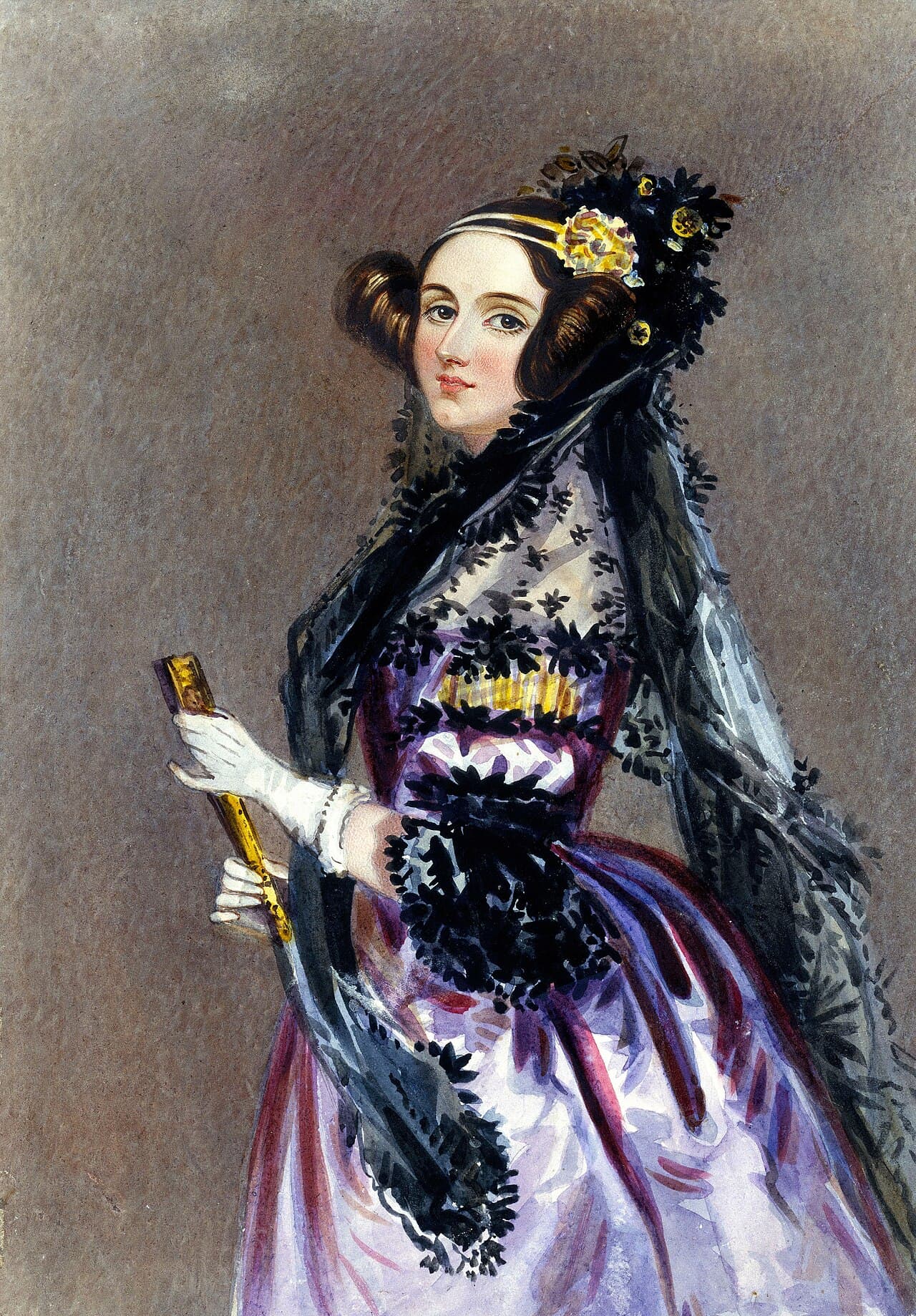
In 1843 a young mathematician published an algorithm for a machine that had not yet been built. Almost everything about that sentence is unusual.
The Antikythera Mechanism
In 1901 a sponge diver brought up a corroded lump of bronze from a Roman shipwreck. It took the next century to work out that it was a Greek astronomical computer, built more than 2,000 years ago.
Mansa Musa, the richest person ever to live
In 1324 the king of Mali stopped in Cairo on his way to Mecca. He gave away enough gold to crash the Egyptian economy for the next twelve years.

The brake that built the skyscraper
In 1853 a New York mechanic stood on a platform suspended above a watching crowd at the Crystal Palace exposition, ordered the rope cut, and waited. The platform did not fall. The safety brake he had just demonstrated made tall buildings economically possible for the first time.

The line that stopped the coffin ships
In the mid-19th century, British shipowners were deliberately overloading their vessels and collecting insurance when they sank. The seamen drowned. A Member of Parliament named Samuel Plimsoll spent six years getting a law passed that required every ship to bear a visible mark showing how heavily it could be loaded. The mark is still painted on every ocean-going hull.

The bar code
On the morning of 26 June 1974, at 8:01 AM, a cashier in Troy, Ohio, scanned a 10-pack of Wrigley's Juicy Fruit gum across a new kind of register. The pack is in the Smithsonian. The system the scan inaugurated now mediates almost every retail purchase in the world.

The stirrup
Two metal loops hanging from a saddle, into which a rider's feet rest. The device makes mounted riding stable enough for sustained combat. The historian Lynn White Jr. argued in 1962 that it created feudal Europe. The argument is still contested.
The Sokal hoax
In 1996 a physics professor at New York University submitted a deliberate parody to a leading cultural-studies journal. The journal published it. The argument that followed has not really ended, and has become, in retrospect, an early skirmish over what counts as serious thought in the academy.
The Iron Pillar of Delhi has not rusted for 1,600 years
An iron column 7 metres tall, weighing six tonnes, cast in the early 5th century and standing in a courtyard in Delhi. It has been exposed to monsoon rain, oxygen, and pollution for sixteen centuries. It has the same surface it had on the day the smiths walked away.
Spinoza ground lenses for a living and rewrote philosophy at night
Excommunicated from his Amsterdam Jewish community at twenty-three. Worked as a lens grinder for the next twenty-one years. Wrote one of the most rigorous metaphysical systems in Western philosophy. Refused a Heidelberg professorship to keep working at his lathe.
The Bronze Age city preserved under volcanic ash
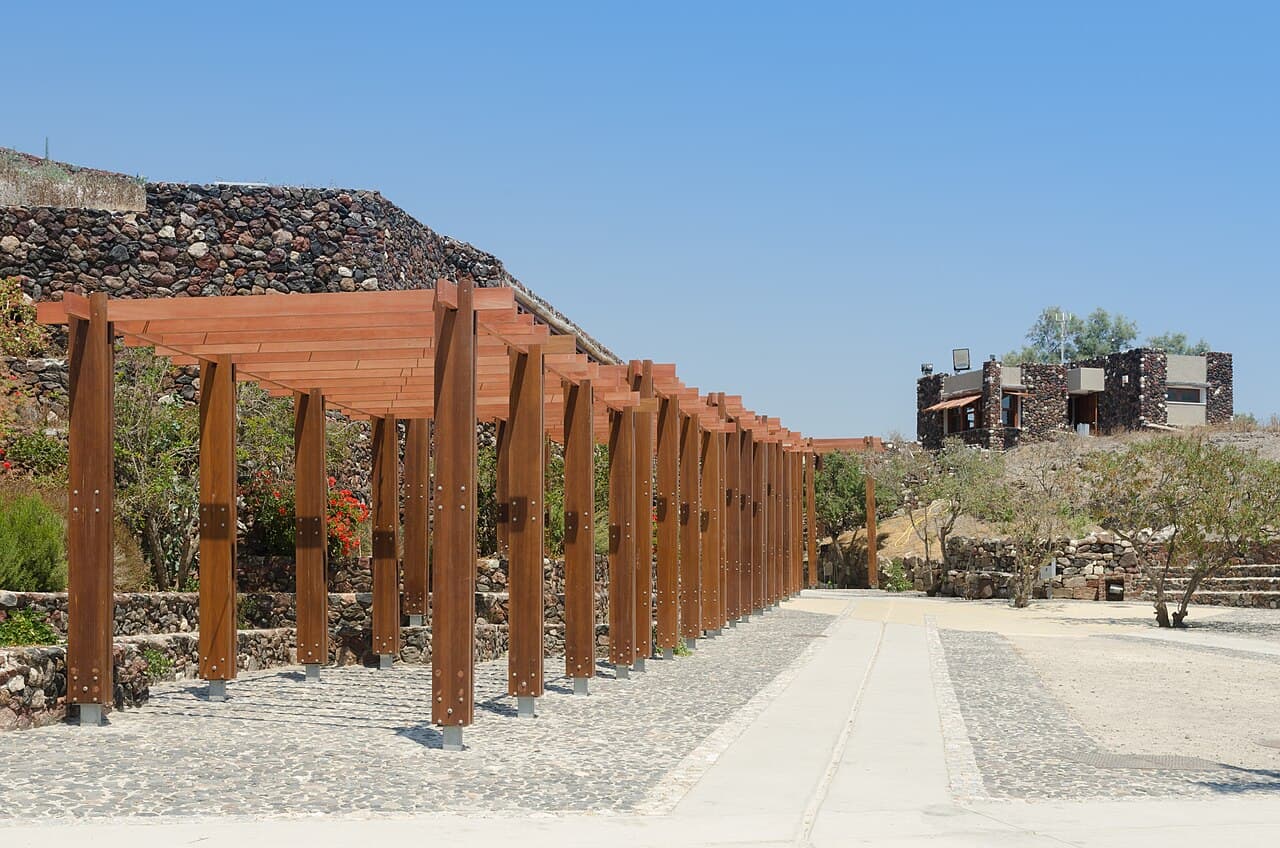
A town on the island of Thera, painted with extraordinary frescoes, was buried by a volcanic eruption around 1600 BCE. The eruption was the largest of the second millennium BCE. The frescoes preserve a marine, peaceful civilisation that almost nothing else records.
Money is a story we agree on
Coins, banknotes, debt records, gift economies, and the Yapese stone-money tradition. Anthropology suggests money is not what classical economists said it was — and the new digital forms are stranger than they appear.
Somebody set off a nuclear bomb in 1979 and we still don't know who
On 22 September 1979 a US satellite over the South Atlantic detected the unmistakable signature of an atmospheric nuclear test. Forty-six years later, the official US position remains that the data is inconclusive. The unofficial consensus is different.
The Hagia Sophia is held up by faith and physics
Anthemius of Tralles and Isidore of Miletus, working for the emperor Justinian, finished it in 537 CE. The dome was the largest in the world for almost a thousand years. It is still standing.
The colour that made you a king came from rotting sea snails
For three thousand years the Phoenician dye industry on the eastern Mediterranean coast extracted purple from one species of marine snail. It took twelve thousand snails to dye a single robe. The colour was worth its weight in silver.
Norse settlers reached America five centuries before Columbus
In 1960 a Norwegian archaeologist found their settlement on the northern tip of Newfoundland. Tree-ring dating in 2021 nailed down the year a beam of wood was cut: 1021 CE.
How Champollion read the Rosetta Stone
For 1,400 years no one had been able to read Egyptian hieroglyphs. In September 1822, a 31-year-old French linguist worked out the system in an afternoon and then collapsed for five days.
Hatshepsut: the woman who ruled Egypt for twenty-two years and was then erased
She built one of the most beautiful temples in the ancient world, sent a trading expedition to the southern coast of the Red Sea, and reigned with full pharaonic regalia. After her death her successor tried to remove her name from every monument.
Salt: the substance that built and broke empires
The Roman salarium. The salt tax that helped trigger the French Revolution. Gandhi at Dandi. For most of human history, control of salt was indistinguishable from political power.
Ibn Battuta travelled three times as far as Marco Polo
He left Tangier in 1325, planning a one-year pilgrimage to Mecca. Twenty-nine years and approximately 117,000 kilometres later, he came home and dictated the longest travel narrative of the pre-modern world.
The Indus Valley civilization had indoor plumbing 4,500 years ago
The largest urban network of the Bronze Age, spread across 1.25 million square kilometres, vanished by 1900 BCE for reasons we still don't agree on. Its writing system has never been deciphered. There are no kings in the archaeological record.
Göbekli Tepe is 11,500 years old and predates agriculture
Hunter-gatherers in southeastern Turkey built T-shaped megalithic temples six thousand years before Stonehenge and seven thousand before the pyramids. We do not yet know how they did it.
Coffee: from Yemen to your kitchen, in six centuries
Coffee was a Sufi devotional drink before it was anything else. The 600-year route from a mountain monastery in Yemen to the espresso machine on your counter is, against expectations, mostly a story about books.
Hedy Lamarr's wartime patent (which is now in your phone)
In 1942 a Hollywood actress and an avant-garde composer patented a technique for resisting radio jamming. The Navy ignored it. Forty years later it ended up in Bluetooth, Wi-Fi, and GPS.
The Voynich Manuscript
A 600-year-old book in an unknown script, with illustrations of plants that do not exist. The most rigorous statistical analyses suggest the text is structured language. No one has read it.
Art
7 essaysThe Mona Lisa was stolen in 1911 and that is how it became famous
A glazier from Milan walked into the Louvre on a Monday morning, lifted the painting off the wall, and walked out with it under his smock. The painting was missing for two years. The empty wall drew more visitors than the painting ever had.
The Chauvet cave paintings are 36,000 years old and depict animals correctly
In December 1994 three speleologists in southern France found a cave whose walls were covered in the oldest accomplished figurative art known. The lions were drawn by people who had seen them.
Hokusai painted the Great Wave at seventy and was unsatisfied
He had been working for sixty-five years and signed it 'old man crazy about painting'. He believed he would only really know how to draw when he turned 110. The wave's geometry matches the physics of rogue waves we worked out in the 1990s.
Prokudin-Gorsky photographed Russia in colour in 1909
Tsar Nicholas II commissioned him to document the empire. He travelled with a railway carriage darkroom, exposing three glass plates per photograph through red, green, and blue filters. The Russia he recorded was about to disappear; the photographs are in colour our screens can render.
Caravaggio painted from life, killed a man in Rome, and changed European painting
He used street prostitutes as models for the Virgin Mary. He fled Rome after killing Ranuccio Tomassoni in a duel in 1606. He died at 38 of fever or exposure on a beach near Porto Ercole. His paintings rewrote what art could look like.
The Stradivarius mystery: why no modern violin sounds quite like it
Antonio Stradivari made about 1,100 instruments in 17th-century Cremona. About 650 survive. Players will pay millions for them. Blind tests cannot reliably tell them from modern violins. Both facts are true at the same time.
Did Vermeer use a camera obscura?
He left no apprentices, no notebooks, and very few paintings. Six of them were lost in a 1696 fire; another in a 1990 robbery. The question of his technique is the longest-running unsolved problem in Dutch art history.
Science
43 essaysJocelyn Bell Burnell found pulsars and her supervisor won the Nobel
In November 1967 a 24-year-old PhD student noticed a strange repeating signal on a chart recording. Two months of detective work proved it was a rotating neutron star — the first known. Her supervisor and his collaborator shared the 1974 Nobel Prize. She did not.
On a small Indonesian island, a different kind of human survived until very recently
In 2003 archaeologists dug into the floor of a cave on Flores and found the bones of a metre-tall hominin who lived alongside Homo sapiens until perhaps 50,000 years ago. The discovery rearranged the human family tree.
Tycho Brahe lost his nose in a duel and measured the stars for twenty years
He kept a moose as a pet (it died falling down the stairs after drinking too much beer). His pre-telescopic observations were so precise that Kepler used them to derive the laws of planetary motion. He died of a burst bladder at a state banquet.
The pistol shrimp briefly creates temperatures hotter than the surface of the Sun
A finger-length crustacean snaps a specialised claw fast enough to make the water around it vaporise. The collapsing bubble flashes at about 4,700 °C — for one ten-billionth of a second.
Why honey never spoils
Honey was found in 3,000-year-old Egyptian tombs and was still edible. The reason isn't magic — it's three different chemical defences working at once.
The microbe that poisoned Earth's atmosphere with oxygen
About 2.4 billion years ago, an obscure microbe perfected a chemical trick that should have stayed a niche metabolism. Instead it killed most of the life on the planet and made everything that came after possible.
The asteroid that ended the dinosaurs, hour by hour
Sixty-six million years ago, on a day late in spring or early in summer, a rock 10 kilometres across hit the Yucatán at 20 kilometres per second. The next 24 hours have been reconstructed in considerable detail.
Why elephants almost never get cancer
Bigger bodies have more cells. More cells should mean more cancer. Elephants break the math, and the reason has been hiding in their genome since at least the Miocene.

Public-key cryptography
For most of human history, secret communication required that the sender and receiver had previously met to share a key. In November 1976 two researchers at Stanford described how to communicate secretly without ever having met. The proposal sounded impossible. Every secure transaction on the modern internet depends on it.

The wrong resistor
In 1958 an engineer at the University of Buffalo was building an oscillator to record heart sounds. He reached into a drawer of resistors and picked up the wrong value. The circuit he had been trying to build became something else: a small device, the size of a button, that produced a steady electrical pulse at exactly the rate a human heart needed.
The Golden Record
In 1977 NASA launched two probes that would, decades later, become the first human-made objects to leave the solar system. Carl Sagan and a small team had three months to decide what humanity should send with them. The records are still travelling.
The Dunbar number is 150 and it is everywhere
Robin Dunbar noticed in the early 1990s that the size of a primate's neocortex predicts the size of its social group. The human prediction was 150. Once you know to look for it, you find it in army companies, village rosters, monastery rolls, and the contact lists of medieval merchants.
What pain is for
Pain is not damage. Damage is what pain warns about. The 1965 gate-control theory and the chronic-pain research that has followed have rebuilt our understanding of one of the most basic human experiences — and have produced treatments that work where opioids do not.
The Higgs boson
Peter Higgs and five other physicists proposed it in 1964 to explain why anything in the universe has mass. The Large Hadron Collider was built to find it. After forty-eight years and roughly ten billion dollars, on 4 July 2012, it announced itself.
The Sahara was green within human memory
Cattle herders. Lakes the size of inland seas. Crocodiles in what is now central Algeria. The largest hot desert on Earth was, until about five thousand years ago, a savanna full of rivers — and we know because the people who lived there left paintings.
Bees do mathematics with their bodies
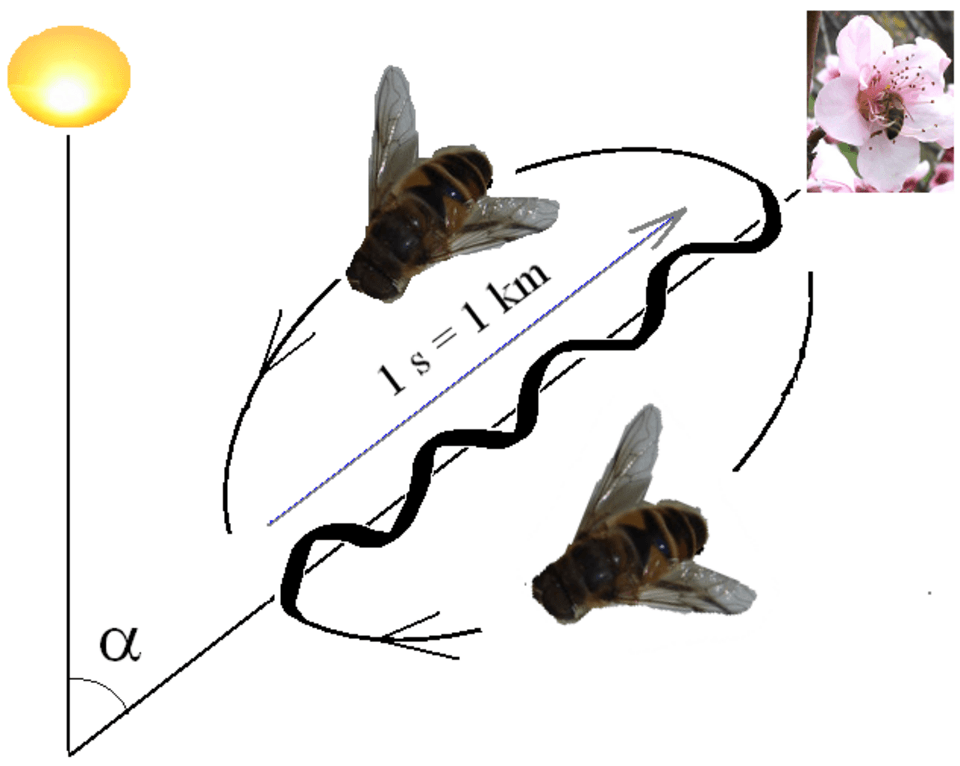
Karl von Frisch worked out what the honeybee waggle dance meant in 1944. Sixty years of follow-up experiments show that bees can count, judge symmetry, do basic arithmetic, and recognise the concept of zero.
What dreams might be for
For most of the twentieth century, neuroscience treated dreams as the brain's mental garbage collection. The last decade of research has produced a more interesting picture — and we still do not know what dreams are doing.
Toba almost ended us
About 74,000 years ago, a volcano on what is now Sumatra erupted with a force unequalled by any other in the last million years. The ash darkened the planet. Some geneticists believe humanity passed through a near-extinction bottleneck — but the evidence is more complicated than the textbook version suggests.
What ChatGPT actually does
A plain explanation of what is happening when you type a question and a language model writes back. Not a metaphor. Not 'it predicts the next word'. The actual mechanism, the actual training, and what we do and do not know about why it works.
Henrietta Leavitt measured the universe from a desk at Harvard
She was paid thirty cents an hour to catalogue photographic plates. In 1908 she noticed that a certain kind of star pulses with a period that depends on its brightness — and that one relationship made it possible to measure distances across galaxies.
Vanilla has one natural pollinator and a teenage slave in Réunion solved the problem
The vanilla orchid evolved in Mexico to be pollinated by a single species of stingless bee. Outside its native range it produces no pods. In 1841 Edmond Albius, age twelve, worked out how to pollinate it by hand. Every commercial vanilla bean since has been pollinated his way.
In 1994 a park ranger found a living fossil in a canyon outside Sydney
The Wollemi pine had been known from fossils dating back 90 million years and was thought to have died out with the dinosaurs. Then David Noble abseiled into an unmarked gorge in the Blue Mountains and noticed a tree he did not recognise.
A South African museum curator pulled a 'living fossil' off a fishing trawler
In December 1938 Marjorie Courtenay-Latimer noticed a strange blue fin sticking out of a pile of bycatch on the East London docks. The fish she preserved had been thought extinct for 66 million years.
In 1859 a solar storm set telegraph offices on fire and the aurora reached Cuba
On the morning of 1 September the English astronomer Richard Carrington saw a bright flash in his solar telescope. Eighteen hours later the largest geomagnetic storm in recorded history shorted out every telegraph line in the northern hemisphere.
The Tunguska event flattened 80 million trees and left no crater
At 7:14 a.m. on 30 June 1908, in central Siberia, something exploded in the sky with the force of about 12 megatons of TNT. The shockwave was registered as far as London. The cause has been narrowed down but is still not certain.
Pando: a single organism that is 80,000 trees
In a Utah forest, every quaking aspen across 43 hectares is genetically identical, connected by a single root system, and the whole thing has been alive for at least 9,000 years. It is also dying.
How Roman concrete survived for two thousand years
The Pantheon's dome, cast in 126 CE, is still the largest unreinforced concrete dome in the world. The harbours of Caesarea are still under water. The secret turned out to be in the seawater itself.
The mitochondria in your cells were once free-living bacteria
Every cell in your body except red blood cells contains hundreds of tiny power stations. Two billion years ago they were independent organisms. The realisation, when it came in the 1960s, was rejected as ridiculous for almost a decade.
The Apollo guidance computer had less memory than a modern washing machine
It ran at 0.043 megahertz with 64 kilobytes of read-only memory. It navigated three astronauts to the Moon and back. During the lunar descent it threw alarms five times in two minutes. The astronauts landed anyway.
The Greenland shark lives for 400 years and swims slower than you walk
The longest-lived vertebrate known, blind for most of its life, swimming at 0.34 metres per second through the freezing North Atlantic, eating things that have already died. Its flesh is poisonous unless aged for months.
You have Neanderthal DNA. Here's what it does.
If you have any ancestry outside sub-Saharan Africa, about two percent of your genome was contributed by a population that has been extinct for 40,000 years. The contribution affects, among other things, your immune system, your hair, and possibly your susceptibility to severe COVID-19.
The volcano on Io that has been erupting for thirty years
On a Jovian moon the size of our own, a single volcanic feature has been continuously molten since at least the Voyager flyby in 1979 — and probably for a great deal longer than that.
The tardigrade
A near-microscopic animal that survives boiling, freezing, the vacuum of space, and a thousand times the radiation that would kill a person. The mechanisms are odd, specific, and now mostly understood.
How an octopus may see colour with its skin
Octopuses are colour-blind by the standard test. They also do some of the most accurate colour-matched camouflage in the animal kingdom. The reconciliation has been the working puzzle of cephalopod biology for a decade.
Why birds are dinosaurs (and have been all along)
The sparrow at your window is, in the most precise modern sense the word can carry, a small theropod dinosaur. The evidence for this has been accumulating for 150 years, and is now overwhelming.
Why your body's clock runs slightly long
In total darkness, human biology runs to a day that is fractionally longer than the Earth's. The reason is one of the most precise measurements ever made about ourselves.
The iron in your blood was made inside a dying star
Where the calcium in your bones, the oxygen in every breath, and the iron in every red blood cell came from. The chain of causation runs through several supernovae and roughly nine billion years.
What the Voyager probes are doing right now
Launched in 1977, the two Voyager spacecraft are still operating. They are now outside the solar system, returning data with 1970s computers, on power that is dropping by about four watts a year.
CRISPR was a bacterial immune system before it was a tool
The story of how a curious sequence in E. coli, ignored for fifteen years, turned out to be the most precise gene-editing technology ever made — and a parable about why fundamental research has to be defended.
What happened in the first second after the Big Bang
Most of the interesting physics of the universe took place in less time than it takes to read this sentence. A guided tour of the first second, told in the order things happened.
The slime mold that solved the Tokyo subway map
A bright-yellow single-celled organism, given pieces of oat at the locations of Tokyo's railway stations, built a network that closely resembled the one trained engineers had spent decades designing.
Why diamonds aren't actually forever
Every diamond on Earth is gradually trying to turn into a much less impressive material. The reason it has not yet is purely a matter of kinetic patience.
How a virus carved the human placenta
A gene that mammals use to build the placenta — to make us mammals — was originally a piece of a retrovirus that infected an ancestor 25 million years ago. The story is repeated, independently, across mammalian lineages.