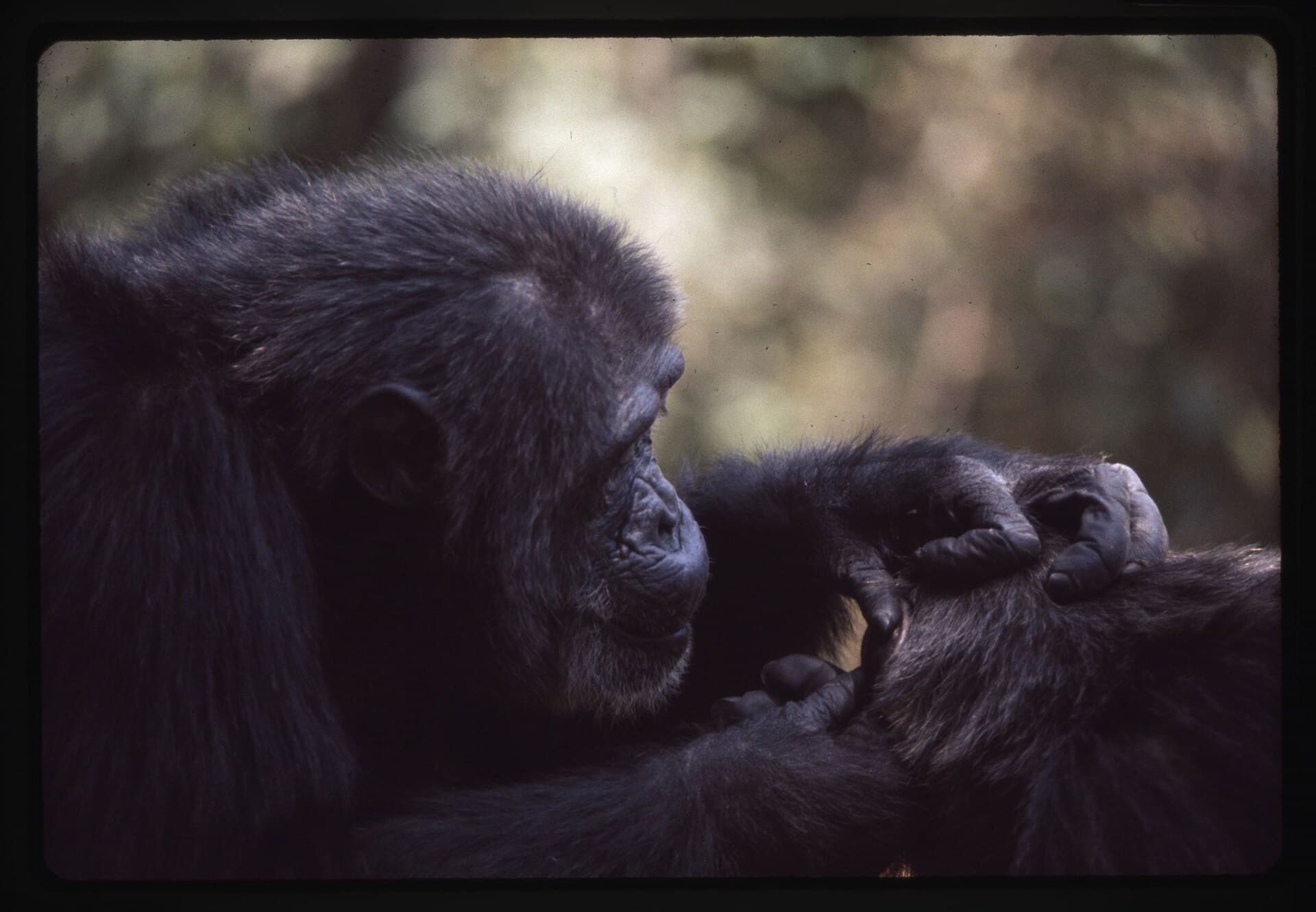
In 1992, Robin Dunbar, a professor at University College London, made an intriguing observation that has since reverberated across disciplines. In his paper, 'Neocortex size as a constraint on group size in primates,' published in the Journal of Human Evolution, Dunbar explored the relationship between brain anatomy and social structures. By examining the neocortex size relative to the rest of the brain across 38 primate species, he found a striking correlation: the size of a primate's social group was predicted by the size of its neocortex. This correlation held true across species, from macaques to chimpanzees, and crucially, when extrapolated to humans, it suggested a social group size of approximately 150. This number—later coined 'Dunbar's number'—emerged as a cognitive ceiling, purportedly representing the maximum number of stable social relationships a human can maintain.
What Dunbar found in human evidence

To verify the implication of 150 as a cognitive limit, Dunbar turned to human social organisations. His investigations spanned diverse contexts, from tribal societies to contemporary corporate structures. In tribal societies like the Yanomami of South America and the !Kung of southern Africa, village sizes frequently hovered around 150. The same pattern was evident in historical military formations such as the Roman maniple, which comprised roughly 120 soldiers, and the British Army company, typically around 150 men strong. Religious communities like the Hutterites consistently split their settlements once they reached about 150 members, citing the inability to maintain social cohesion without formal rules. Even in seemingly unrelated domains like the Christmas-card lists of British academics, the average number of names hovered around 130. Across these varied contexts, Dunbar saw evidence of a pervasive cognitive limit, manifesting in organisational structures around the number 150.
These observations suggested that the 150 threshold was more than a statistical artefact; it represented a cognitive limit to human social organisation. Dunbar argued that when groups exceed this size, informal means of maintaining relationships—such as personal knowledge and social pressure—are no longer sufficient. Formal institutions, with written rules and hierarchical structures, become necessary to manage larger groups. This recurring pattern across disparate human societies underscored a fundamental aspect of human cognition, suggesting a deep-rooted constraint on our social capacities.

What the cognitive mechanism actually is
The link between neocortex size and social group size in primates offers insights into the cognitive mechanisms at play. In primate groups, each social relationship entails a complex web of information: identities, kin relationships, alliances, dominance hierarchies, and social interactions. These cognitive demands scale exponentially with group size, as each additional member increases the number of pairwise relationships exponentially—N(N-1)/2 to be precise. This cognitive load is taxing, requiring substantial neural resources to track and maintain the detailed social information necessary for group cohesion.

In humans, this cognitive load is further amplified by our capacity for language and complex social cognition. Maintaining relationships requires not only tracking social dynamics but also managing conversations, remembering shared knowledge, and understanding beliefs and intentions. The neocortex, responsible for higher-order cognitive functions, limits how much social information we can retain and process. The extrapolation to a human group size of 150 reflects the threshold at which we can maintain detailed, reciprocal social relationships. Beyond this, relationships either become superficial or demand the support of formal structures to sustain them.
The structure of the number
Dunbar's hypothesis further develops into a model of concentric social layers, each representing different depths of relationship. At the core are the five closest individuals—intimates with whom one shares the most frequent contact. Expanding outward, the next circle encompasses 15 close friends or family members, followed by a group of 50 individuals whom one knows well. The next significant boundary, the 150 relationships, represents acquaintances one can keep track of and maintain stable social bonds with.
Beyond this lies a layer of 500 individuals whose faces are recognisable, and 1500 names that are known but not intimately. This multi-layered structure replicates in various contexts: studies of mobile phone call frequencies, social networking platforms, and diary accounts of social contact reveal similar patterns. Each successive layer is roughly three times the size of the previous, reflecting a diminishing cognitive load required to manage relationships as they become less intimate. The 150 boundary delineates a crucial shift from personal to more impersonal interaction.
Where the number breaks down
Despite its widespread acceptance, the Dunbar number is not without criticism. A 2021 paper by Patrik Lindenfors and colleagues, published in Biology Letters, challenged the robustness of the original findings. Using updated neuroanatomical data and Bayesian statistical methods, their re-examination suggested that the predicted human group size could range widely, from as low as 70 to as high as nearly 300. The specific figure of 150 is not the sole plausible estimate but lies within a broader range of possibilities.
Further scrutiny comes from modern social media data. A 2022 study by Casari et al. analysed digital social networks from platforms like Facebook and Twitter, revealing that while meaningful 'active social ties' frequently clustered around 130-160, there was considerable individual variation—ranging from under 50 to over 400. This suggests that the 150 number might represent a central tendency rather than an absolute cognitive limit. Additionally, the organisational sizes Dunbar referenced could coincidentally align with 150 due to factors unrelated to cognitive constraints, such as historical or logistical considerations.
Why it still matters
The precise number may be debated, but the conceptual framework Dunbar introduced remains influential. The notion that there exists a cognitive threshold beyond which informal social management fails resonates across various fields. In organisational theory, it is consistently observed that groups larger than roughly 150 require formal structures to function effectively. Hierarchies, written policies, and monitoring systems become essential as personal knowledge and informal norms lose their efficacy in coordinating behaviour.
In the corporate world, Amazon's 'two-pizza team' rule exemplifies this principle: teams should be small enough to be fed by two pizzas, reflecting a preference for smaller, more manageable groups. This same instinct underscores a broader organisational strategy: when teams or business units grow beyond a certain size, they necessitate splitting to maintain efficiency and coherence. The Dunbar number, even if not a hard limit, identifies a critical cognitive transition in social group dynamics that institutions must navigate.
In digital social space
In the digital age, social media platforms have transformed the scale of social connectivity, permitting users to maintain nominal links with far more individuals than the Dunbar number suggests. Facebook users, for instance, often have hundreds of 'friends,' while LinkedIn users might boast several hundred connections. Yet empirical studies repeatedly show that meaningful interactions—those involving substantial communication and mutual engagement—concentrate within a much smaller circle, typically well below 200.
Analysis of the Cambridge Analytica data set revealed that even users with extensive networks engaged meaningfully with only a fraction of their contacts. This data suggests that while platforms allow for expanded networks, they do not fundamentally alter the cognitive architecture underlying social interaction. Instead, they layer a veneer of recognition atop an unchanged social substrate, with substantive engagement remaining concentrated in smaller, more intimate circles.
Robin Dunbar, now 78 and reflecting on decades of research, remains cautious about the exactitude of the number 150. He often remarks, 'It is a number around 150.' The key takeaway is not the precise figure but what it represents—a boundary delineating personal social knowledge from impersonal record-keeping. Human cognition, evolved for small groups, now operates within vastly larger social frameworks enabled by technological advancements. Yet, this cognitive ceiling is not easily surpassed. Beyond the Dunbar boundary, no matter where precisely it falls, personal knowledge gives way to formal mechanisms, altering the texture of social life.
References
- Dunbar, R. I. M. (1992). Neocortex size as a constraint on group size in primates. Journal of Human Evolution, 22(6), 469–493.
- Dunbar, R. I. M. (2010). How Many Friends Does One Person Need? Dunbar's Number and Other Evolutionary Quirks. Harvard University Press.
- Lindenfors, P., Wartel, A., & Lind, J. (2021). 'Dunbar's number' deconstructed. Biology Letters, 17(5), 20210158.
- Hill, R. A., & Dunbar, R. I. M. (2003). Social network size in humans. Human Nature, 14(1), 53–72.