
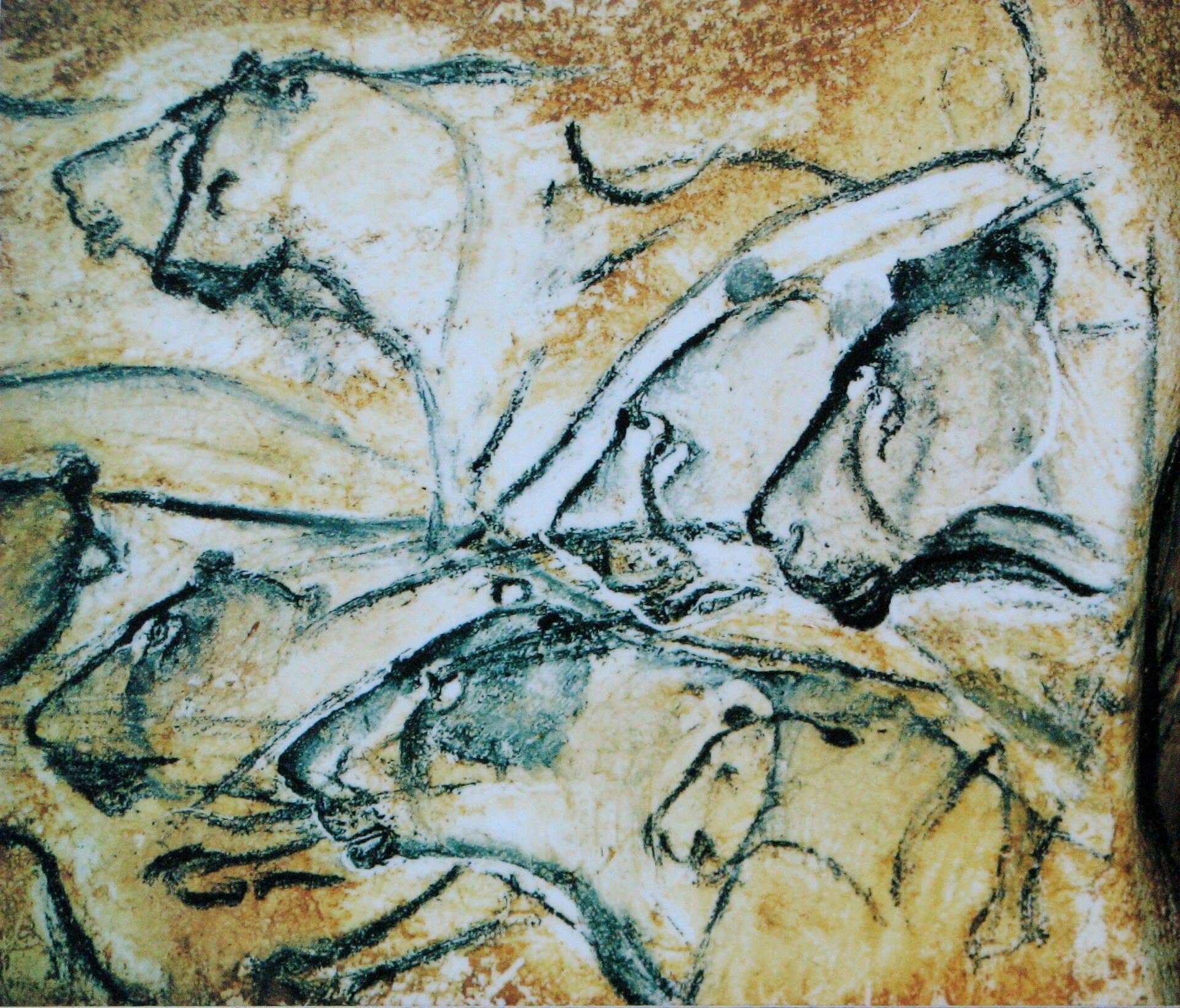
On the afternoon of 18 December 1994, an unassuming fissure in the karst limestone of the Ardèche region in southern France revealed a hidden world untouched for millennia. Jean-Marie Chauvet, Éliette Brunel, and Christian Hillaire, a trio of French amateur speleologists, had stumbled upon a cave sealed by time—a vast network of chambers whose walls were adorned with over 400 paintings and engravings. These artworks, featuring lions, horses, bison, rhinoceroses, and more, remained unseen since a collapse closed the entrance roughly 21,500 years ago. Radiocarbon dating of the charcoal used in these paintings revealed a staggering antiquity: approximately 36,000 years. This discovery marked the Chauvet Cave paintings as the oldest known accomplished figurative art, rendering them a crucial touchstone in the study of prehistoric expression.
Why the date was a surprise
The revelation of Chauvet upended long-standing assumptions about the evolution of prehistoric art. Prior to this discovery, the prevailing belief was that figurative cave art, such as that seen in Lascaux and Altamira, developed gradually over millennia, with technique improving steadily throughout the Upper Palaeolithic. These caves, dated to about 17,000 and 15,000-18,000 years ago respectively, were thought to represent the zenith of a slow artistic progression. Chauvet shattered this linear narrative, demonstrating that fully-developed figurative art existed at the very dawn of the European Upper Palaeolithic record.
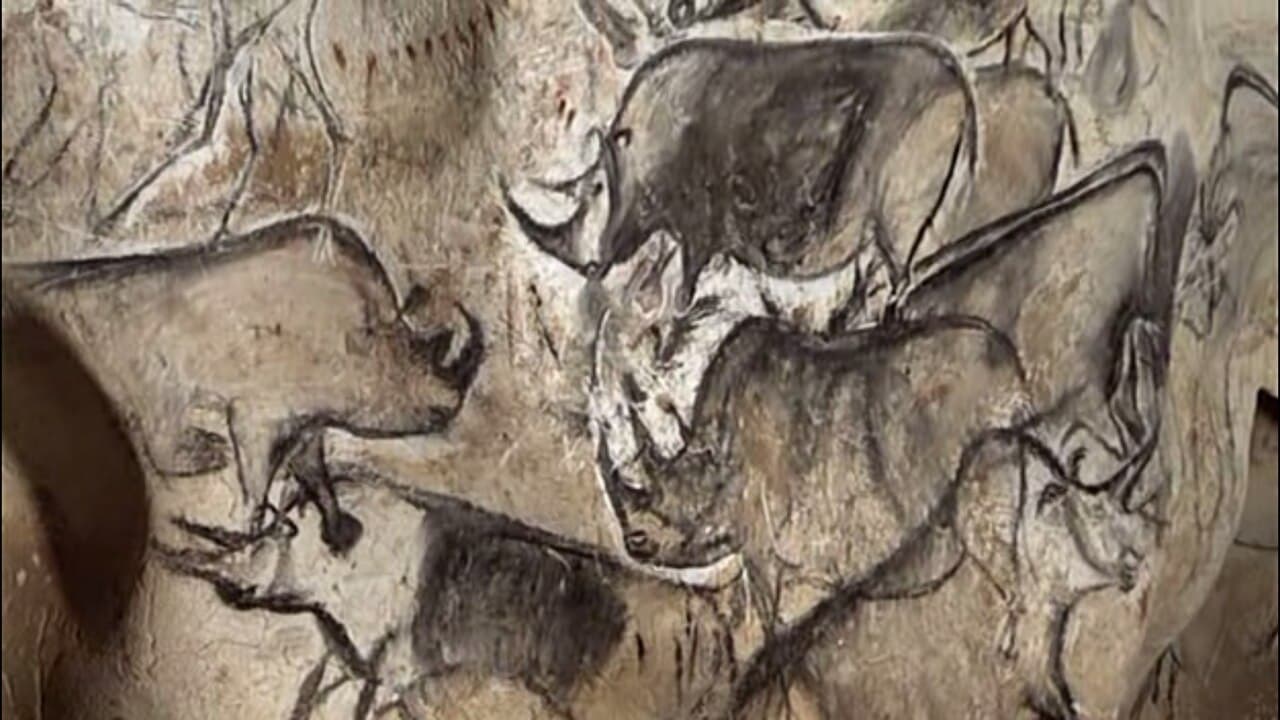
The collapse of the 'gradual development' model raised new questions about the origins of artistic skill. The artists of Chauvet already possessed a sophisticated command of shading, perspective, and anatomical accuracy. They employed techniques such as animation and complex composition that defied the expected progression from primitive to advanced forms. Consequently, the understanding of prehistoric artistic evolution required reevaluation, as no satisfactory replacement explanation has yet emerged to account for this early burst of creativity.
How they painted
The technical sophistication of the Chauvet artists is evident in their meticulous use of materials and techniques. Charcoal, predominantly derived from Scots pine, was used for black lines, while red and yellow ochres, mixed with water, provided vibrant fills. To prepare the walls, the artists scraped away layers of calcite to expose the white limestone beneath, creating a stark canvas for their work. Brushes made from moss or animal hair were used alongside finger-painting to achieve different textures and effects.
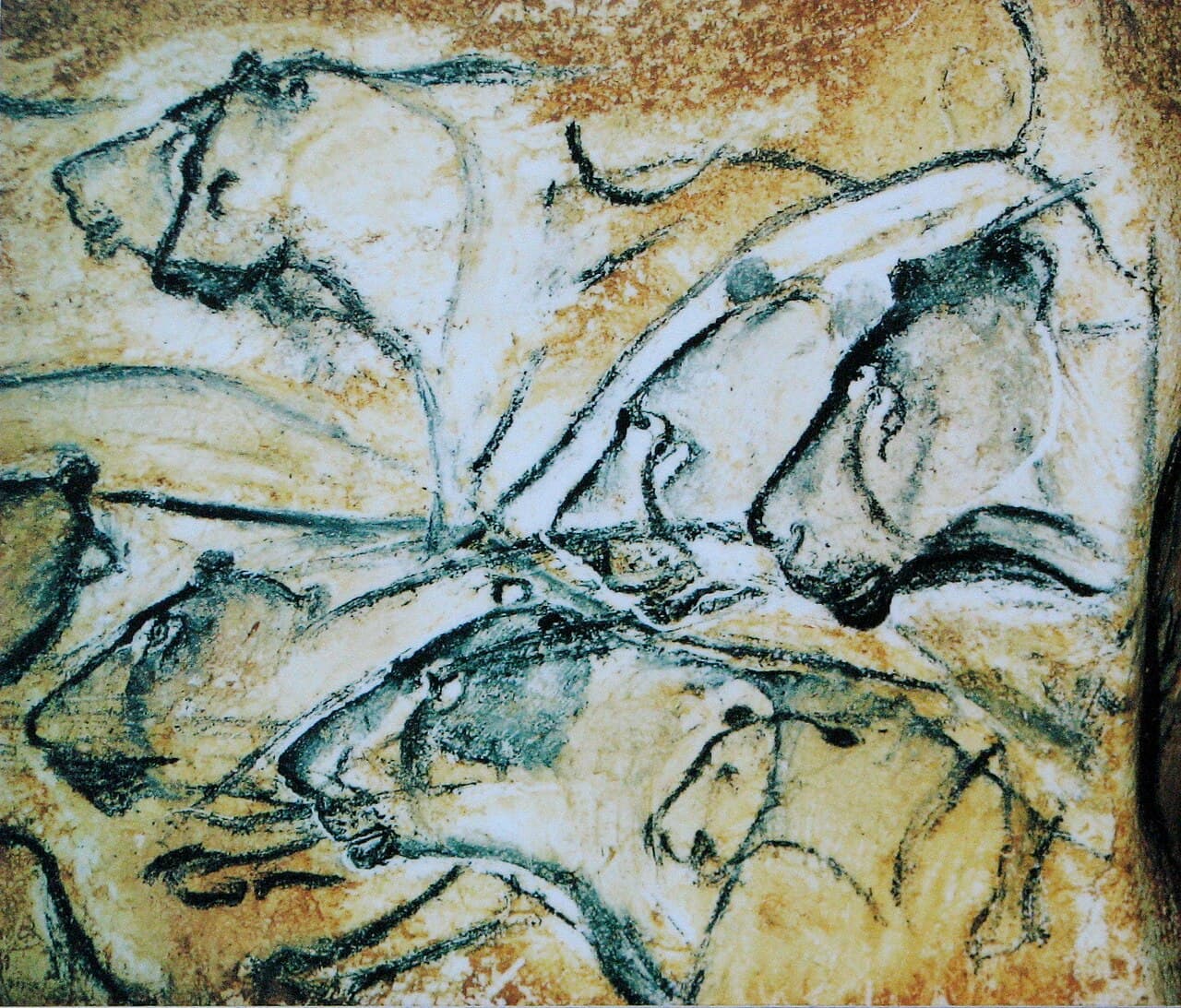
One of the cave's remarkable features is the 'End Chamber,' which contains a horse panel where four horses are drawn in profile, their forms partially overlapping. The shading on the muzzles and necks imbues the scene with depth, a technique not commonly associated with prehistoric art. Similarly, the 'Lions Panel' showcases sixteen lions in stalking formation, drawn at varying scales to indicate distance. Such use of pictorial space is more typical of much later artistic developments, underscoring the advanced understanding of visual representation possessed by these early artists.
The dating, in detail
The precise dating of the Chauvet paintings was achieved through a series of radiocarbon analyses conducted in phases over more than two decades. The most comprehensive of these efforts, led by Jean-Michel Geneste, Anita Quiles, and colleagues, was published in 2016 in the Proceedings of the National Academy of Sciences (PNAS). The study confirmed two distinct phases of artistic activity: an Aurignacian phase from approximately 37,000 to 33,500 years ago, and a Gravettian phase from about 31,000 to 28,000 years ago. This indicates that the cave was used sporadically over a span of 10,000 years.
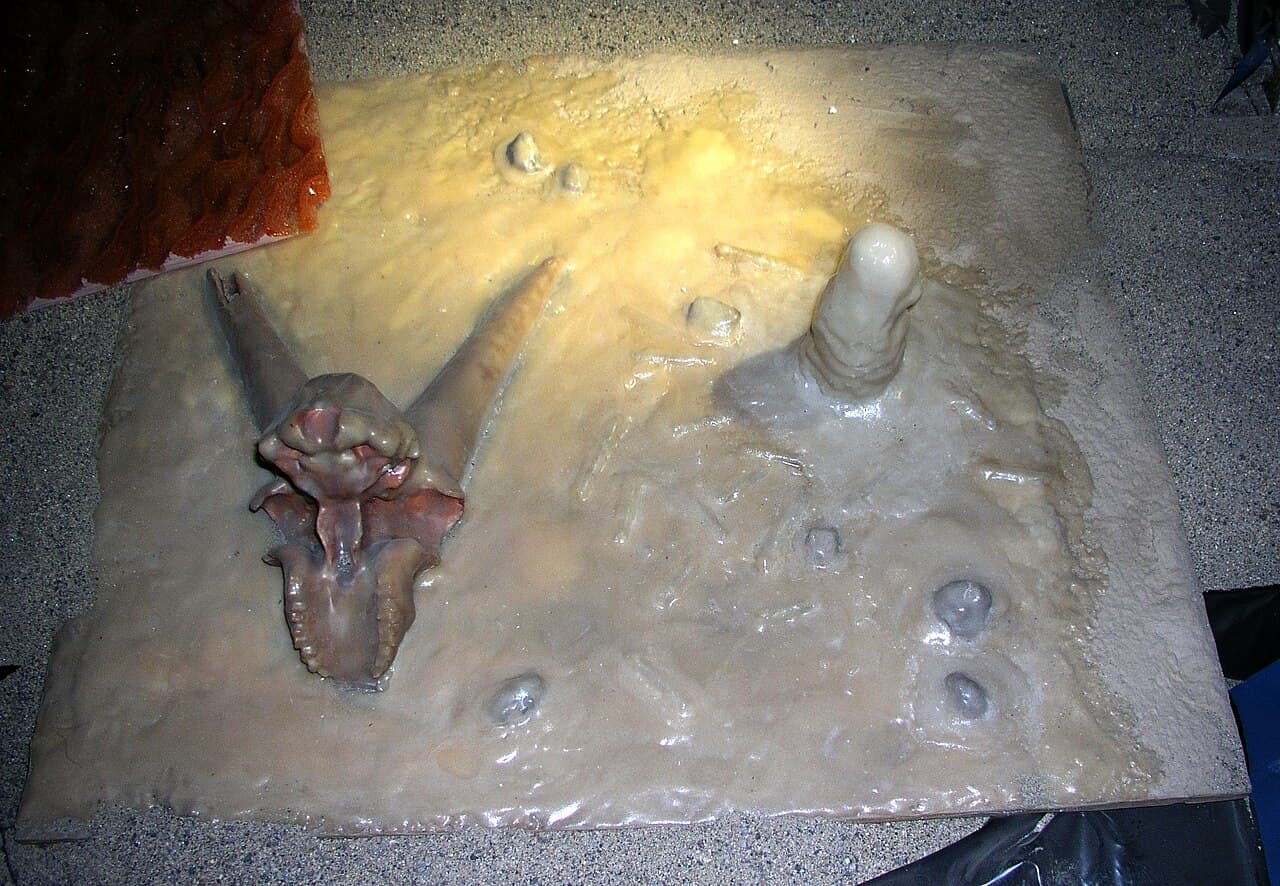
The cave also yielded bear bones dating back 50,000-60,000 years, suggesting its use as a den before it became an art site. Hibernation depressions found within reinforce this notion. The coexistence of ancient animal remains and human artistry provides a rare glimpse into the dynamic interplay between species during this era, adding another layer of complexity to the site's history.
What they painted
The subject matter of the Chauvet paintings deviates from what is typically expected in prehistoric art, particularly in the prevalence of predator imagery. While most cave art focuses on prey species such as horses, bison, and ibex, Chauvet features an array of predators, including lions, leopards, bears, and hyenas. This choice of subjects suggests a different cultural or symbolic emphasis among the artists of Chauvet, whose reasons remain speculative.
Moreover, the anatomical precision of these depictions is noteworthy. The cave lions, identified as Panthera spelaea, are rendered without manes, aligning with palaeontological evidence that Eurasian cave lions differed from their African counterparts in this respect. This accuracy suggests the artists were drawing from direct observation rather than imagination. Additionally, the dynamic portrayal of movement—lions stalking, horses running, and rhinoceroses in combat—indicates a narrative complexity absent from many later traditions.
The Werner Herzog film and the replica cave
To preserve its pristine state, Chauvet Cave has remained closed to the public since its discovery, a measure taken to avoid the microbial damage suffered by Lascaux after it was opened to visitors. However, the cave's beauty and significance have been brought to broader attention through Werner Herzog's 2010 documentary, 'Cave of Forgotten Dreams.' Filmed with a minimal crew, it offers a rare visual exploration of the cave's interior, capturing the art in its haunting context.
For those unable to access the original site, a full-scale replica, the Caverne du Pont d'Arc, was opened in 2015. This reconstruction, located two kilometres from the actual cave, faithfully reproduces the primary painted panels and serves as an accessible means for the public to engage with this ancient art. The replica itself stands as one of the largest archaeological reconstructions ever attempted, underscoring the cultural and historical significance of the original site.
What it tells us about the people who made it
The creators of the Chauvet paintings were anatomically modern Homo sapiens belonging to the Aurignacian and Gravettian cultures. They inhabited a Europe marked by an ice-age climate, sharing the landscape with formidable fauna like cave lions, woolly rhinoceroses, and mammoths. The contemporaneous existence of Neanderthals, whose extinction in Europe coincided with the earliest Chauvet paintings, adds another layer of historical intrigue to this period.
These artists were not mere hobbyists; they were skilled draftsmen capable of producing representational art of striking sophistication. Working by torchlight in complete darkness, often far from any natural light source, they demonstrated an acute understanding of their subjects and materials. While the exact purposes—be they religious, mythological, or educational—behind the artworks remain unknown, the social context that gave rise to such art is elusive. The paintings endure as solitary witnesses to the complex societies that produced them, leaving us to interpret them in the absence of their creators' cultural framework.
The dating of the Chauvet paintings compels us to reconsider human cognitive evolution. By 36,000 years ago, the artistic capabilities of behaviourally modern humans were already as sophisticated as any later developments in prehistoric art. This challenges the narrative of a gradual artistic emergence, instead suggesting a sudden and widespread flowering of representational art across Aurignacian Europe. The question of why this capability appeared when it did, well after the anatomical emergence of Homo sapiens but earlier than previously supposed, remains a central puzzle in the study of Upper Palaeolithic cognitive development. In this light, the Chauvet paintings complicate rather than clarify our understanding of human artistic evolution.
References
- Quiles, A., Valladas, H., Bocherens, H., et al. (2016). A high-precision chronological model for the decorated Upper Paleolithic cave of Chauvet-Pont d'Arc, Ardèche, France. PNAS, 113(17), 4670–4675.
- Clottes, J. (Ed.). (2003). Return to Chauvet Cave: Excavating the Birthplace of Art. Thames & Hudson.
- Herzog, W. (Director). (2010). Cave of Forgotten Dreams. IFC Films.
- Espluga Rivière, X., Pacher, M., & Stuart, A. J. (2009). The cave lion (Panthera spelaea) — palaeobiology and depiction in cave art.