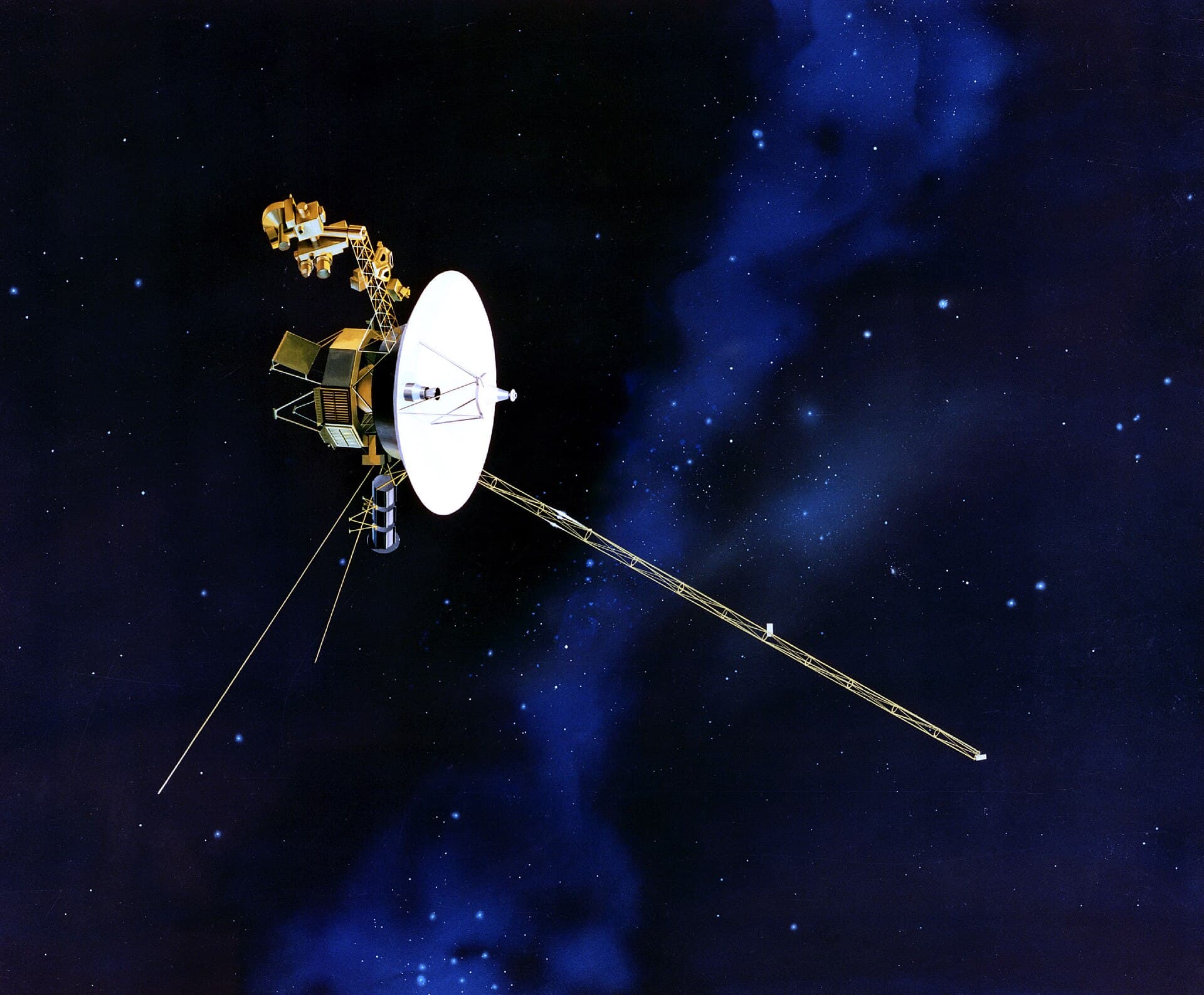
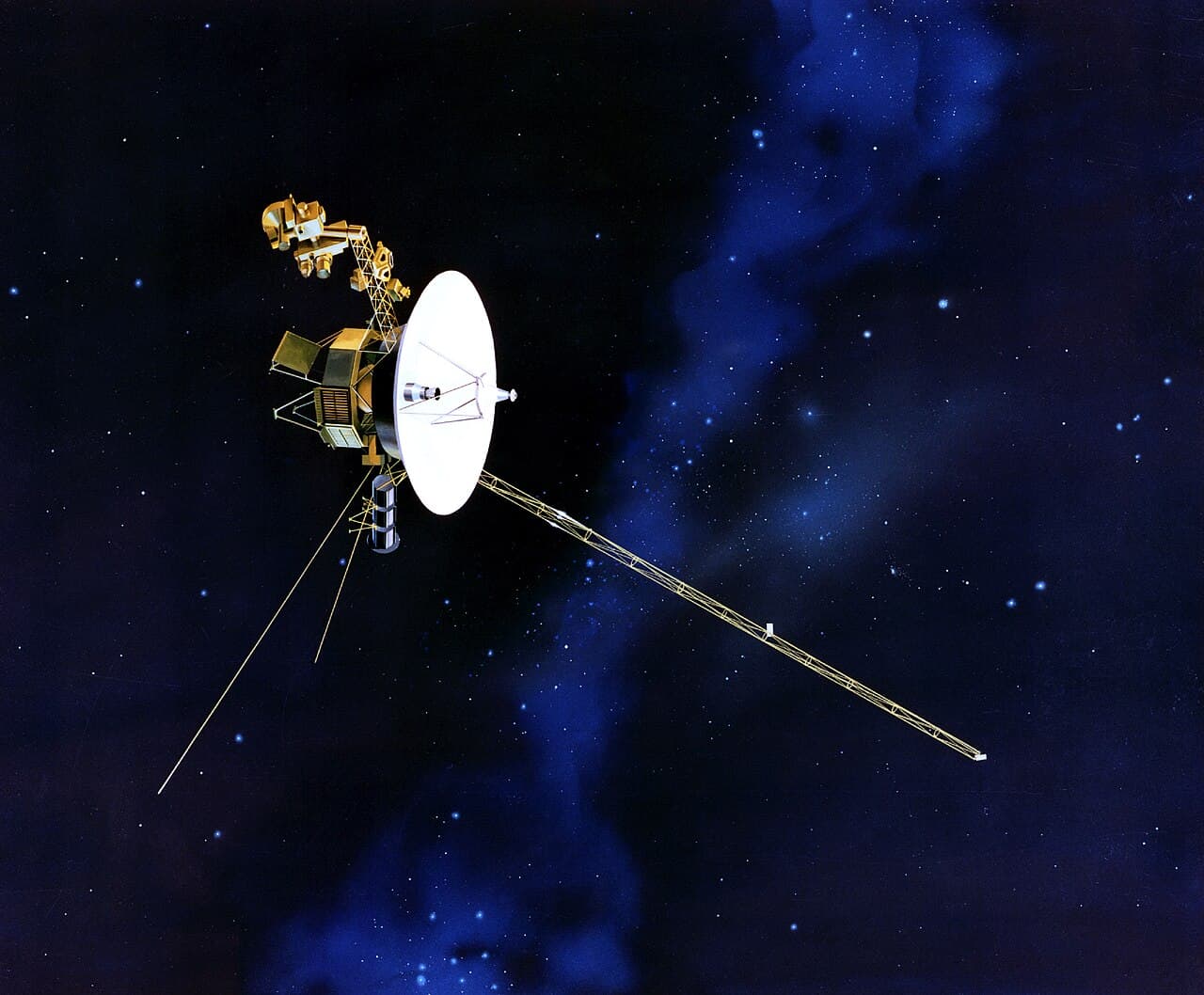
As of mid-2026, Voyager 1 is approximately 165 astronomical units from the Sun, translating to a staggering 25 billion kilometres away. At this distance, a radio signal moving at the speed of light takes about 23 hours to travel to the spacecraft and another 23 hours to return to Earth. Voyager 2, slightly closer, is positioned around 138 AU from the Sun. Launched in the late summer of 1977, these twin spacecraft have traversed vast distances, moving at speeds of roughly 15 to 17 kilometres per second relative to the Sun. Each year, they gain about 3.5 AU on their cosmic journeys. Remarkably, they stand as the only human-made objects to have ventured beyond the heliosphere, the protective bubble of particles and magnetic fields generated by our Sun.
What the mission was
The genesis of the Voyager mission was anchored in a rare cosmic alignment that occurs once every 175 years, allowing for a grand tour of the outer planets. This window, uniquely available during the 1970s, presented an unprecedented opportunity for exploration. The primary mission objective focused on a flyby of Jupiter and Saturn. The mission planners, with foresight, designed Voyager 2's trajectory to potentially extend to Uranus and Neptune, contingent on the spacecraft enduring its encounters with Jupiter and Saturn.
Voyager 1's closest approaches to Jupiter occurred in March 1979, followed by Saturn in November 1980. Post-Saturn, Voyager 1 was directed onto a high-latitude trajectory, prioritising the study of Titan, Saturn's intriguing moon, and thus concluding its planetary encounters. Voyager 2, trailing its sibling, made its passes by Jupiter in July 1979 and Saturn in August 1981. Unlike Voyager 1, it continued to Uranus in January 1986 and Neptune in August 1989. Notably, Voyager 2's visit to Neptune remains, as of 2026, the sole direct exploration of this distant planet.
The Golden Record
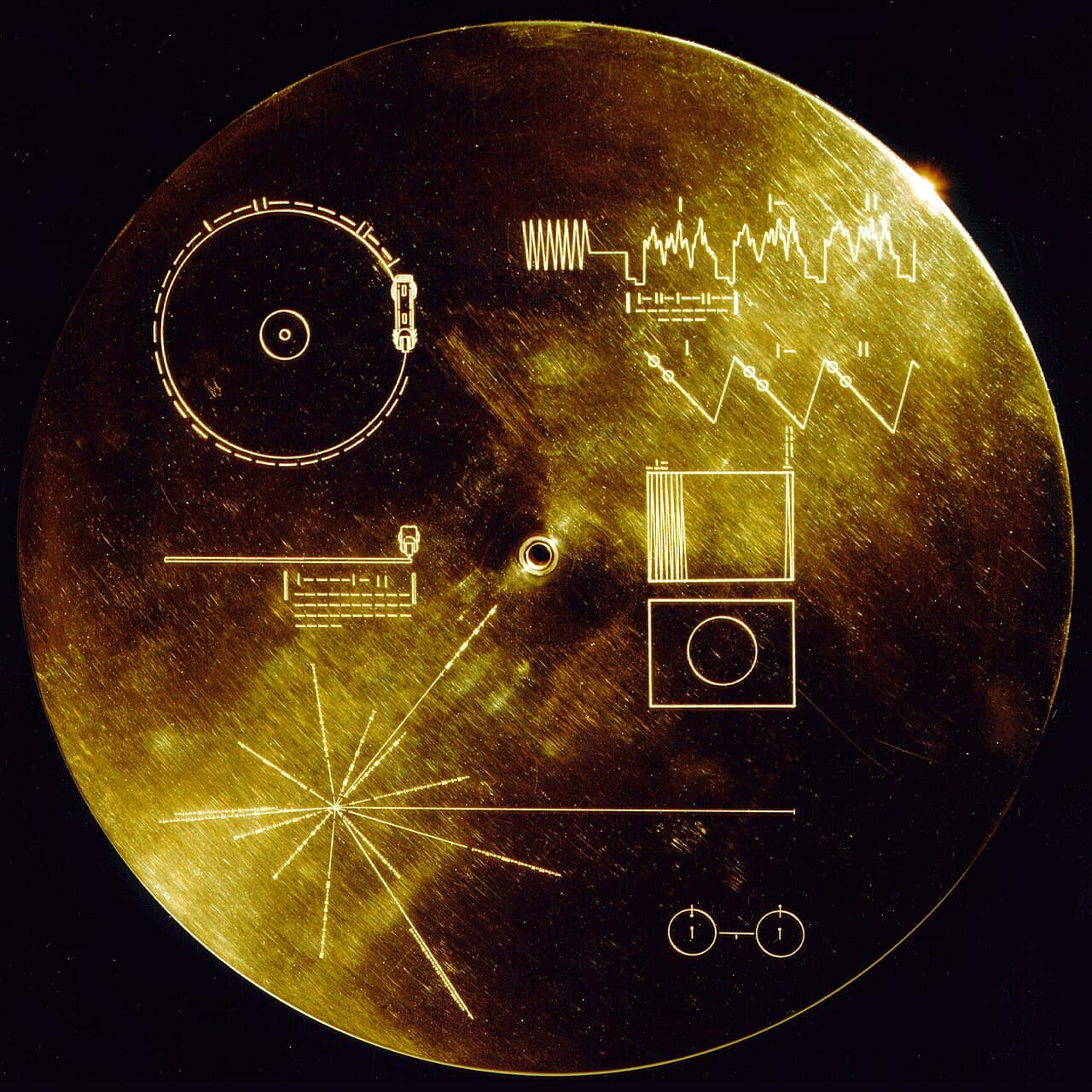
Aboard each Voyager spacecraft is a 12-inch gold-plated copper phonograph record, a gesture of goodwill and curiosity spearheaded by a committee led by Carl Sagan. This record serves as a time capsule, encapsulating the diversity of life and culture on Earth. It includes greetings spoken in 55 languages, a selection of 27 pieces of music spanning cultures and eras—from the timeless compositions of Bach and Beethoven to the energetic rhythms of Chuck Berry and the traditional sounds of Senegalese percussion and Aboriginal Australian song.
Additionally, the record contains 116 images encoded in an analog format, alongside natural sounds such as surf, thunder, and whale calls, capturing the essence of Earth's biosphere. Accompanying the record is a stylus and a set of pictorial instructions intended to guide potential extraterrestrial audiences on how to play it. While the chances of the record being discovered by alien life are slim, its cultural significance remains deeply terrestrial, symbolising humanity's desire to reach beyond its home planet.
Crossing the heliopause
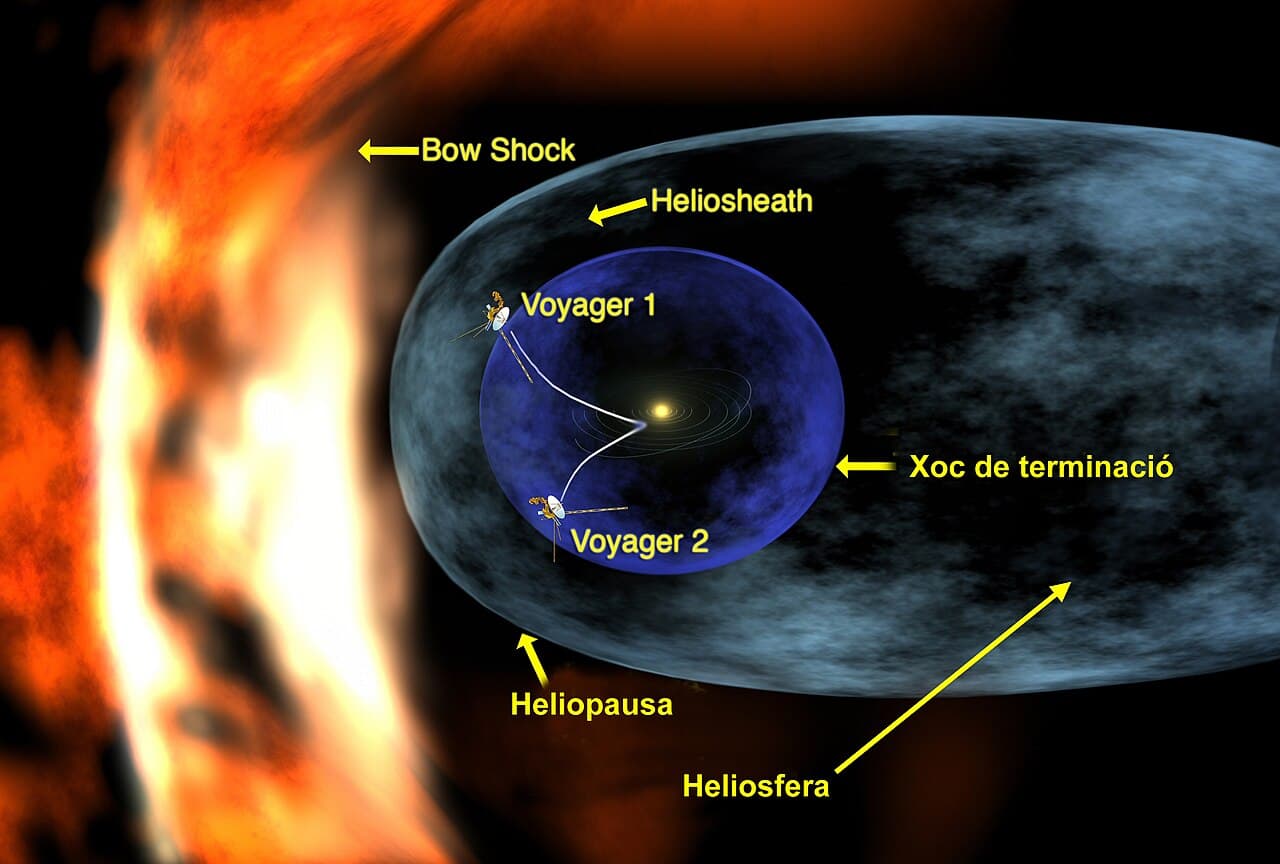
The heliopause represents the boundary where the solar wind—an outflow of charged particles from the Sun—meets the interstellar medium. Voyager 1 crossed this threshold on 25 August 2012, at approximately 121 AU from the Sun, marking its entry into interstellar space as the first human-made object to do so. Its sibling, Voyager 2, followed suit on 5 November 2018, crossing at 119 AU. These milestones were discerned through abrupt changes recorded by the spacecraft's instruments, notably in plasma and cosmic-ray data, which showed a decrease in solar particles and an increase in interstellar particles.
Data from these crossings have provided valuable insights, significantly altering our understanding of the heliosphere's shape. Contrary to previous models that suggested a comet-like tail, observations indicate a more compressed and rounded boundary. This understanding continues to be refined by ongoing analysis of the data collected by both probes, contributing to the fields of astrophysics and heliophysics.
What they still measure
In their current state, each Voyager spacecraft continues to operate with four functional scientific instruments out of the original eleven. These include a magnetometer, a plasma wave subsystem, a cosmic-ray subsystem, and a low-energy charged-particle detector. These instruments are actively gathering and sending back invaluable data concerning the interstellar magnetic field, the particle environment in local interstellar space, and the propagation of solar disturbances as they reach these remote regions.
The scientific value of this data is immense, as no other instruments are positioned at such distances to perform these measurements. The ongoing transmission of data from the Voyagers enriches our understanding of the interstellar medium and the Sun's influence far beyond the traditional confines of the solar system. Works like Krimigis et al. (2019) further elaborate on these findings, providing a deeper comprehension of the interstellar environment.
The power problem
The longevity of the Voyager spacecraft is underpinned by their power source: three radioisotope thermoelectric generators (RTGs) per spacecraft, utilising plutonium-238. The radioactive decay of this isotope, with a half-life of 87.7 years, results in a gradual decline in power output—approximately 4 watts per year. At launch, the RTGs generated around 470 watts, but by 2026, this has dwindled to about 220 watts.
This power constraint has necessitated a strategic deactivation of instruments and heaters to conserve energy, a process that has been ongoing since the spacecraft crossed the heliopause. The current plan, as of 2026, involves maintaining at least one scientific instrument operational on each Voyager into the early 2030s. Beyond this, the spacecraft will continue their silent drift through space, albeit without data transmission back to Earth.
Where they are going
The cosmic journeys of the Voyager spacecraft are far from over. Voyager 1 is heading towards the constellation Ophiuchus, on a trajectory that will bring it within 1.6 light-years of the star Gliese 445 in about 40,000 years. Similarly, Voyager 2 is bound for the constellation Sagittarius, set to pass within 1.7 light-years of Ross 248 in roughly the same timeframe. These encounters, while not close enough to engage or impact any extraterrestrial life forms, highlight the vast emptiness of space the probes will traverse.
In essence, the Voyagers are destined to wander the cosmos for eons, their journeys spanning timeframes that dwarf the entire history of human civilisation. As durable relics of human engineering, they will likely endure long after the Earth itself has changed beyond recognition, providing a silent testament to our early ventures into the universe.
The Voyager spacecraft are marvels of engineering, designed in the early 1970s for a mission initially planned to last just five years. Their continued operation, now approaching 49 years, is a testament to the foresight and skill of the engineers who built them. Most of these engineers have since retired or passed away, and the technology of that era is largely obsolete. The replacement parts no longer exist, yet these spacecraft continue to function. With transmitters outputting a mere 23 watts—the power of a refrigerator bulb—the signals still reach Earth, captured by the Deep Space Network.
Maintaining the Voyager mission has evolved into an exercise in institutional memory as much as engineering prowess. It stands as the longest demonstration of sustained attention and capability by humanity, a reflection on our pursuit of knowledge and our desire to reach beyond the confines of our world. The story of Voyager is one of determination, endurance, and an unwavering commitment to exploration, as illustrated by NASA's ongoing updates on the mission's status.
References
- NASA. Voyager Mission Status.
- Stone, E. C., et al. (2013). Voyager 1 observes low-energy galactic cosmic rays in a region depleted of heliospheric ions. Science, 341(6142), 150–153.
- Krimigis, S. M., et al. (2019). The interstellar medium beyond the heliopause: Voyager 2 observations. Nature Astronomy, 3, 997–1003.
- Sagan, C., et al. (1978). Murmurs of Earth: The Voyager Interstellar Record. Random House.