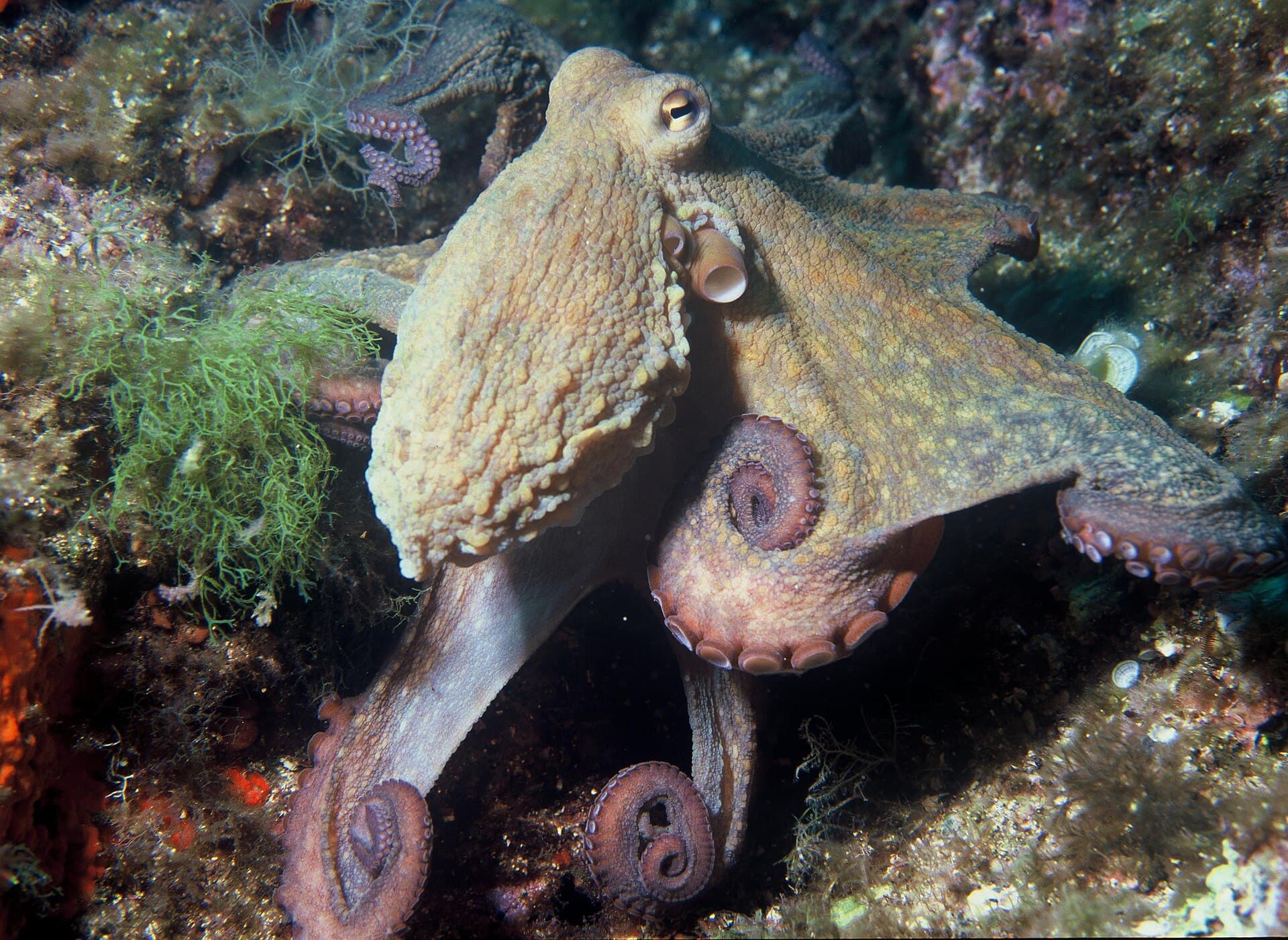
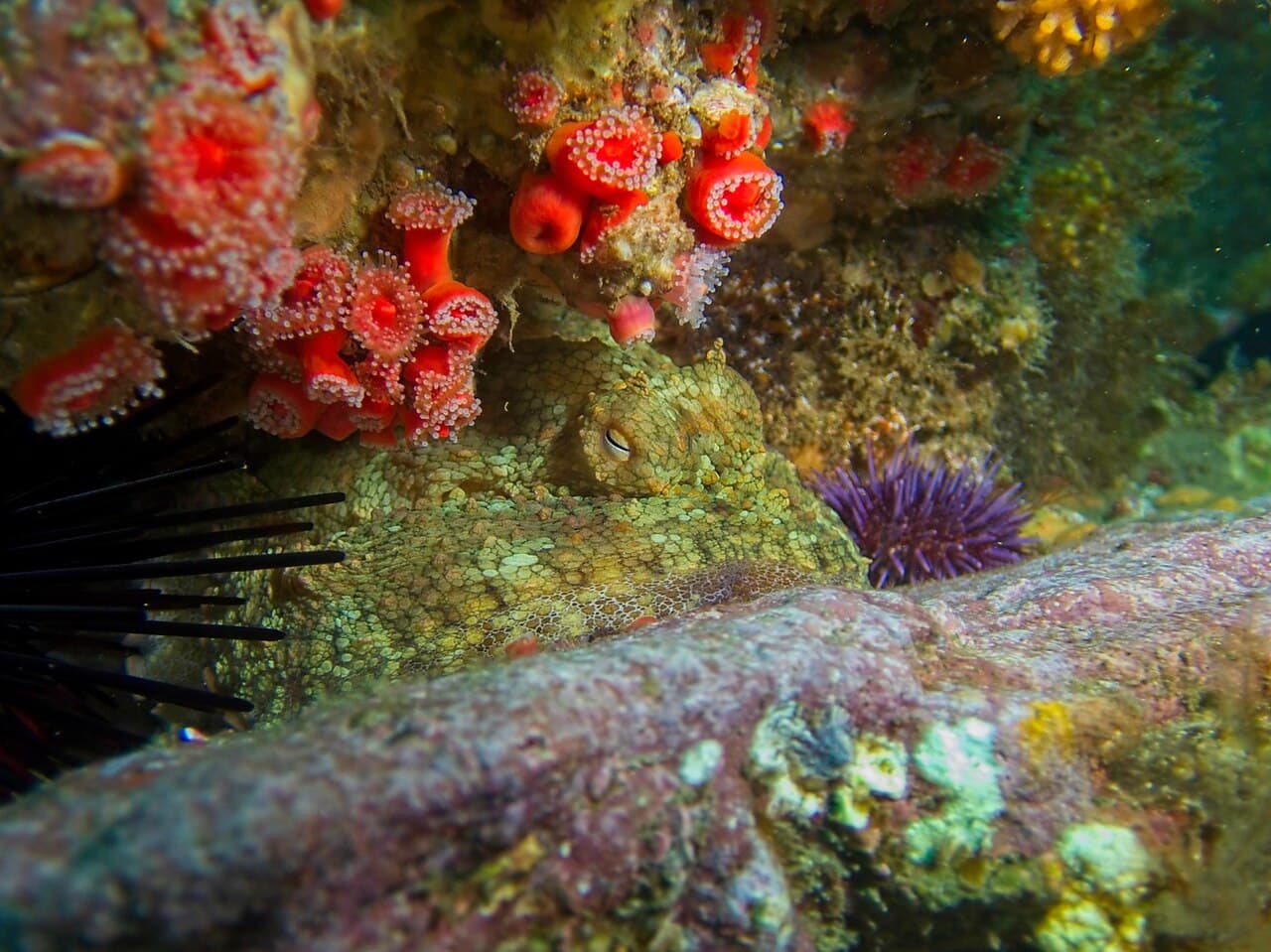
In the vibrant underwater world of a coral reef, an octopus can become all but invisible. Despite being colour-blind by conventional measures, it can mimic the precise hues and patterns of its environment almost instantaneously. Drop an octopus onto a multicoloured substrate, and within moments, it will transform its appearance to blend seamlessly with the coral, rocks, and sand around it. How is it that an animal with retinas composed of a single class of photoreceptor manages such remarkable camouflage, seeing what it cannot see?
What the eyes can do
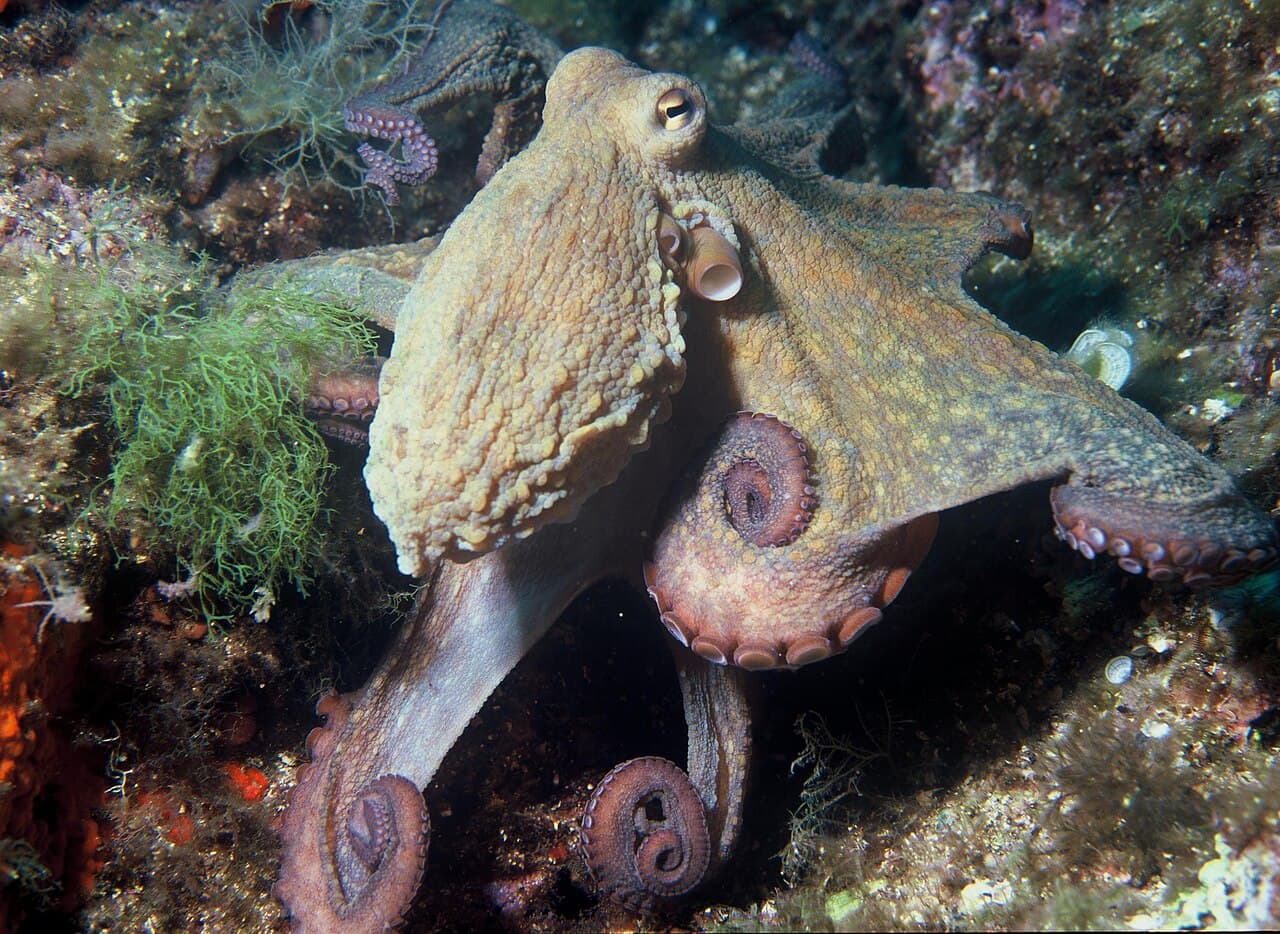
Cephalopod eyes are a marvel of evolution. They offer high resolution and fast accommodation, allowing these creatures to navigate their intricate surroundings with ease. However, when it comes to colour vision, the octopus presents a puzzle. Octopus retinas have only one type of opsin, sensitive to light at roughly 470 nanometres, which corresponds to the blue part of the spectrum. According to the standard rule of visual neuroscience derived from human studies, this should render them incapable of distinguishing different colours. With a single photopigment, one can detect variations in brightness but not in hue when brightness is held constant.
This physiological limitation is confirmed through behavioural tests. Octopuses, when subjected to standard colour-discrimination tasks, fail to differentiate between hues. The logic is straightforward: without multiple opsins tuned to different wavelengths, the concept of colour in the way humans perceive it should be beyond the octopus's grasp. And yet, the mystery deepens when we observe their natural behaviours, which suggest a sophisticated interaction with their colourful environments.
The Stubbs-Stubbs proposal
In a thought-provoking paper published in 2016, Alexander and Christopher Stubbs put forward an unconventional hypothesis that challenges our understanding of cephalopod vision. They noted the peculiar shapes of cephalopod pupils—slit-shaped in octopuses, W-shaped in cuttlefish, and pinhole-like in nautiluses. These pupil configurations produce significant chromatic aberration, where different colours of light are focused at different distances from the lens.
The Stubbs-Stubbs proposal suggests that octopuses might exploit this aberration by varying the depth of focus in their eyes. By rapidly adjusting the focus, an octopus could potentially infer the wavelength of incoming light based on the sharpness of the image. This mechanism would allow them to discern colours despite having a single opsin. The hypothesis has gained traction because it predicts specific eye movements that have been observed in these animals. Such a method of colour detection, if proven, would be a remarkable example of evolutionary innovation in sensory biology.
The opsins-in-the-skin proposal
Around the same time, another groundbreaking theory emerged from the work of Desmond Ramirez and Todd Oakley at UC Santa Barbara. Published in 2015, their research identified an intriguing phenomenon: the expression of opsin proteins not only in the eyes of the octopus but also in its skin. They focused their study on the species Octopus bimaculoides and found that its skin samples responded to light in vitro, indicating that the skin itself might possess light-sensing capabilities.
This finding suggests that octopuses might have a form of distributed light sensitivity. The chromatophores—the pigment-containing cells responsible for colour change—could be directly influenced by light detected by the skin, bypassing the eyes altogether. This model of direct skin photoreception offers a tantalising explanation for the octopus's ability to match its surroundings so accurately. Such a system would be a profound departure from vertebrate models of vision, presenting an entirely different paradigm for colour perception and adaptation.
Both might be true
The two leading theories—the chromatic aberration in the eyes and the opsins in the skin—are not mutually exclusive. It's conceivable that an octopus could employ both mechanisms, or even a combination of other undiscovered processes, to achieve its astonishing camouflage. The octopus's ability to match its environment might not rely solely on colour perception but could also incorporate cues from brightness and spatial frequency.
This multiplicity of potential mechanisms highlights the complexity of cephalopod sensory biology, which does not fit neatly into vertebrate categories. The notion that they might achieve colour discrimination without colour vision, as we understand it, underscores the need to rethink traditional sensory models. Octopus camouflage remains an open scientific question, a vivid example of how much we still have to learn about the natural world.
What we already know about octopus cognition
Beyond their visual systems, octopuses display a range of behaviours that suggest a sophisticated level of problem-solving and interaction with their environment. They have been observed solving complex puzzles, recognising individual human handlers, and manipulating objects with precision. Some even exhibit behaviours akin to play, a trait seen in few invertebrates.
The octopus nervous system is architecturally distinct from that of vertebrates. Approximately two-thirds of its neurons are located in its arms rather than in a centralised brain. This decentralised neural architecture allows the arms to function with a high degree of autonomy, each capable of performing tasks independently of the central brain. Such a system is not mysterious, but it does represent a fundamentally different way of organising sensory and motor functions. Octopuses challenge our assumptions about what intelligence and cognition can look like.
The implications of these findings extend beyond octopus biology. They prompt us to question whether intelligence and perception must mirror human experiences, or if they can manifest in radically different forms. The octopus, with its decentralised nervous system and possible distributed light sensitivity, illustrates that diverse evolutionary paths can lead to complex behaviours and interactions with the environment.
The question of how octopuses perceive colour without conventional colour vision invites us to rethink the possibilities of sensory biology. It is not just a challenge to our understanding of these intriguing creatures, but a broader inquiry into the nature of perception and intelligence. The octopus stands as a testament to the idea that the universe is full of ways to see and understand that we are only beginning to explore.
References
- Stubbs, A. L., & Stubbs, C. W. (2016). Spectral discrimination in color blind animals via chromatic aberration and pupil shape. PNAS, 113(29), 8206–8211.
- Ramirez, M. D., & Oakley, T. H. (2015). Eye-independent, light-activated chromatophore expansion (LACE) and expression of phototransduction genes in the skin of Octopus bimaculoides. Journal of Experimental Biology, 218(10), 1513–1520.
- Mäthger, L. M., et al. (2009). Do cephalopods communicate using polarized light reflections from their skin? Journal of Experimental Biology, 212, 2133–2140.
- Godfrey-Smith, P. (2016). Other Minds: The Octopus and the Evolution of Intelligent Life. Farrar, Straus and Giroux.