
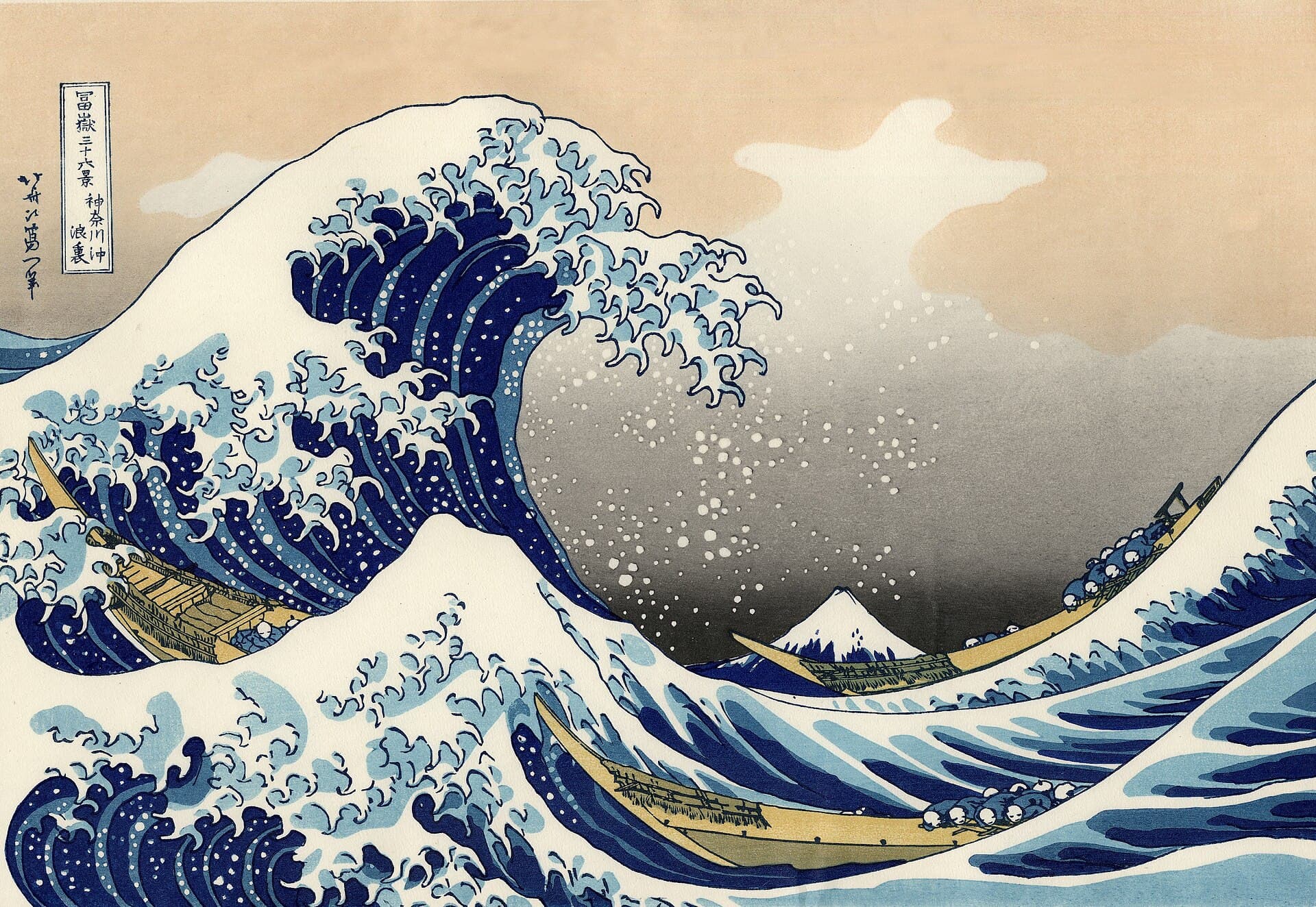
On the upper-left of the woodblock print famously known as Under the Wave off Kanagawa (神奈川沖浪裏), there is a signature that many might overlook but holds immense significance. It reads: 'Hokusai aratame Iitsu hitsu'—'Hokusai, who has now changed his name to Iitsu, brushed this.' At the time of its creation, between 1830 and 1833, Hokusai was approximately 70 years old, having spent over six decades in the pursuit of artistic mastery. This signature marks a moment in his life where he was yet again reinventing himself artistically. Despite being at an age where most might consider retirement, Hokusai continued to produce work that captured the imagination of both his contemporaries and future generations. Two years after the Great Wave was first printed, he adopted a new name, 'Old Man Crazy About Painting,' which beautifully encapsulates his lifelong obsession with art.
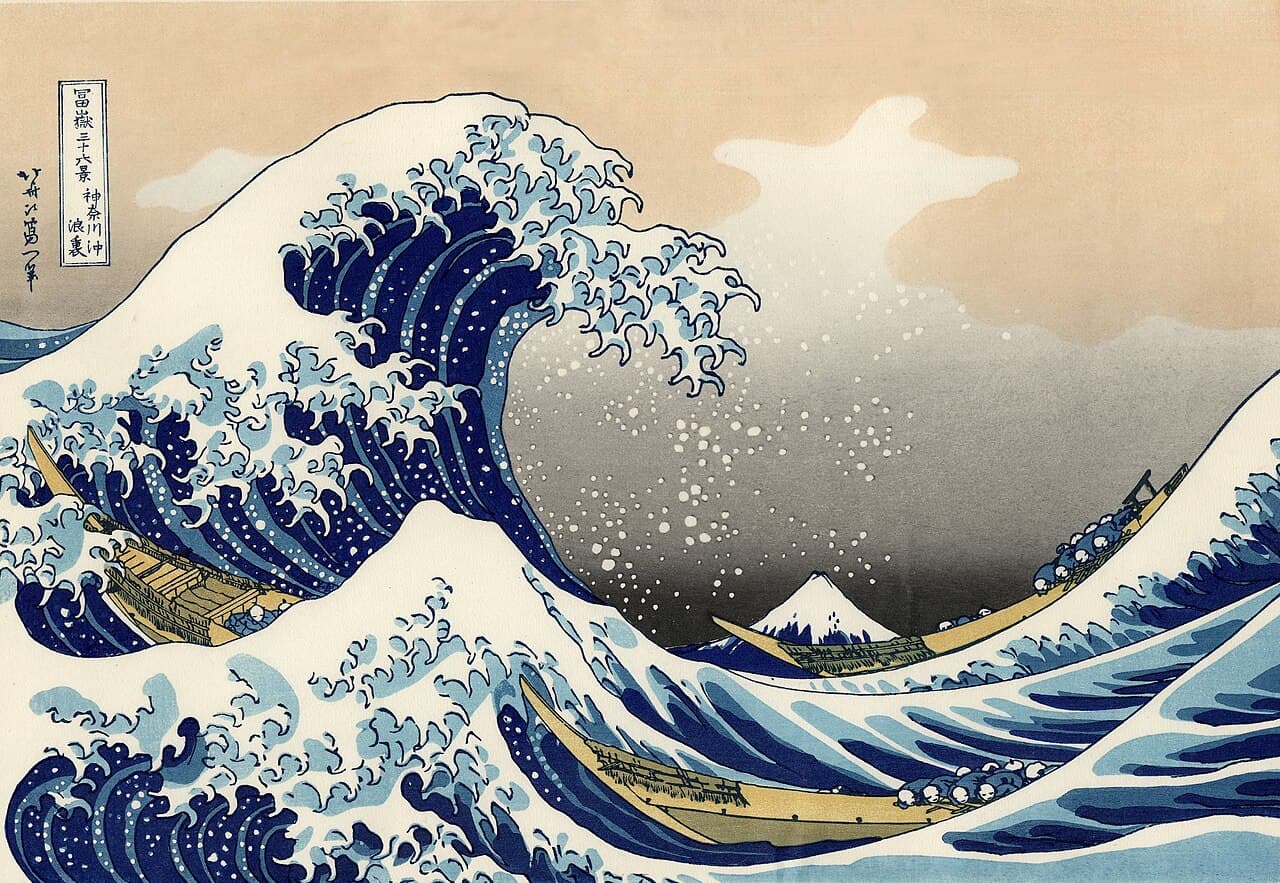
What the Great Wave actually is
The Great Wave is not merely an isolated work but the opening piece of a grander series entitled 'Thirty-six Views of Mount Fuji' (Fugaku Sanjūrokkei). This series, published by Nishimuraya Yohachi between approximately 1830 and 1834, offered a diverse array of perspectives on Japan's iconic Mount Fuji. In each piece, Hokusai placed the mountain in varying contexts—serene fields, bustling bridges, or as in the Great Wave, the tumultuous sea. In this particular print, Mount Fuji appears almost diminutive, a small yet steady presence amidst the dramatic crescendo of water that threatens to dominate the scene. The wave, with its towering presence, is poised to engulf three oshiokuri-bune, fast-moving cargo boats laden with fishermen laboriously rowing against nature's impending force. These fishermen, hailing from Edo (modern-day Tokyo), are captured in a moment of intense struggle, their bodies bent against the promise of impact as they transport fresh fish to the city.
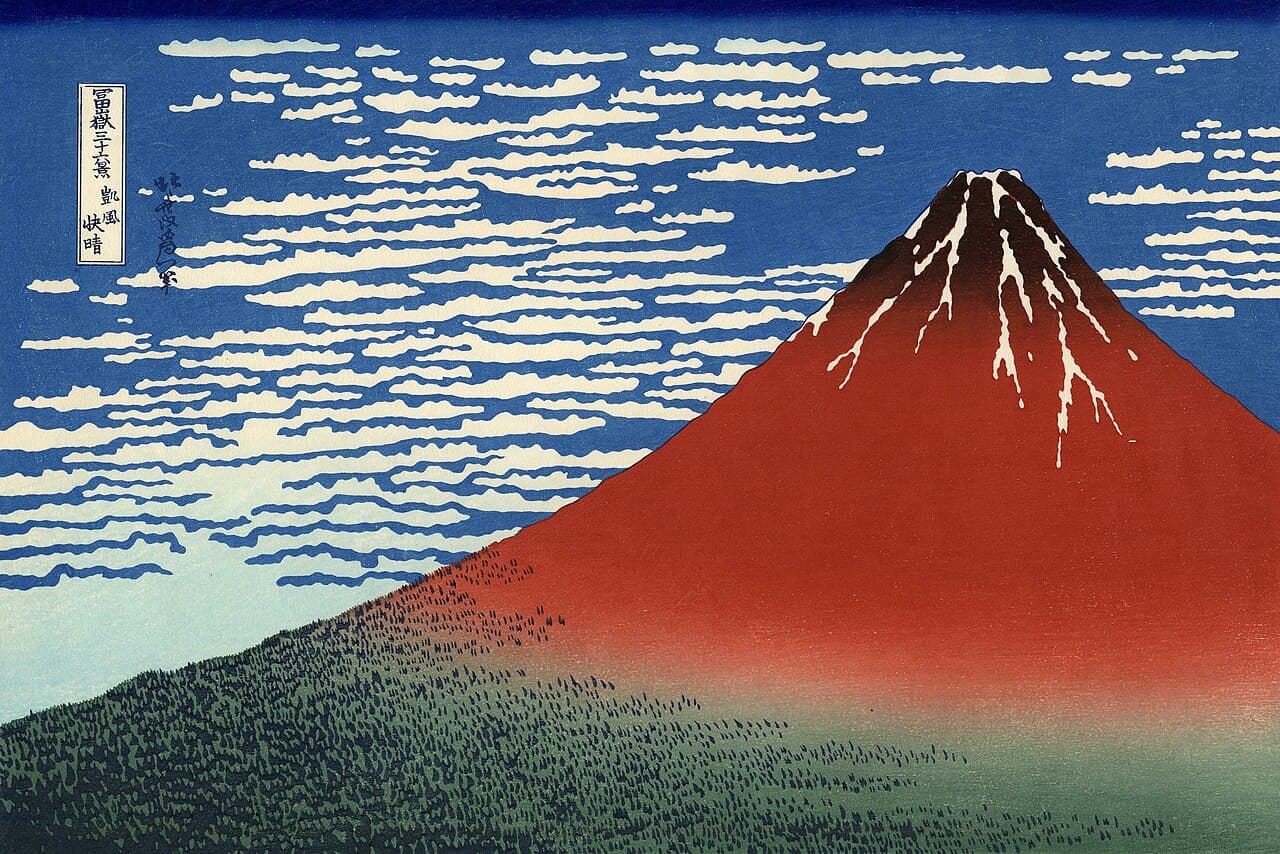
Hokusai’s ability to juxtapose the enduring tranquility of Mount Fuji with the chaotic energy of the sea demonstrates his mastery of capturing both the serene and the tumultuous aspects of nature. The subtlety with which the mountain is rendered — small and seemingly distant — contrasts sharply with the overwhelming size and movement of the wave, illustrating a tension between permanence and the ephemeral, a theme that resonates through much of Hokusai's work. This dynamic composition not only serves as a visual marvel but also conveys deeper philosophical questions about nature and human resilience, making it a piece that is both visually and conceptually compelling.
The art and the chemistry
The striking deep blue that dominates the Great Wave is thanks to Prussian blue, a synthetic pigment that became available in Japan during the late 1820s through Dutch trading routes. Originating in Berlin in 1706, Prussian blue was the first stable and lightfast blue pigment, a considerable advancement over the fugitive indigo that was commonly used prior. This new pigment allowed for a vibrancy and durability that previous materials could not achieve, enabling prints like the Great Wave to maintain their original brilliance over centuries. Hokusai, always the innovator, was among the first to harness this pigment in a commercial print setting, making the Great Wave one of the earliest examples of Prussian blue's use as a dominant hue in Japanese art. In well-preserved impressions of the print, the blue remains as vivid today as it was in 1831, a testament to both the chemistry of the pigment and Hokusai’s keen eye for innovation.
The use of Prussian blue not only added a new dimension to the aesthetic of Japanese woodblock prints but also signified a broader cultural exchange and adaptation. This pigment represented a bridge between Eastern and Western art, merging traditional Japanese techniques with European materials. Hokusai's embrace of Prussian blue was not merely a choice of colour but an acknowledgment of the interconnectedness of global artistic practices, highlighting his openness to influence and change, which further enriched his artistic repertoire and contributed to the enduring impact of his work.
How a woodblock print like this is made
The creation of a woodblock print like the Great Wave involves a meticulous and collaborative process that reflects the artistry and craftsmanship of multiple specialists. It begins with Hokusai himself, who would produce a detailed brush drawing. This drawing was then handed over to a skilled carver, who would paste the sketch face-down onto a block of cherrywood. The carver's task was to cut away the areas meant to remain unprinted, leaving only the raised lines that would transfer ink to the paper. Each colour in the print required its own block, necessitating an intricate series of carvings to capture the full spectrum of Hokusai's design.
After the carving, the blocks moved to the printer, the third specialist in this collaborative effort. The printer applied ink to the carved blocks and carefully aligned the paper using 'kentō' registration marks. Precision was crucial; all blocks had to align within fractions of a millimetre to achieve a cohesive image. This process, combining the talents of artist, carver, and printer, resulted in editions of perhaps 1,000 or 2,000 impressions from each set of blocks before they began to deteriorate. In the case of the Great Wave, it is estimated that around 8,000 impressions were made in total, with several hundred surviving to this day. The durability and beauty of these prints, achieved through such a complex process, speak to the dedication and skill required to produce what is now considered a masterpiece of art.
The wave itself
In recent years, the geometry of Hokusai’s wave has attracted attention from a different discipline—fluid dynamics. Scholars like Henry Yeh from Oregon State University have noted that the wave's form closely resembles modern understandings of rogue waves. These are waves whose height is roughly three times that of the surrounding swell, with steep, near-vertical fronts and curling lips that demonstrate unique physical characteristics. Yeh’s analyses suggest that Hokusai's depiction aligns with the Plateau-Rayleigh instability of free-falling water sheets, a phenomenon not formally understood until much later in the 20th century. How Hokusai managed to capture these details is a matter of some debate, but it likely stems from his decades spent observing the sea from Edo and Japan’s coastlines. The result is a depiction that is more physically plausible than one might expect from an artist working nearly two centuries ago.
Hokusai's wave, therefore, is not just a figment of artistic imagination but a representation that resonates with scientific accuracy. It challenges our assumptions about the capabilities of artists to depict natural phenomena without the aid of modern scientific tools. Whether through meticulous observation or an intuitive understanding of the sea's rhythm and energy, Hokusai's work demonstrates an uncanny foresight, adding yet another layer of depth to a print already rich with cultural and artistic significance.
What Hokusai thought he was doing
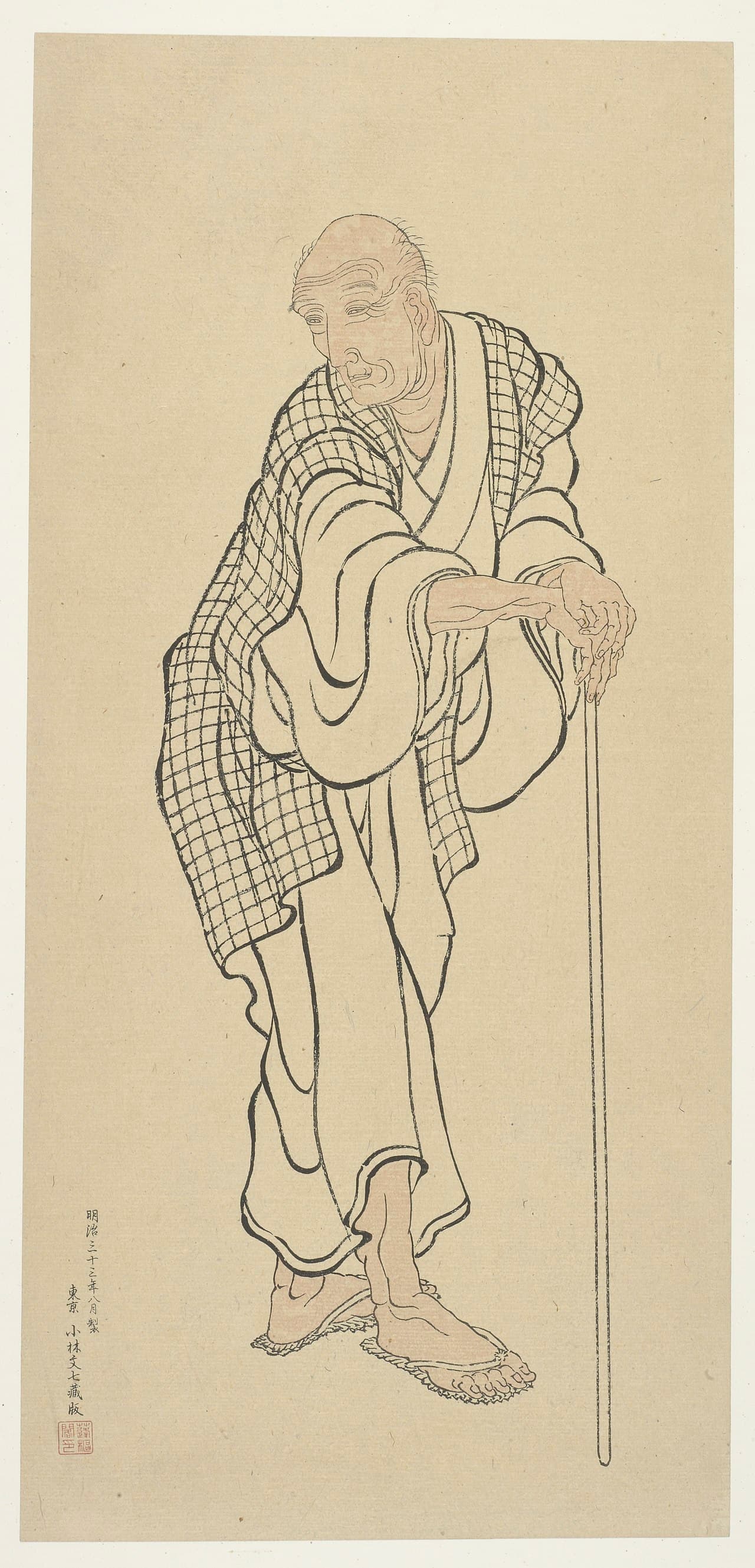
In one of his last works, Hokusai reflected on his long career with a poignant humility and a relentless drive for self-improvement. In the postscript to the 1834 album One Hundred Views of Mount Fuji, he confessed, 'From around the age of six I had the habit of sketching from life. From the age of fifty, I had produced a number of designs, yet of all I drew prior to the age of seventy there is truly nothing of great note. At the age of seventy-three, I finally apprehended something of the true quality of birds, animals, insects, fishes—of the vital nature of grasses and trees. At ninety, I shall have penetrated their essential nature. At one hundred, I shall have made real marvels. At one hundred and ten, every point and every stroke shall be living.' Sadly, Hokusai passed away in 1849 at the age of 88, never reaching the ambitious benchmarks he set for himself.
Hokusai's words offer a window into his philosophy as an artist—a belief in perpetual growth and the pursuit of an ever-elusive perfection. His self-assessment at seventy-three reflects a lifetime of learning and a deep-seated curiosity that drove him to continually redefine his understanding of the natural world. This notion of art as a lifelong journey rather than a series of finite achievements speaks volumes about Hokusai's character and his commitment to his craft. It also provides insight into the remarkable tenacity and passion that fueled his work, qualities that continue to inspire artists and admirers of art today.
The legacy of the Great Wave extends far beyond its initial reception. Vincent van Gogh encountered Hokusai's prints in Paris during the 1880s and was captivated by their clarity and precision. Debussy, too, drew inspiration from the Great Wave, keeping a print in his study as he composed his 1905 symphonic sketch La Mer. Such encounters in Europe signalled a profound exchange of artistic ideas, with Hokusai's influence reaching Western shores, altering the trajectory of art in subtle yet significant ways. Today, institutions like the Metropolitan Museum, the British Museum, and the Art Institute of Chicago house their own impressions of the Great Wave, cementing its place in art history.
The image persists in today's cultural landscape, often diluted into cliché through its ubiquitous presence on beach towels, album covers, and even as an emoji. Yet, for those who stand before an original impression, the power of Hokusai's vision is undeniable. The Great Wave loses much in its transition to a modern icon, yet there remains an essential brilliance in the original that endures. It is a testament to the work's complexity and depth that it remains both a cherished artwork and a symbol of the sea's perpetual challenge to human endeavour.
References
- Forrer, M. (1991). Hokusai. Royal Academy of Arts.
- Yeh, H. (2007). The Great Wave: Modern Tsunami Wave or Hokusai's Imagination? Topics in Civil Engineering / OSU Wave Lab.
- Clark, T. (2017). Hokusai: Beyond the Great Wave. Thames & Hudson / British Museum.
- Hokusai, K. (1834). One Hundred Views of Mount Fuji, postscript translated in Forrer (1991).