
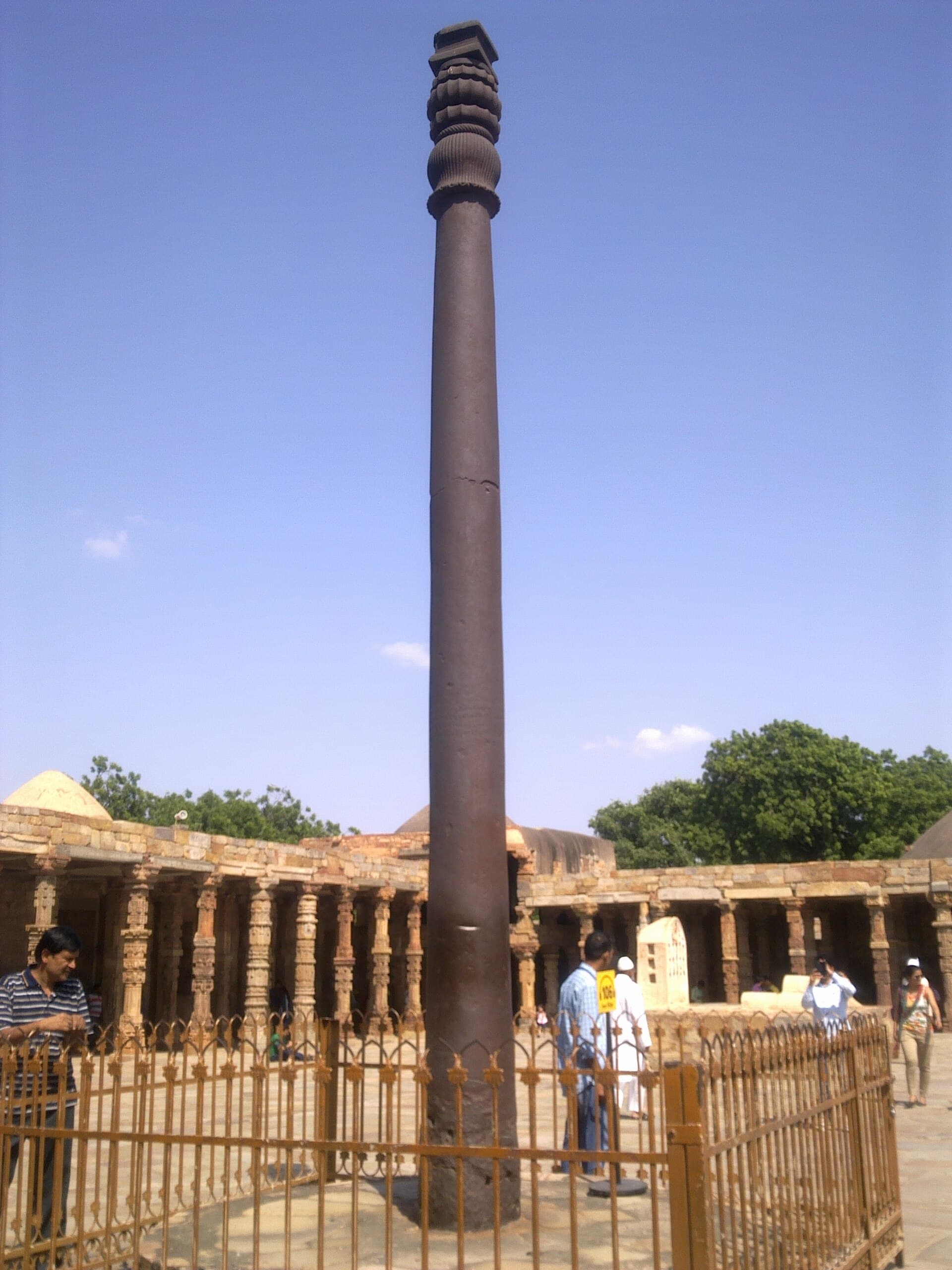
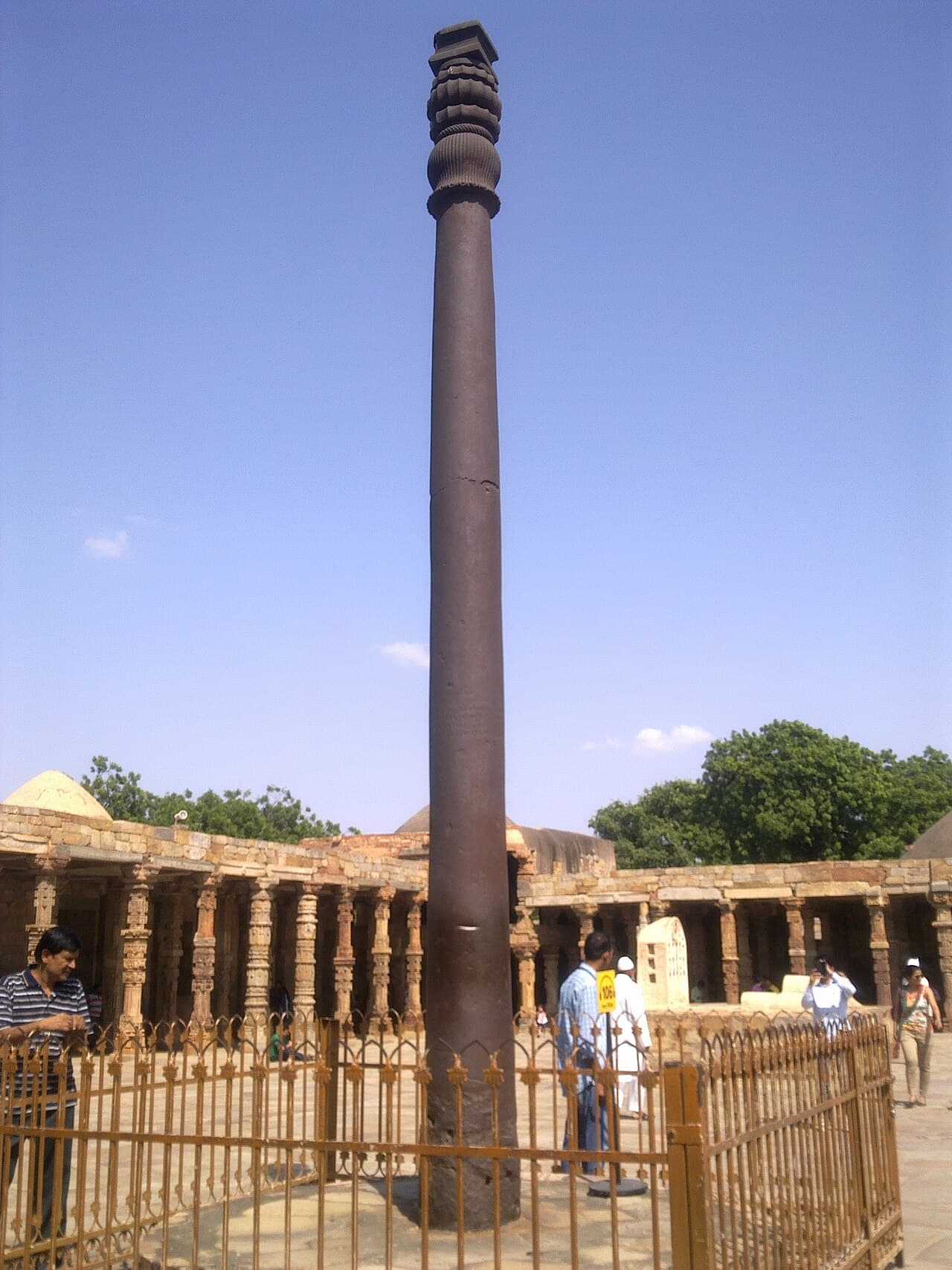
In the courtyard of the Quwwat-ul-Islam mosque, nestled within the Qutb complex of southern Delhi, stands an extraordinary monument to both historical and metallurgical achievement. This is the Iron Pillar, a six-tonne column of wrought iron, rising 7.21 metres tall and tapering from a base diameter of 41 centimetres to 31 centimetres at the top. Its surface is remarkably smooth, cloaked in a dark patina that seems impervious to the effects of time. An inscription in Brahmi script, etched into its upper portion, reveals its origins: a Sanskrit verse dedicated to Vishnu, recounting the victories of a king named Chandra. This king is widely believed to be Chandragupta II Vikramaditya, who reigned during the Gupta Empire from approximately 380 to 415 CE. For nearly 1,600 years, this pillar has withstood the relentless Delhi air, the monsoon rains, and the encroaching grasp of urban pollution. Despite these harsh elements, the pillar has not succumbed to rust. Modern iron subjected to the same conditions would have long since crumbled into a heap of red flakes. Yet this pillar remains as steadfast as when the Gupta-era smiths completed their work.
What an iron pillar is

The Iron Pillar of Delhi is a testament to ancient craftsmanship and material science. It is not a cast object, but rather a single forged column composed predominantly of iron—99.7 per cent, to be precise. The remaining fraction includes trace elements like carbon, sulfur, and silicon. However, the most crucial component is phosphorus, which constitutes about 0.25 per cent of the pillar's weight. This is significantly higher than the phosphorus content found in modern structural iron, which typically measures below 0.05 per cent.
The presence of phosphorus is not merely an accidental impurity but a decisive factor in the pillar's unique chemistry. The iron was produced by smelting ore, likely sourced from the Singhbhum region in modern Jharkhand, using charcoal in bloomery furnaces. The resulting bloom—a solid mass of iron—was then laboriously forge-welded in stages, layer upon layer, to amass the pillar's considerable bulk. This process left visible welding lines on the pillar's surface, betraying its construction method. Modern estimates suggest that creating a six-tonne pillar of this nature required between 25 and 100 tonnes of charcoal and between 50 and 200 tonnes of iron ore. Such an endeavour would have demanded the coordinated efforts of over a hundred workers over several months, underscoring the Gupta state's capacity to marshal vast resources for religious and monumental projects.
What stops it from rusting
The Iron Pillar's remarkable resistance to corrosion is no longer a mystery wrapped in the annals of history; it has been understood through the meticulous work of metallurgists such as R. Balasubramaniam of the Indian Institute of Technology Kanpur. The key lies in a thin, protective film on the pillar's surface, composed of a mixture of iron oxide-hydroxide compounds collectively known as misawite. This film forms continuously as the high-phosphorus iron alloy interacts with the humid atmosphere, creating a barrier that is highly insoluble and impermeable to further oxygen penetration.
The formation of this misawite layer, comprising δ-FeOOH plus phosphate, effectively prevents pitting corrosion. Unlike ordinary iron, phosphorus-rich iron does not develop discrete cathodic and anodic sites in moist air, which would otherwise facilitate corrosion. Although the role of phosphorus in enhancing corrosion resistance was noted as early as 1912 by the metallurgist Hadfield, it was only in the early 2000s that the full mechanism was elucidated. Thus, the pillar stands today not as an ancient enigma but as an example of an alloy whose chemistry has been demystified: high-phosphorus iron that forms its own protective oxide film.
Whether they meant to
The question of whether the Gupta-era smiths intentionally created a corrosion-resistant alloy has sparked considerable debate. One school of thought, sometimes referred to as the 'lucky accident' theory, posits that the high phosphorus content was a mere coincidence, stemming from the natural composition of the ores used. In this view, the pillar was meant primarily as a religious object, and its longevity was an unintended bonus. However, a growing body of evidence supports the 'deliberate engineering' perspective, suggesting that these artisans had a deeper understanding of their materials than previously acknowledged.
This evidence includes the existence of several other Indian iron objects from the same era, such as the Dhar pillar and temple beams in Bhubaneswar, which exhibit similar corrosion resistance and phosphorus content. Such consistency implies that Indian metallurgical traditions may have included specific recipes for producing iron with distinctive properties, particularly for religious monuments. While the smiths may not have articulated their knowledge in terms we would recognize today, they evidently knew what worked. The Iron Pillar of Delhi is not merely a solitary marvel but part of a broader tradition of metalwork that emphasized durability and resistance to the elements.
The travels of the pillar
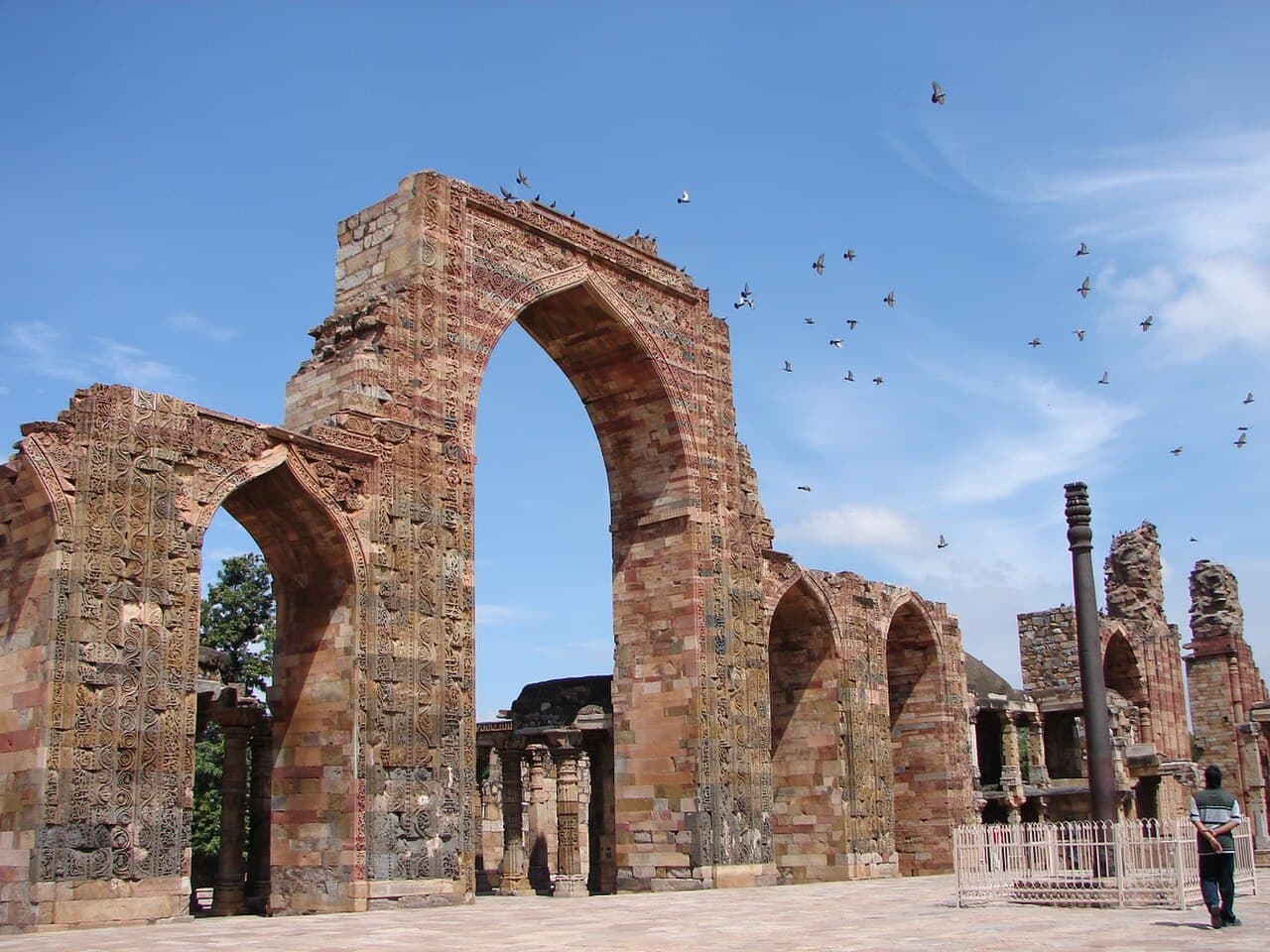
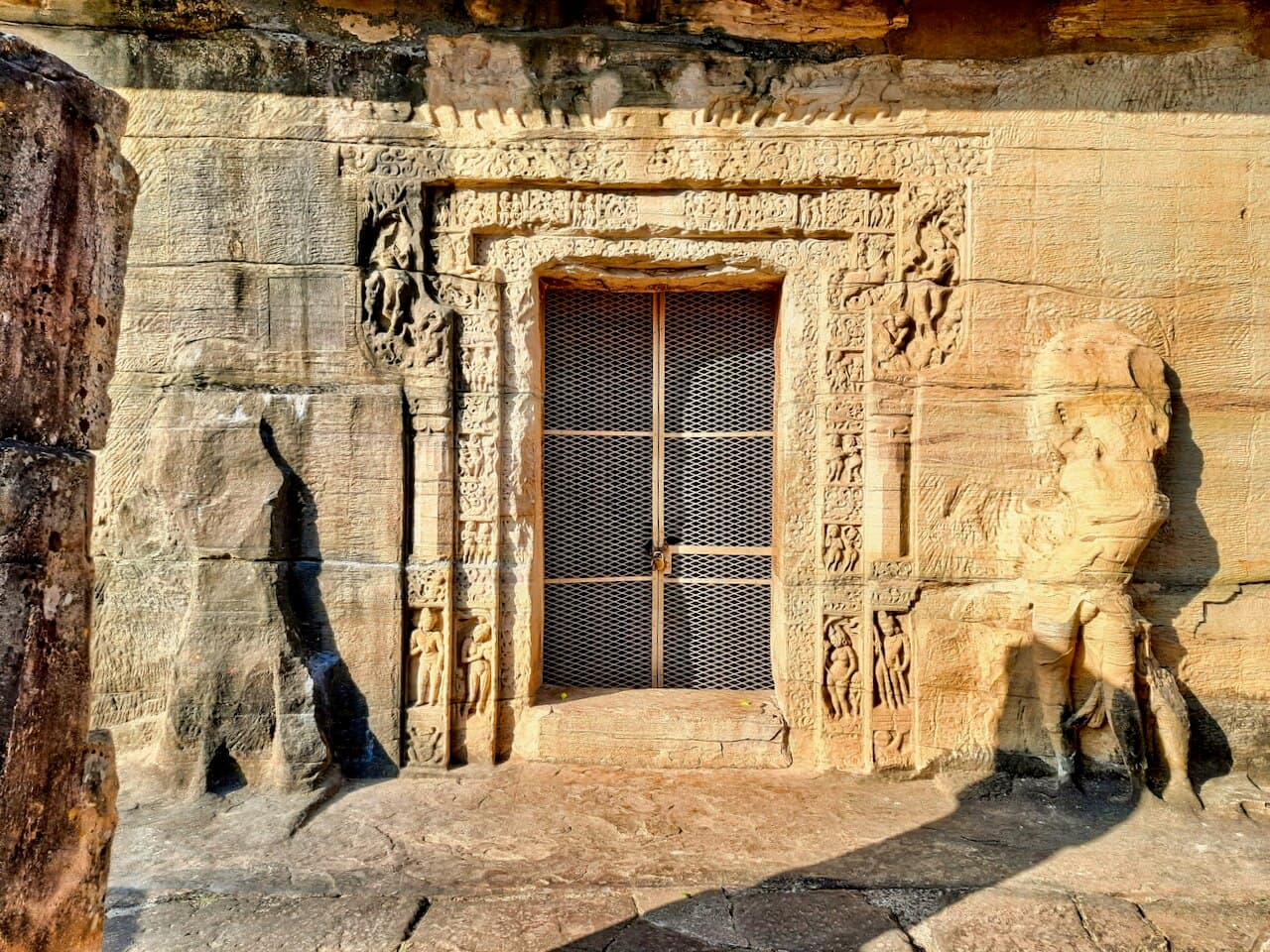
The Iron Pillar's current location in Delhi is not its original home. The inscription suggests it was initially erected at a Vishnu temple on a hill known as Vishnupada-giri, a site scholars have identified with reasonable confidence as Udayagiri in modern Madhya Pradesh. Here, rock-cut temples from the Gupta period dedicated to Vishnu have been preserved, lending credence to this theory. At some point, likely during the conquests of the early Delhi sultans in the 12th or 13th century, the pillar was transported to its present location. It was installed in the courtyard of the Quwwat-ul-Islam mosque, a structure built starting in 1192 CE by Qutb ud-Din Aybak, using materials from demolished temples.
Over the centuries, the pillar has undergone several modifications. The original capital, which likely featured an image of Garuda, Vishnu's eagle mount, has been lost. A flat top now caps the pillar, probably added during its installation in Delhi. Excavations in the 1960s revealed another inscription near the pillar's buried section, indicating a partial repair. The documentary record of the pillar becomes more detailed from the 12th and 13th centuries onwards, as it begins to appear in accounts by European travellers and Persian-language chroniclers. Yet much of its history before this time is pieced together from inscriptions and traditional narratives.
What gives the pillar its later fame
The Iron Pillar's mystique extends beyond metallurgy to cultural lore. A local belief, of uncertain antiquity, claimed that if one could clasp the pillar with their back to it and their arms wrapped around, wishes would be granted. By the late 20th century, this practice had led to noticeable wear on the lower portion of the pillar, with millions of hands polishing its surface. In response, the Archaeological Survey of India erected a fence around the pillar in 1997 to prevent further degradation.
The pillar has also become a potent symbol in Indian heritage. Its image is frequently reproduced in stamps, textbooks, and tourism materials. When the Qutb complex was designated a UNESCO World Heritage site in 1993, the pillar emerged as its focal point. Today, it serves as an educational pilgrimage site for metallurgy students, bridging ancient traditions and contemporary academic inquiry. Few archaeological artefacts capture the intersection of history and modern science as vividly as the Iron Pillar.
Other surviving examples and what the tradition was
The Iron Pillar of Delhi is the most renowned, but it is not an isolated specimen. The Dhar pillar, originally erected in the 11th century in Madhya Pradesh, though now broken, exhibits similar high-phosphorus content and corrosion resistance. The Mookambika temple in Karnataka boasts a smaller pillar of comparable character, and several temples in Konark and Bhubaneswar feature iron beams that have withstood the coastal climate's corrosive effects.
These objects suggest that the knowledge required to produce such iron was concentrated in specific regional guilds. This expertise was transmitted orally and gradually vanished with the advent of European steel imports, which overshadowed indigenous iron production. While modern metallurgists can replicate the chemical composition of these ancient alloys, the exact techniques and craftsmanship involved in their creation remain elusive. The material properties, refined through centuries of practice, are echoed in these enduring relics, yet fully recreating them would demand a temporal span beyond human reach.
In the end, the Iron Pillar endures in the same spot it has occupied since the 13th century, its inscription as clear as it was in the time of Chandragupta II Vikramaditya. The dark patina remains, and the high-phosphorus alloy is unchanged since the early 5th century. The names of the artisans who wrought it are lost to history, as is the visage of the king it honoured. Yet the pillar speaks through its survival—a message from an era long past, standing amidst a city transformed through centuries.
Empires have risen and fallen; languages have evolved. The mosque, built from stones of temples the pillar outlasted, surrounds it. Tourist hands have brushed against its surface, prompting the erection of a protective fence. Through it all, the iron, handled with extraordinary skill by unknown artisans, has held its ground. A column forged 1,600 years ago continues to defy the ravages of time—a statement of human ingenuity and endurance.
References
- Balasubramaniam, R. (2002). Delhi Iron Pillar: New Insights. Indian Institute of Advanced Study, Shimla.
- Balasubramaniam, R. (2000). On the corrosion resistance of the Delhi iron pillar. Corrosion Science, 42(12), 2103–2129.
- Hadfield, R. A. (1912). Sinhalese iron and steel of ancient origin. Journal of the Iron and Steel Institute, 85, 134–186.
- Prakash, B., & Igaki, K. (1984). Ancient iron-making in Bastar district. Indian Journal of History of Science, 19(2), 172–185.


