
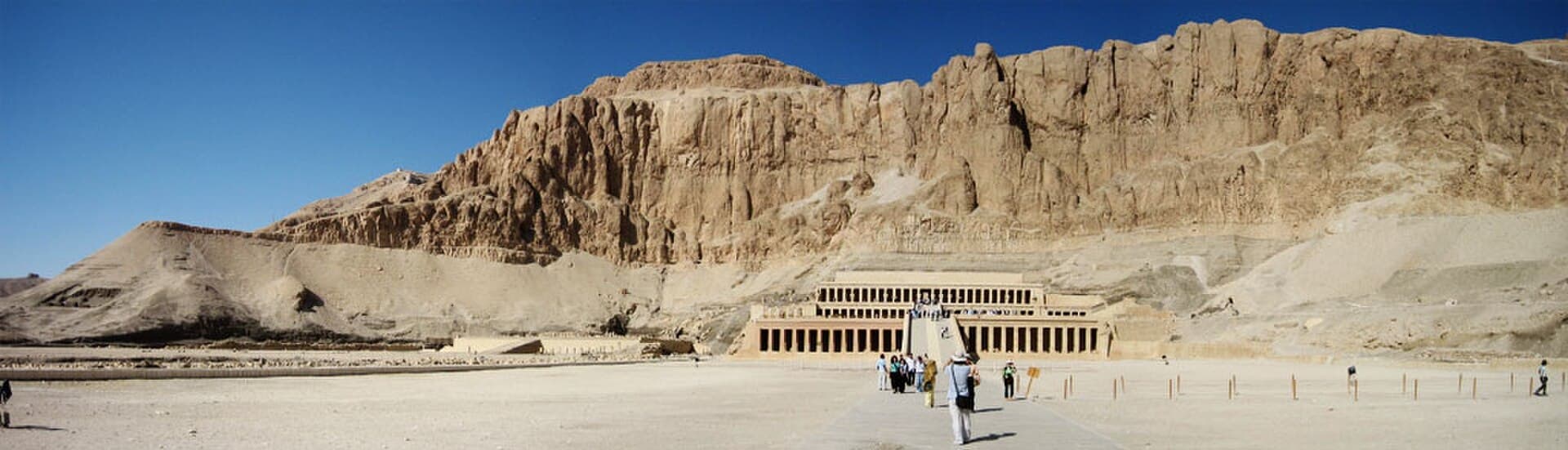
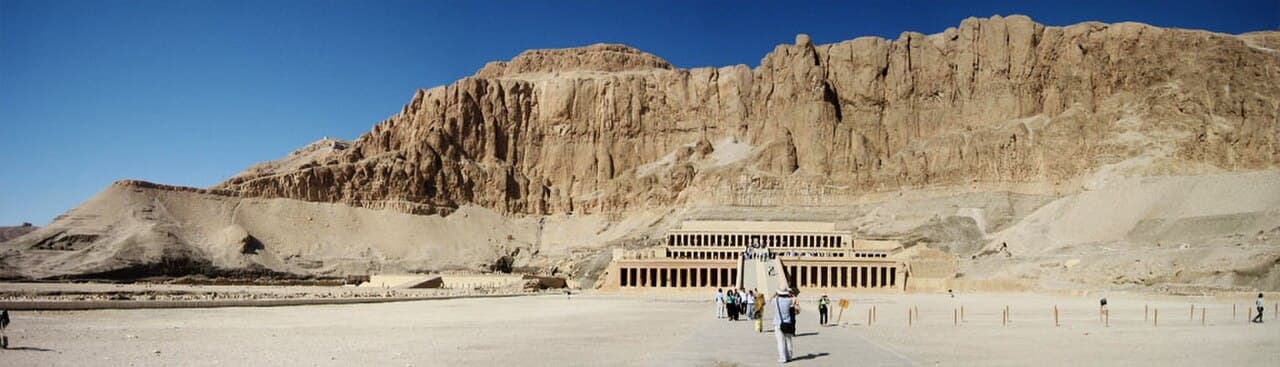
Deir el-Bahari, a majestic site on the west bank of the Nile, commands attention with its impressive architecture. It stands across from Luxor, ancient Thebes, nestled against the stark limestone cliffs. This is the mortuary temple of Djeser-Djeseru, the 'Holy of Holies,' conceived and constructed under the reign of Hatshepsut, the fifth ruler of Egypt's Eighteenth Dynasty. Built between approximately 1479 and 1458 BCE, this temple is a testament to her ambitious reign. Among its most striking features are the three colonnaded terraces that rise in grand succession, each a step toward divinity. Originally, the site boasted hundreds of statues of Hatshepsut, many of which were systematically defaced or destroyed. The obliteration was so thorough that, for centuries, the temple was mistakenly attributed to Tuthmosis III. It wasn't until later excavations and studies, like those by Edouard Naville in the late 19th century, that its true builder was identified.
Who she was
Hatshepsut, whose name translates to 'foremost of noble women,' was born around 1507 BCE. She was the daughter of Tuthmosis I and his Great Royal Wife, Ahmose. As was customary in the royal lineage, Hatshepsut married her half-brother, Tuthmosis II, when she was about 12 years old. Tuthmosis II's reign was notably brief; he died young, likely in his early thirties, leaving the throne to his son by a secondary wife, Tuthmosis III. At the time of his accession, Tuthmosis III was but a child, which necessitated a regency. Hatshepsut stepped into this role with conviction and, over the subsequent years, transitioned from regent to full pharaoh. By taking on the formal regnal titles of a pharaoh, she asserted her authority and ruled alongside Tuthmosis III for approximately 15 to 22 years.
The political landscape of ancient Egypt was such that the ascension of a female pharaoh was highly unusual. Hatshepsut's rise to power demonstrates her adeptness in navigating the intricacies of dynastic politics. Her reign is marked by stability and prosperity, a testament to her administrative capabilities and strategic acumen. Despite her unprecedented role, her daughter Neferure did not follow in her footsteps as heir, illustrating the complexities of royal succession in pharaonic Egypt.
How she ruled
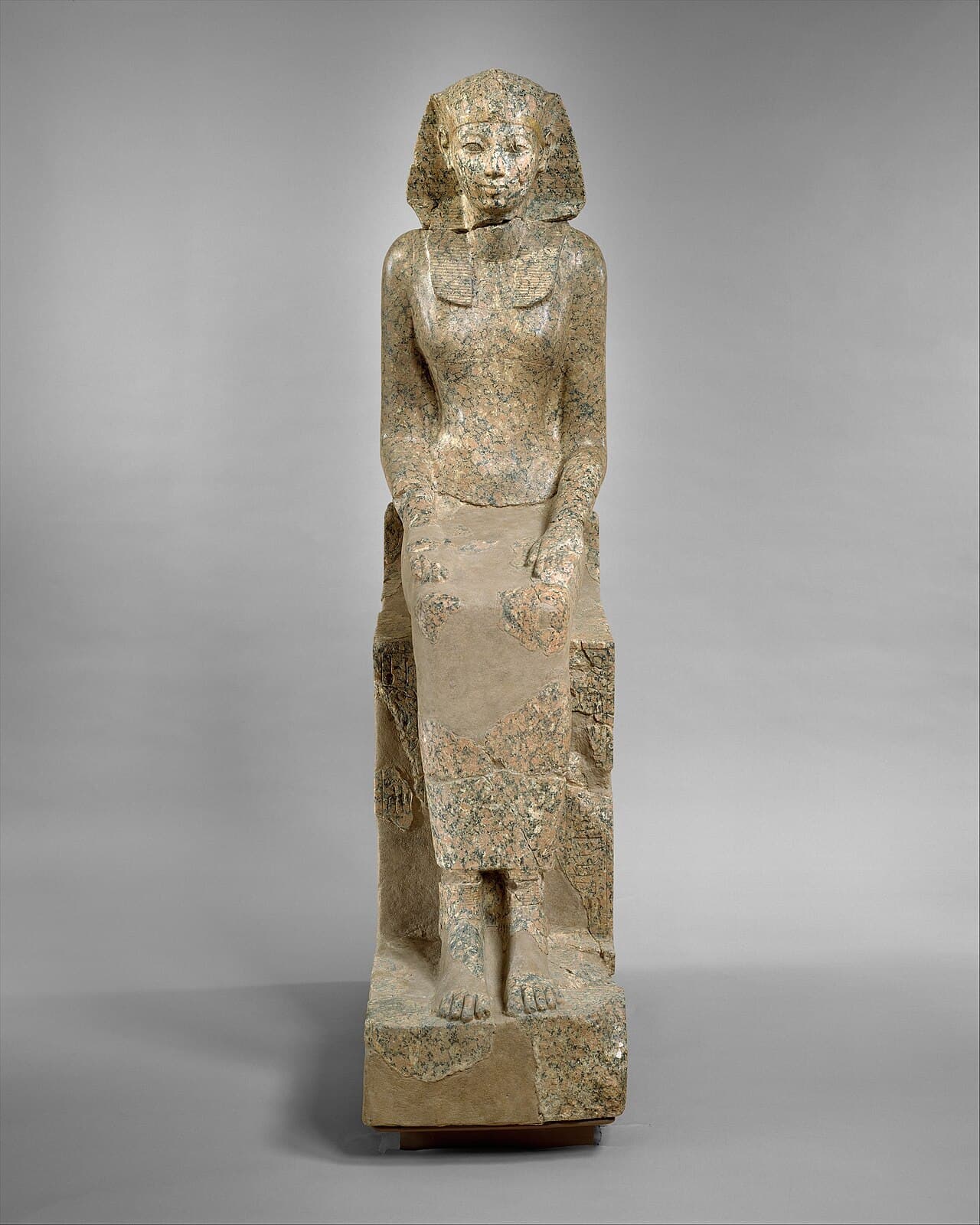
Hatshepsut's rule is vividly encapsulated in her iconography, which has been meticulously studied by scholars. Her statues typically depict her wearing the traditional pharaonic regalia: the false beard, the nemes headcloth, and the shendyt kilt. Her inscriptions frequently alternate between masculine and feminine forms, a conscious strategy to legitimize her pharaohship. This dual representation was not without precedent; Sobekneferu of the Twelfth Dynasty had similarly navigated the gendered expectations of rulership. However, Hatshepsut's portrayal was more elaborately developed, underscoring her unique position in the male-dominated institution of pharaohship.
Egyptological consensus, as elaborated by scholars like Peter F. Dorman, suggests that Hatshepsut adopted male iconography not as a matter of personal preference, but as a means of institutional necessity. The pharaoh was traditionally male, and in presenting herself within this established framework, she was able to command the same respect and authority as her male predecessors and contemporaries. This dual representation was an astute political manoeuvre that reinforced her legitimacy as a ruler.
The Punt expedition
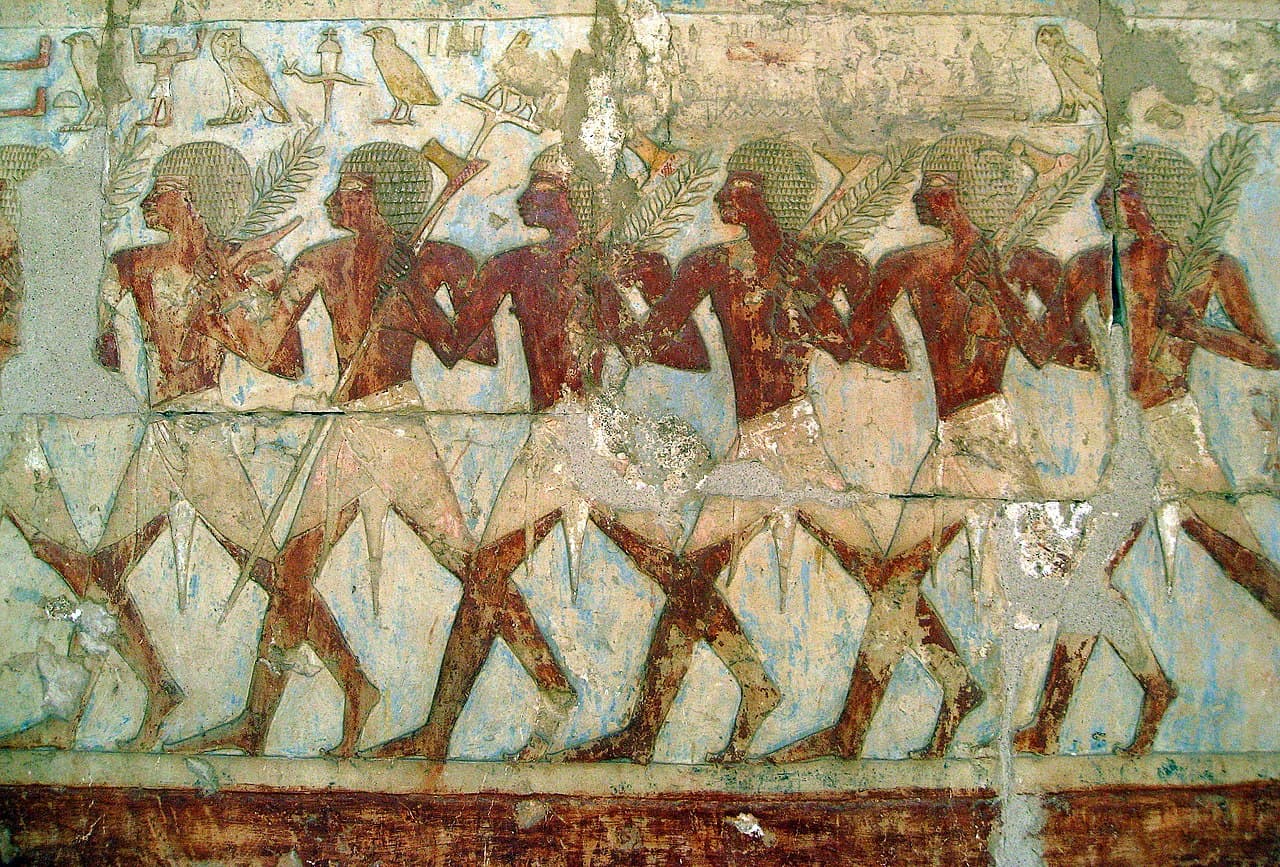
One of Hatshepsut's most celebrated achievements was the trading expedition to the Land of Punt, vividly immortalized in reliefs on the middle terrace of her temple at Deir el-Bahari. This journey, as recorded, brought back an array of exotic goods, including myrrh trees, which were replanted in the temple's gardens, gold, ivory, ebony, baboons, and leopard skins. The reliefs offer a unique glimpse into the geographical and cultural exchanges of the time, depicting the distinctive stilt houses of Punt and the queen of Punt herself, whose physique suggests a possible medical condition.
The exact location of Punt remains a matter of scholarly debate, but prevailing theories place it in the region of present-day Eritrea or Somalia. This expedition is particularly significant as it represents one of the earliest recorded examples of long-distance trade contact between the Nile civilisation and the southern Red Sea coast. The wealth of goods acquired from Punt not only enriched Egypt materially but also underscored Hatshepsut's diplomatic and economic prowess. These accomplishments reinforced her status as a ruler who expanded Egypt's horizons through trade, rather than through conquest.
The buildings
Beyond her famed mortuary temple, Hatshepsut embarked on an ambitious building programme that left an indelible mark on Egypt's architectural landscape. At Karnak, she commissioned the erection of two obelisks, the taller of which stood nearly 30 metres high. This obelisk remains standing today, a monumental achievement considering the technical challenges involved in its construction and transportation. The inscriptions boast that the obelisks were quarried, transported from Aswan, and erected in a mere seven months—a testament to her organisational efficiency.
Hatshepsut's contributions to the Karnak temple complex included the construction of a 'red chapel' and extensive work on a mortuary temple known as the Akh-menu, which was later expanded by Tuthmosis III. Her architectural legacy is remarkable for its ambition and scope, rivalling that of any male pharaoh of the Eighteenth Dynasty. The surviving structures reflect not only her dedication to the gods but also her desire to immortalise her reign through stone—a medium as enduring as her influence on Egyptian history.
The erasure
Hatshepsut's death around 1458 BCE marked the end of her two-decade-long co-regency with Tuthmosis III, who then ruled alone for an additional 33 years. Yet, it was not until approximately 20 years into his solo reign that Tuthmosis III initiated a systematic campaign to erase Hatshepsut's legacy. This campaign involved chiselling out her cartouche and images from major monuments, including those at Karnak and Deir el-Bahari, where her statues were smashed and hidden in pits. These pits were later excavated by the Metropolitan Museum of Art's team, which led to the recovery and partial reassembly of these artifacts.
The erasure campaign was comprehensive, but not absolute. Enough remnants of Hatshepsut's reign survived to allow modern Egyptologists, like those contributing to the comprehensive study edited by Cathleen A. Roehrig, to piece together her story. The campaign to obscure her achievements was thorough enough that her name was omitted from subsequent kings' lists, an exclusion that contributed to her historical obscurity until recent times. Yet, the irony remains: the very efforts to erase her have paradoxically ensured her name endures in the annals of history.
Why he did it
The motives behind Tuthmosis III's erasure of Hatshepsut have long intrigued historians. Earlier theories suggested a personal vendetta, positing that Tuthmosis III harboured resentment toward his stepmother-regent. However, contemporary scholarship, including the work of Peter F. Dorman, offers a more nuanced explanation that focuses on dynastic legitimacy. By the time the erasure campaign began, Tuthmosis III's son, Amenhotep II, was preparing for succession, and the presence of a female pharaoh in the recent lineage complicated the traditional male-pharaoh legitimacy that was crucial for Amenhotep II's undisputed claim to the throne.
The erasure was not a mere act of revenge but a deliberate institutional strategy to cleanse the royal annals of any ambiguity regarding pharaohship. By removing Hatshepsut from the records, Tuthmosis III sought to reinforce the patriarchal paradigm essential for his son's acceptance as the rightful heir. This institutional necessity underscores the complexities of legitimacy and succession in the pharaonic era, where the presentation of a seamless dynastic continuity was paramount.
In 2007, the identification of a mummy in KV60, a small tomb in the Valley of the Kings, added a poignant chapter to Hatshepsut's story. Zahi Hawass's team, using advanced techniques like CT scans and DNA analysis, matched a tooth from a box bearing Hatshepsut's cartouche to the mummy, strongly indicating it was indeed her. The remains revealed a woman in her fifties, plagued by diabetes, advanced osteoarthritis, and probable metastatic bone cancer. Her physical ailments, preserved through millennia, contrast starkly with the systematic erasure of her name—a duality that underscores the complexity of her legacy.
The mummy's identification restored Hatshepsut's place in the historical narrative, affirming her as one of Egypt's most influential rulers. Despite efforts to obliterate her memory, her story endures, a testament to the enduring human fascination with history and the individuals who shape it. Her restored visage, now residing in the Egyptian Museum in Cairo, invites reflection on power, legacy, and the inexorable passage of time.
References
- Roehrig, C. H. (Ed.). (2005). Hatshepsut: From Queen to Pharaoh. Metropolitan Museum of Art.
- Dorman, P. F. (2005). The proscription of Hatshepsut. In Roehrig (ed.), Hatshepsut: From Queen to Pharaoh, 267–269.
- Hawass, Z., et al. (2007). The identification of the mummy of Hatshepsut. SCA Press Release, 27 June 2007.
- Naville, E. (1894-1908). The Temple of Deir el Bahari. Egypt Exploration Fund (6 vols).


