

In the highlands of Yemen, within the austere walls of a Sufi monastery, a group of devoted mystics gathered to drink a peculiar brew. It was the mid-15th century, and these monks were engaged in lengthy nocturnal vigils, reciting sacred texts and engaging in spiritual practices that required both focus and endurance. This drink, known as qahwa, was central to their rituals. It provided a stimulant effect that supported their devotion. The earliest known documentation of coffee's use in such religious contexts comes from the writings of Al-Dhabhani, a mufti from Aden, who died around 1470. By the time the fanciful tale of the Ethiopian goatherd Kaldi reached the pages of European books two centuries later, coffee had already secured a fundamental place in the spiritual life of Sufi communities across the Islamic world.

What coffee actually is
Coffee, in its botanical origins, begins with Coffea arabica, a small tree native to Ethiopia's highlands. This plant, likely cultivated no more than a few centuries before the Sufi adoption, produces berries encasing the seeds we recognise as coffee beans. These seeds undergo a transformative process: drying, roasting, grinding, and finally brewing to release their distinctively aromatic beverage. At its heart, the allure of coffee lies in caffeine, an alkaloid that the plant evolved as a natural pesticide. Among the myriad Coffea species, only two have risen to commercial prominence—arabica and the more robust robusta. These species together account for essentially all coffee consumed globally.
The arabica tree, demanding in its growing conditions, requires specific altitudes and climates, thus originally tying its cultivation to Yemen and Ethiopia. In contrast, robusta, thriving at lower altitudes and in warmer climates, emerged later as a significant commercial variety due to its resilience and higher caffeine content. The robusta bean, though often perceived as inferior in flavour, plays a crucial role in the coffee industry, particularly in instant coffee production and as a component in espresso blends. Yet, it is arabica that captivates most coffee aficionados, celebrated for its complex flavours and aromatic nuances.
The Yemeni century
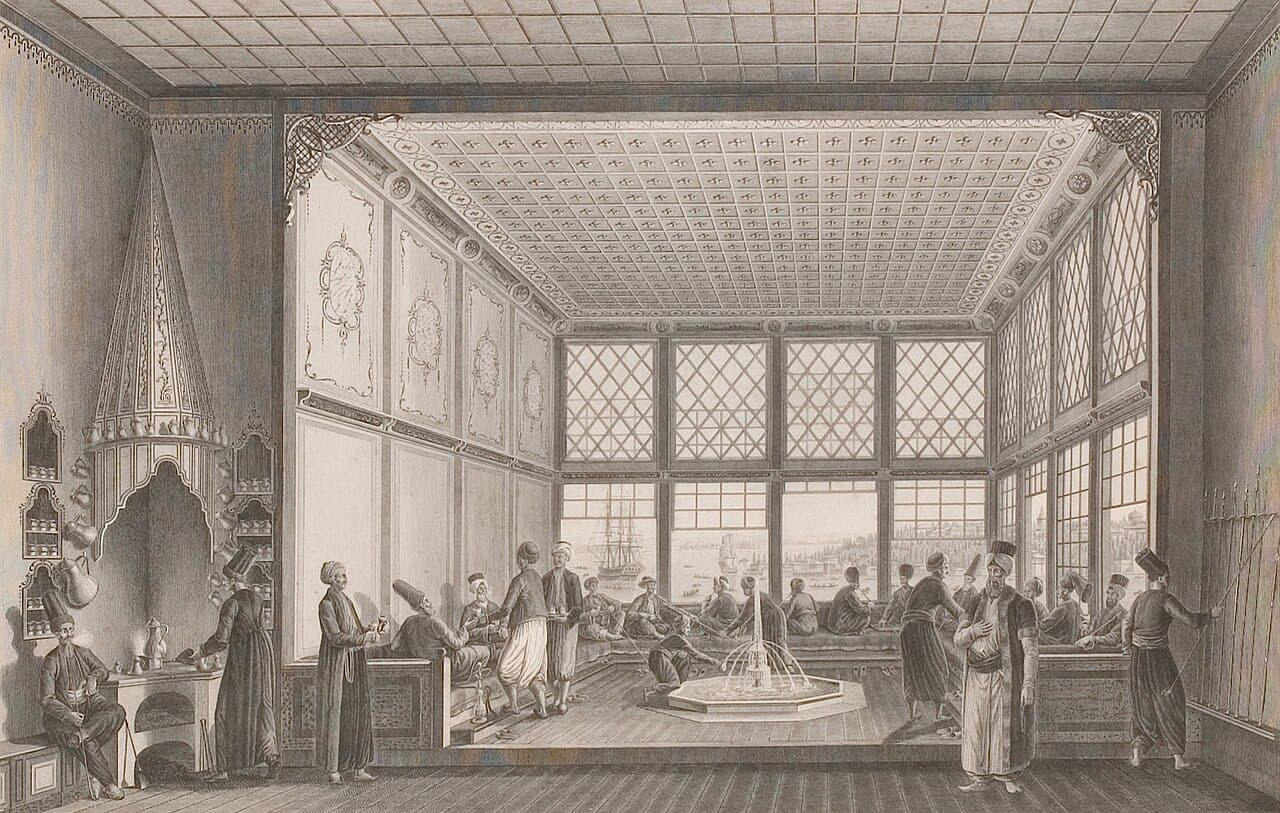
From the late 1400s through the 1600s, Yemen was the unrivalled epicentre of coffee cultivation and trade. Mocha, the famed port city nestled on Yemen's coast, became synonymous with high-grade coffee—a legacy preserved in the term 'mocha' still used to describe certain coffees and chocolate-flavoured drinks. The Ottoman Empire's incorporation of Yemen in 1538 marked a turning point. Coffee soon found its way to Istanbul, the imperial capital, where it gained popularity at an astonishing pace. By 1554, the city had witnessed the establishment of its first coffeehouses, known as kahve hane.
These coffeehouses quickly became integral to urban life, serving as more than mere places for coffee consumption. They emerged as vibrant venues for social interaction, intellectual discourse, and political conversation. Recognising the potential for dissent and subversive activity, the authorities often kept a watchful eye on these establishments. Nonetheless, the kahve hane thrived, spreading the coffee culture across the Ottoman Empire and laying the groundwork for the coffeehouse tradition that would later take root in Europe. This period, often referred to as the "Yemeni century" of coffee, established the foundation for its global proliferation.
The arrival in Europe
The journey of coffee into Europe began through Venice, a bustling nexus of trade with the Ottoman world in the early 1600s. Its arrival was met with both fascination and suspicion. Pope Clement VIII, when urged to denounce coffee as an "infidel's drink," famously sampled it and reportedly declared it too delightful to be left exclusively to non-Christians—a testament, perhaps more to apocryphal legend than historical fact, but illustrative of coffee's early reputation. By the mid-17th century, coffeehouses had sprung up in Oxford and London, serving as the intellectual and social hubs for a burgeoning coffee culture.
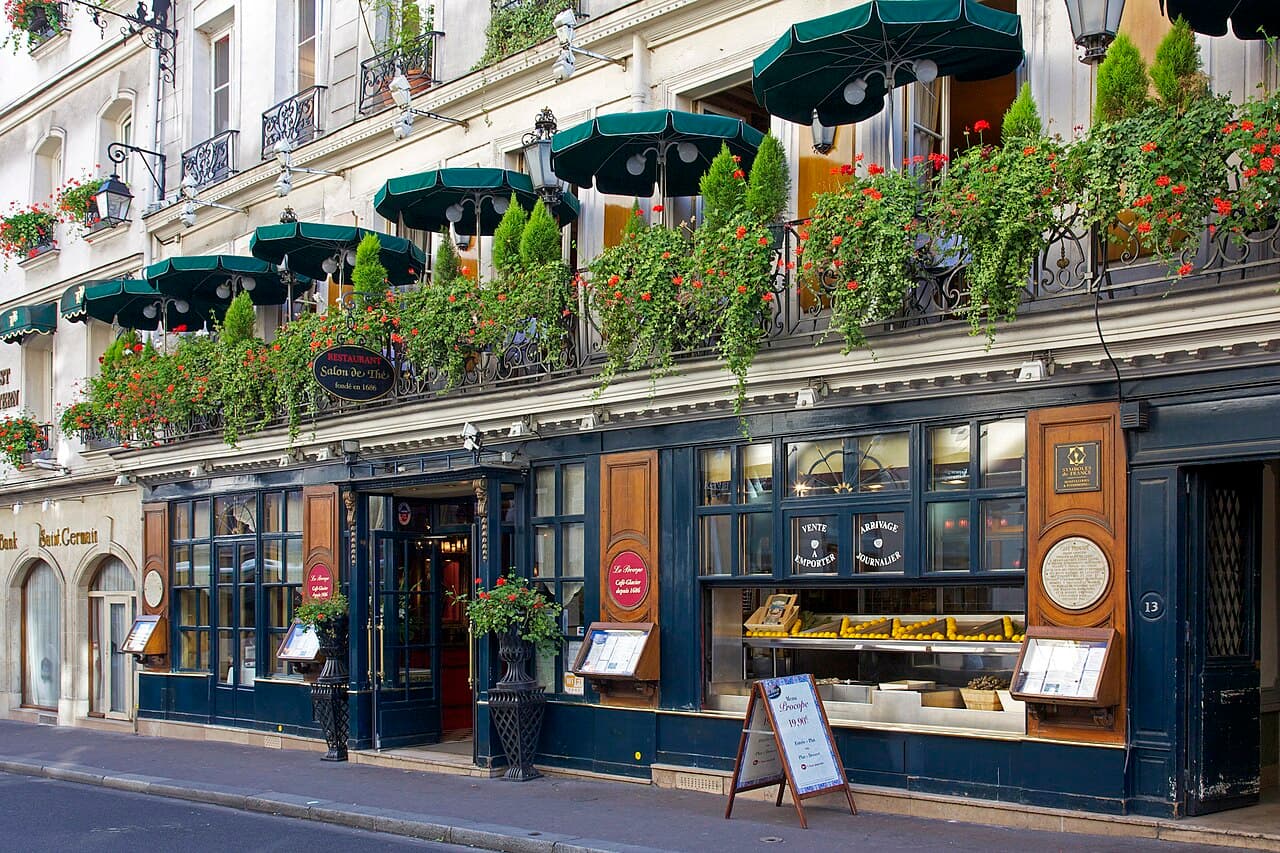
Vienna's introduction to coffee is often linked to the failed Ottoman siege of 1683. Though the tale of Viennese discovering abandoned sacks of coffee beans is largely myth, the city's coffee culture did indeed take hold in that decade. Paris soon followed, with the Café Procope opening its doors in 1686—a venue that remains in operation today, offering a tangible link to the early European coffee scene. These establishments drew a diverse clientele, from scholars to merchants, all seeking the vibrant exchange of ideas in the stimulating atmosphere that coffeehouses provided. They became crucial in the development of modern public discourse.
Coffeehouses and politics
The European coffeehouse quickly became an institution analogous to its Ottoman predecessor, yet distinct in its sociopolitical implications. By the 1670s, London alone boasted an estimated 3,000 coffeehouses, many organised around specific trades and professions. Edward Lloyd's coffeehouse, for example, evolved into Lloyd's of London, the renowned insurance market. The Stock Exchange similarly traces its roots to these bustling venues. However, not everyone viewed the coffeehouse favourably. In 1675, King Charles II issued a proclamation to ban coffeehouses, citing them as "places where the disaffected met"—a thinly veiled acknowledgment of their role in fostering political dissent.
The attempt to suppress these spaces, however, was short-lived. Public backlash against the ban was immediate and intense, forcing its withdrawal after just eleven days. This period of political tension underscored the coffeehouse's place as a crucible for public debate, a status it retains in various forms even today. The coffeehouses of this era were indeed the incubators of Enlightenment thought, where ideas were exchanged as freely as the cups of coffee that fuelled them. As Brian Cowan details in "The Social Life of Coffee," these establishments were instrumental in shaping the modern world, influencing everything from journalism to stock trading.
The plantation problem
The 18th century ushered in a darker chapter in the history of coffee, as European powers sought to break Yemen's monopoly. The Dutch were among the first, successfully smuggling coffee plants to their colonies in Ceylon and Java, establishing a new source for the burgeoning demand. Similarly, the French transported coffee plants to the Caribbean, setting in motion a cascade of agricultural expansion that would lead to coffee's dominance in the New World. The culmination of this era was Brazil, whose vast tracts of land and optimal growing conditions positioned it to become the world's foremost coffee producer.
Yet, this expansion was inextricably linked to the exploitation of enslaved labour. Brazilian plantations, notorious for their size and brutality, became one of the largest consumers of enslaved African workers. This system of forced labour underpinned Brazil's coffee boom, with slavery persisting in the country until 1888, decades after other nations had abolished the practice. The legacy of this era is a coffee market steeped in the injustices of its colonial past—a subject thoroughly examined by Topik and Clarence-Smith in "The Global Coffee Economy in Africa, Asia, and Latin America, 1500–1989." Today’s coffee industry, while vastly transformed, still grapples with the socio-economic disparities that are a direct consequence of this history.
Coffee stands today as the second-most-traded commodity on Earth, surpassed only by crude oil. Its journey from the Sufi monasteries of Yemen to the ubiquitous presence in our kitchens is a narrative that intertwines with colonialism, commerce, and culture. Approximately 30 million people now work in coffee production, with smallholders in Brazil, Vietnam, Colombia, Ethiopia, and Indonesia forming the backbone of the industry. The Sufi monks who first brewed coffee for their nocturnal devotions would likely recognise the essence of the drink in our cups, yet the global supply chain that delivers it would be beyond their imagination.
The history of coffee is not merely a chronicle of a beverage but a reflection of human endeavour, conflict, and collaboration. Understanding this past enriches our appreciation of what might otherwise be a mundane part of daily life. It is not about guilt but about awareness—an awareness that sharpens the perception of our ordinary mornings, reminding us that each cup carries within it centuries of human history.
References
- Hattox, R. S. (1985). Coffee and Coffeehouses: The Origins of a Social Beverage in the Medieval Near East. University of Washington Press.
- Pendergrast, M. (2010). Uncommon Grounds: The History of Coffee and How It Transformed Our World, 2nd edition. Basic Books.
- Cowan, B. (2005). The Social Life of Coffee: The Emergence of the British Coffeehouse. Yale University Press.
- Topik, S., & Clarence-Smith, W. G. (Eds.). (2003). The Global Coffee Economy in Africa, Asia, and Latin America, 1500–1989. Cambridge University Press.


