
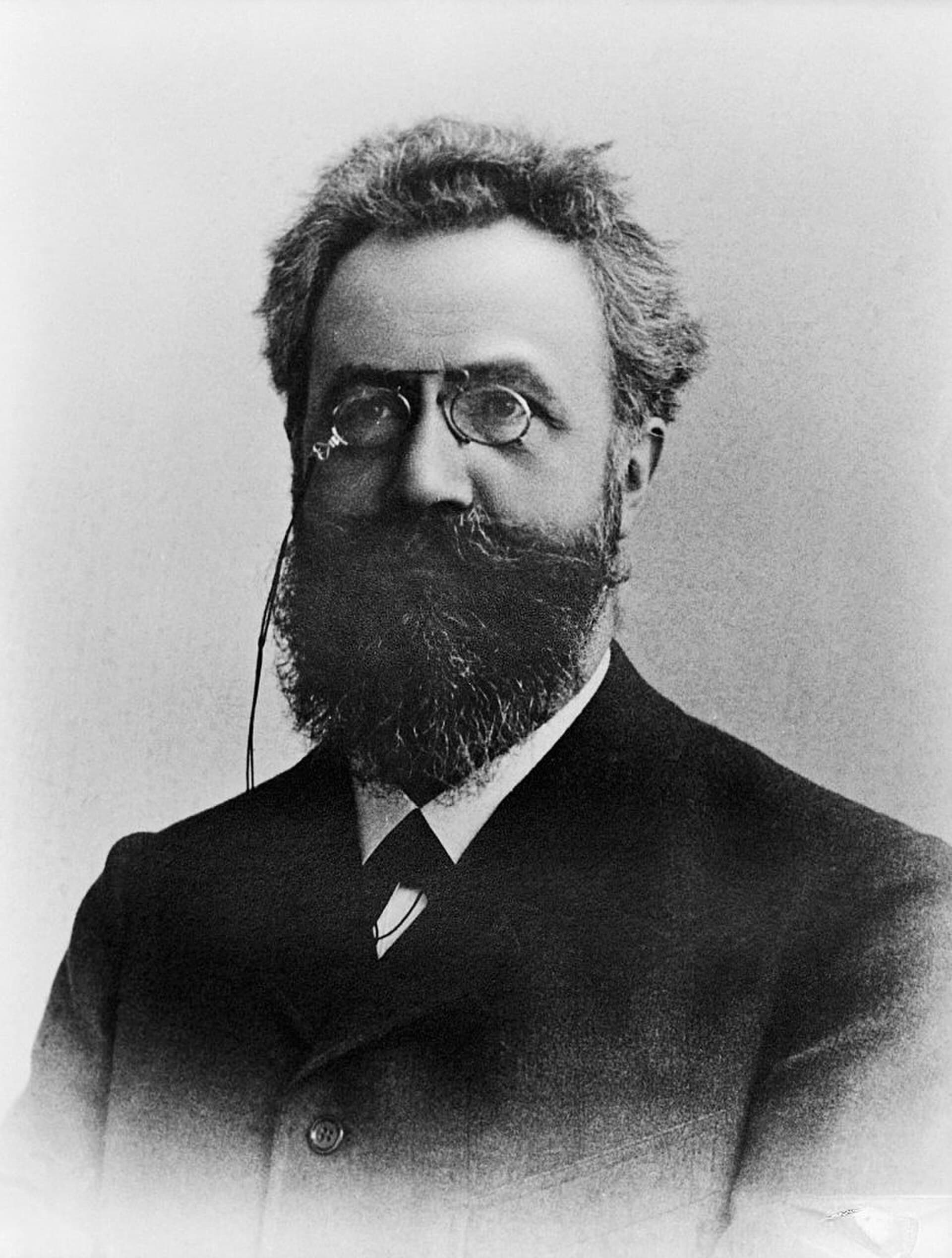
Tuesday was a peculiar day: I learned a word, 'velleidad', a fleeting term describing a faint desire not strong enough to lead to action. By Friday, my mind was a blank slate. This transient acquaintance with vocabulary is a familiar tale for many, and it echoes the findings of Hermann Ebbinghaus. In 1885, Ebbinghaus published 'Über das Gedächtnis', illuminating the nature of our forgetfulness with his famous forgetting curve. It is an elegant, though initially depressing, graph: a steep drop in memory retention in the first twenty-four hours after learning, with the decline tapering off as time progresses. The curve shows that our brains are not, unfortunately, steel traps for information. Instead, they are more like sieves, and without intervention, information tends to slip away.
What Ebbinghaus actually showed
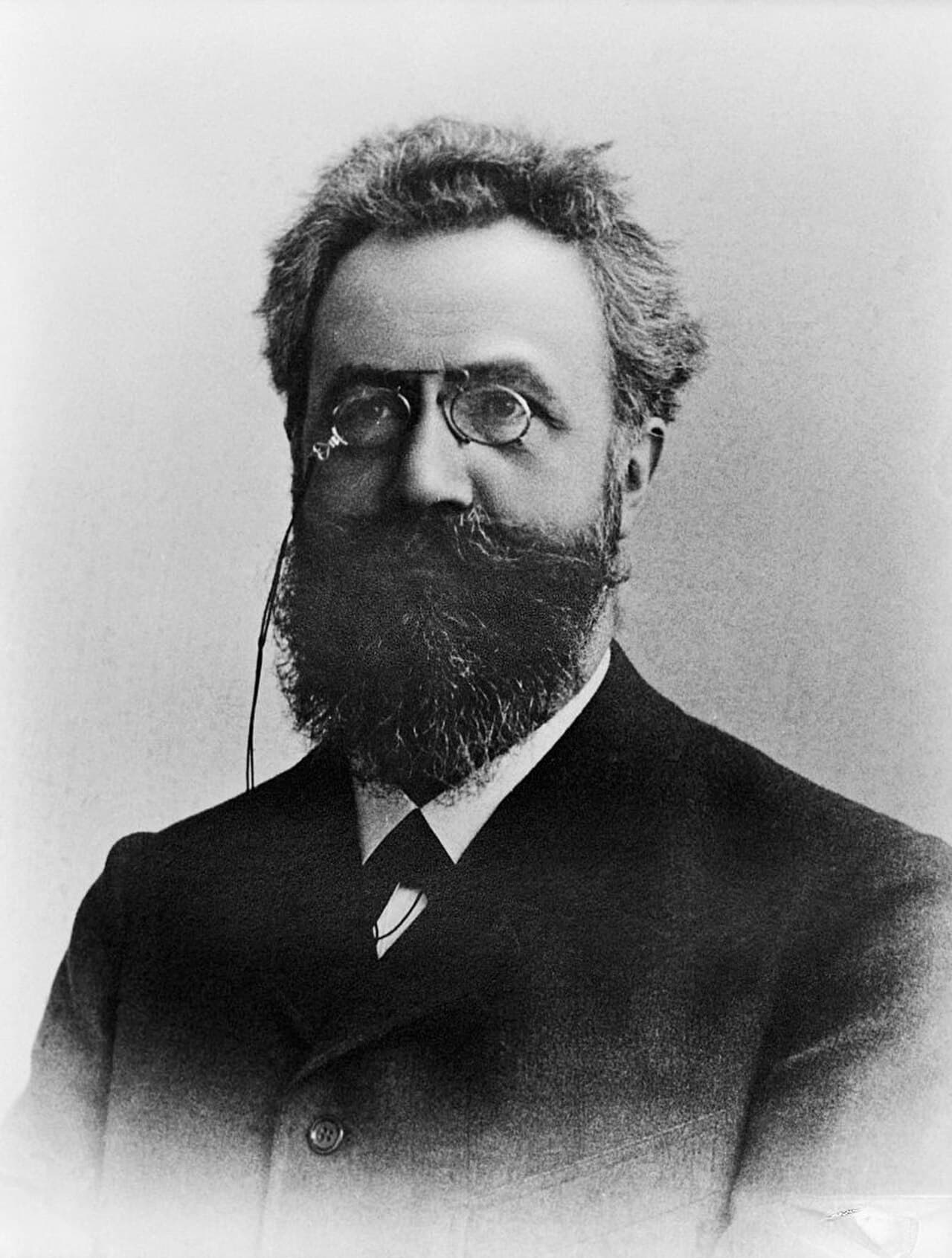
Ebbinghaus's pioneering work wasn't conducted in the grand halls of a university laboratory, but in the modest confines of his own study. He was his sole subject, methodically memorizing strings of nonsensical syllables—'zod', 'quf', 'bin'—crafted to avoid any prior associations that might aid his memory. His aim was to discern the natural mechanisms of forgetting, unclouded by the influence of meaning. The results were stark and illuminating. Using his 'savings method', Ebbinghaus calculated how much faster he could relearn these syllables compared to the initial learning session, thus quantifying memory retention over time.
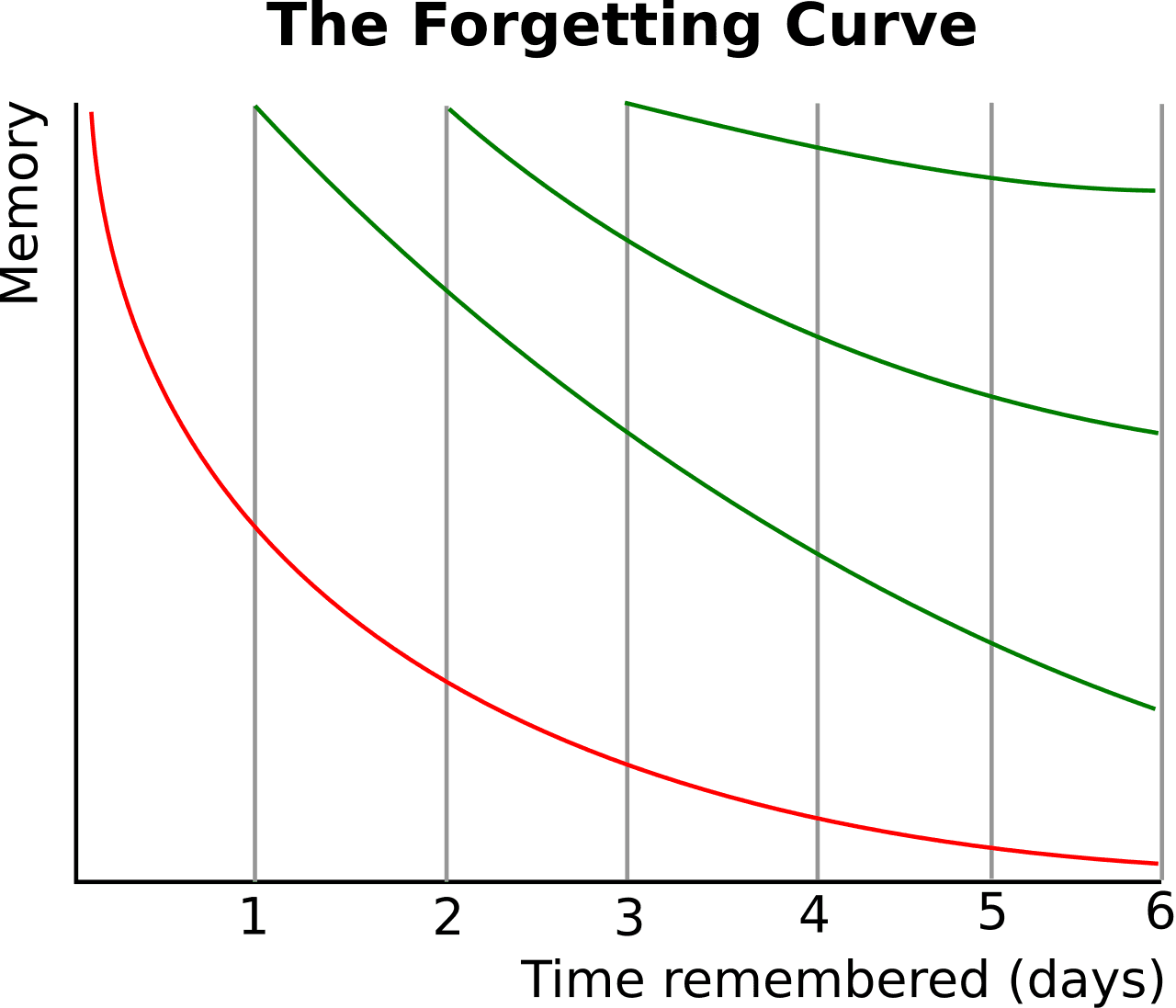
The curve he plotted was steep: after just one day, he retained less than half of what he had learned, with further decay happening over subsequent days, though at a slower rate. This pattern suggested that while we lose information rapidly, the rate of forgetting decreases as time goes on. The implications were clear, even if not immediately actionable: any strategy to improve memory retention would need to account for this precipitous decline. Ebbinghaus's work laid a critical empirical foundation that continues to inform memory research today, even if his syllables now seem quaint amidst our digital tools.
Why repetition has to be spaced, not massed
The concept of 'desirable difficulties', championed by Robert Bjork, offers a compelling explanation for why spacing repetition aids memory far more effectively than massed learning. Desirable difficulties are those conditions of learning that introduce a beneficial struggle—think of them as a kind of cognitive resistance training. When retrieval becomes slightly effortful, as it does when time elapses between study sessions, the act of recalling information strengthens memory traces. This is in contrast to massed practice, where immediate repetition might feel productive but does not lead to long-term retention.

This principle is vividly illustrated in a study by Roediger and Karpicke in 2006, which compared students who engaged in repeated retrieval through testing with those who simply reread material. After a week, those who had tested themselves remembered significantly more than those who had only engaged in review. The act of retrieval, they demonstrated, functions as a potent learning event in itself, underpinning the logic behind spaced repetition systems. Such systems exploit the natural decline in memory as an opportunity for reinforcement, ensuring that each review session is optimally challenging.
What modern SRS algorithms actually do
The evolution of spaced repetition systems (SRS) has travelled from the simple SuperMemo-2 algorithm, developed by Piotr Woźniak, to the more complex models like FSRS. The genius of these systems lies not in an overwhelming complexity, but in their unspectacular, yet effective, ability to predict when you are likely to forget an item. SuperMemo-2, for example, uses a straightforward formula: each card has an associated difficulty multiplier, which adjusts the interval between reviews. If you recall the card successfully, the interval increases exponentially; if you fail, it shortens dramatically.
FSRS, the current state-of-the-art algorithm, builds upon these principles with refined predictions and adaptations to individual learning patterns. It takes into account the variability of forgetting across different contexts and adjusts accordingly. This personalised approach ensures that reviews are scheduled at the optimal moment—just as the memory trace is beginning to weaken, but not yet lost. By doing so, these systems maximise learning efficiency and retention with minimal study time, turning the Ebbinghaus curve into a more manageable slope.
Where Anki users most often go wrong
Despite the prowess of spaced repetition systems, users often stumble due to misconceptions or misapplications of the method. One common error is creating cards that are too long. Spaced repetition shines with discrete, clear facts or word meanings, but falters when confronted with lengthy paragraphs or complex explanations. Users may also select vocabulary that lacks context—detached from meaningful use, such words become floating trivia rather than integrated knowledge.
Moreover, employing SRS for tasks it isn't designed to tackle leads to inefficiencies. While it's superb for memorising single facts or vocabulary, it's not built for mastering complex grammatical patterns or full-sentence comprehension. These skills demand a different approach—immersion, production, and nuanced understanding that SRS cannot provide. Recognising the limits of spaced repetition, and aligning its use with its strengths, ensures that learners harness its true potential without frustration.
What spaced repetition cannot do for you
Spaced repetition is a tool honed for recognition, not production. This distinction is crucial: while an SRS can track when you've recognised a word or fact, it does not measure your ability to produce language actively. The result is a familiar shape in language learning—a burgeoning passive vocabulary with little capacity to articulate thoughts in the target language. Hours spent with Anki can inflate your knowledge of words, but without speaking or writing, this knowledge remains dormant.
This passive-active gap is the undoing of many diligent learners. Language, after all, is not merely about recognising words; it's about using them to communicate. Spaced repetition can support the foundational stages of learning by embedding core vocabulary and facts into long-term memory. However, bridging the gap to active usage requires stepping away from the algorithm and engaging with the language in its living, breathing form—conversation, writing, and spontaneous expression. This is where the real transformation from learner to speaker occurs.
To make spaced repetition work for you, consider a practical approach: focus on creating concise cards with a single word on the front and a clear, single meaning on the back. Start with twenty cards a day, a manageable number that ensures depth of learning without overwhelming your schedule. Hand-type these from materials you personally find engaging or relevant—texts that pique your interest or relate to your goals. The discipline lies not in the algorithm but in the thoughtful selection of what you choose to learn.
References
- Ebbinghaus, H. (1885). Über das Gedächtnis. (Memory: A Contribution to Experimental Psychology, English trans. 1913.)
- Roediger, H. L., & Karpicke, J. D. (2006). Test-enhanced learning. Psychological Science, 17(3), 249–255.
- Bjork, R. A., & Bjork, E. L. (2011). Making things hard on yourself, but in a good way. In M. A. Gernsbacher (Ed.), Psychology and the real world.
- Woźniak, P. A. (1990). Optimization of learning. M.Sc. Thesis (the basis of SuperMemo-2).
- Open Spaced Repetition / FSRS algorithm documentation.


