A sparrow flits to a stop outside your window, its tiny heart fluttering beneath feathers that shimmer in the morning light. This inconspicuous bird is a living dinosaur, a statement that rests not in hyperbole but in cladistic precision. Observe its wishbone, that forked bone known to paleontologists as the furcula, which aids in flight dynamics — a structure first seen in non-avian theropods. Consider its four-chambered heart, a hallmark of efficient blood circulation, and its hollow bones that lighten its body for flight. These features, alongside its beak replacing teeth, its hard-shelled eggs, and its unique respiratory system, all hark back to its distant ancestors — the theropod dinosaurs. In a strict biological sense, birds are not descendants of dinosaurs in a mere past tense; they are living members of the clade Theropoda, a subgroup of Dinosauria. Thus, when we speak of birds as dinosaurs, we do so with the same clarity that identifies a human as a mammal or a primate.
How we got to this conclusion
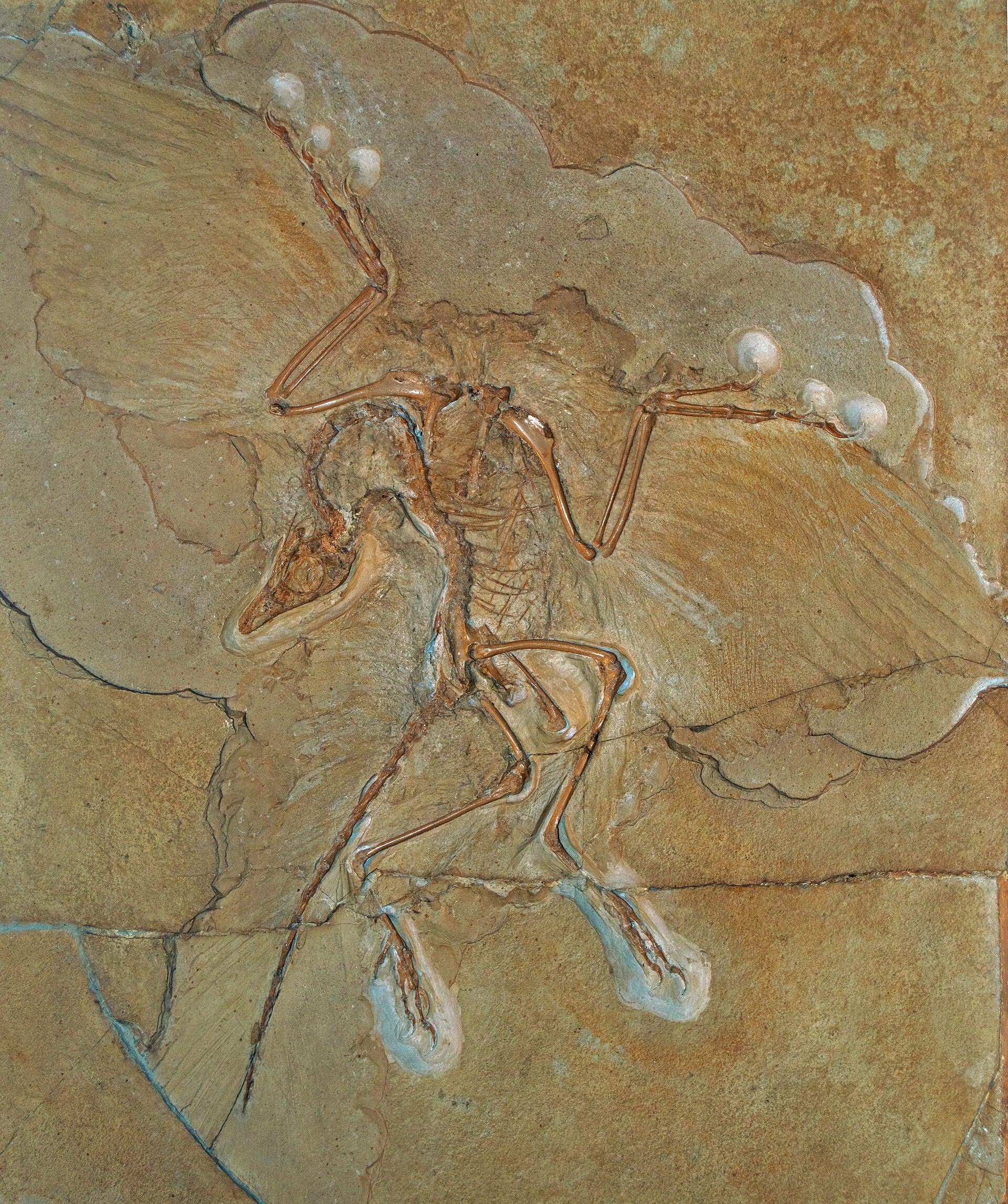
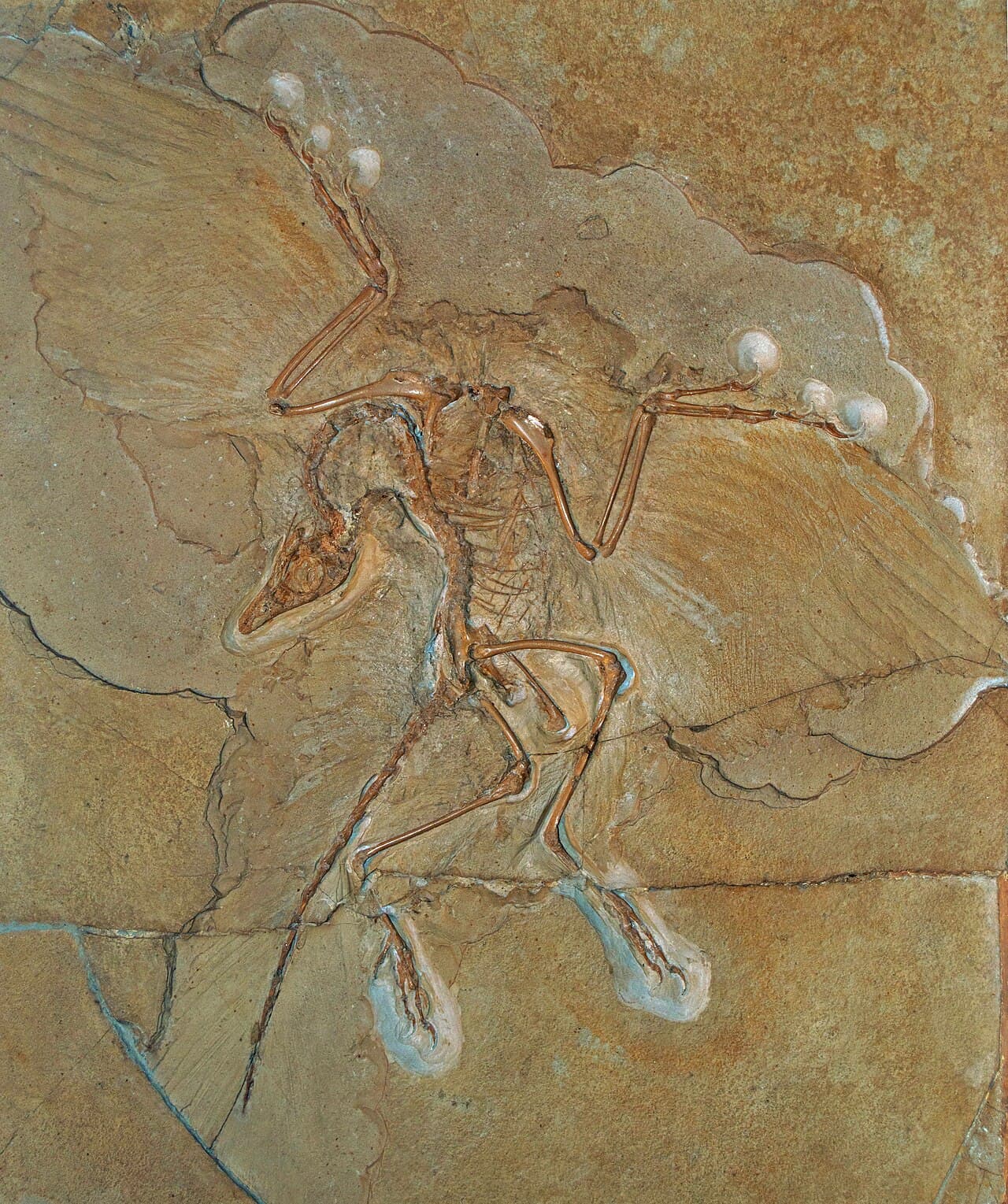
The hypothesis that birds are dinosaurs has been over a century in the making, first brought into scientific discourse by Thomas Henry Huxley in the 1860s. Huxley, an ardent supporter of Darwin's theory of evolution, was struck by the skeletal similarities between birds and certain reptiles. His attention was particularly drawn to Archaeopteryx, a fossil discovered in 1861 in the Solnhofen limestone, which bore the unmistakable hallmarks of both avian and reptilian anatomy. In 1868, Huxley audaciously proposed that birds had descended from dinosaurs, a suggestion that was met with skepticism and debate for nearly a hundred years.
It wasn't until the 1970s that the hypothesis regained traction, largely due to the work of John Ostrom on a theropod dinosaur named Deinonychus. Ostrom's meticulous studies of this turkey-sized predator revealed a host of features previously thought unique to birds: hollow bones, a three-fingered hand, an S-shaped neck, and a pelvis structured for bipedal locomotion. These findings, documented in Ostrom's influential 1976 paper 'Archaeopteryx and the origin of birds', fueled the resurgence of the bird-dinosaur link. By the 1990s, comprehensive cladistic analyses had synthesized the fossil evidence into a coherent model, making the classification of birds as theropod dinosaurs an inescapable conclusion.
The feathered dinosaur revolution
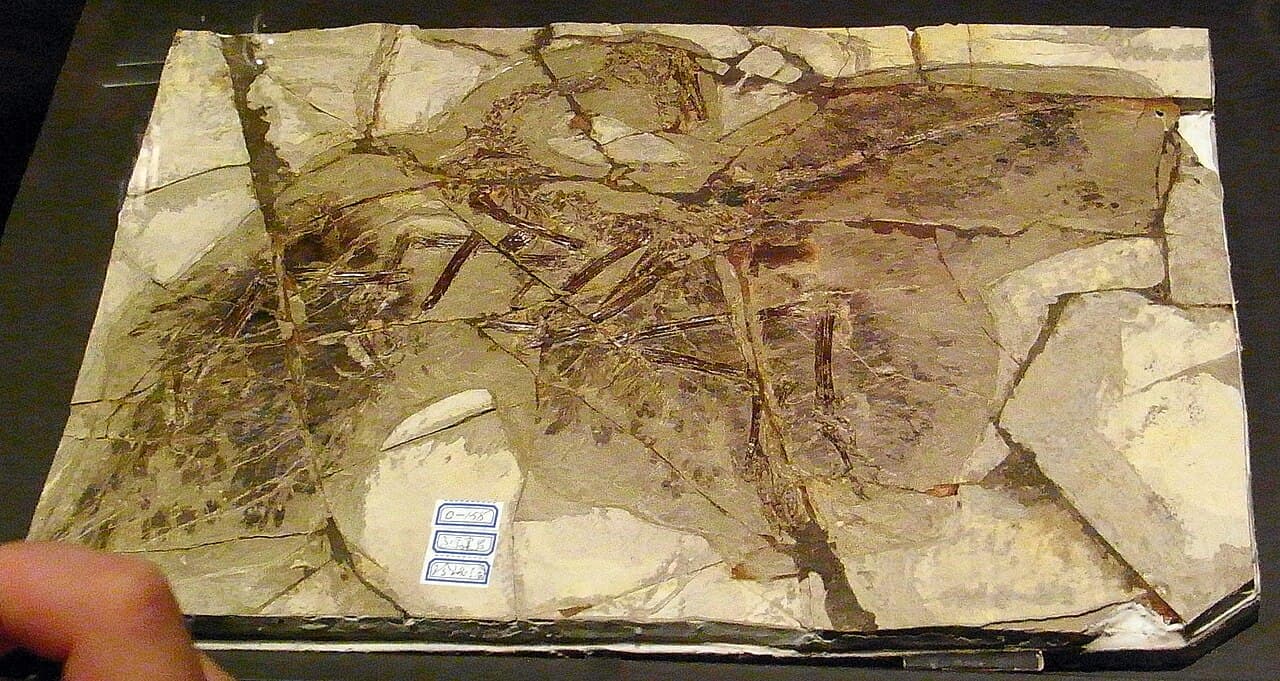
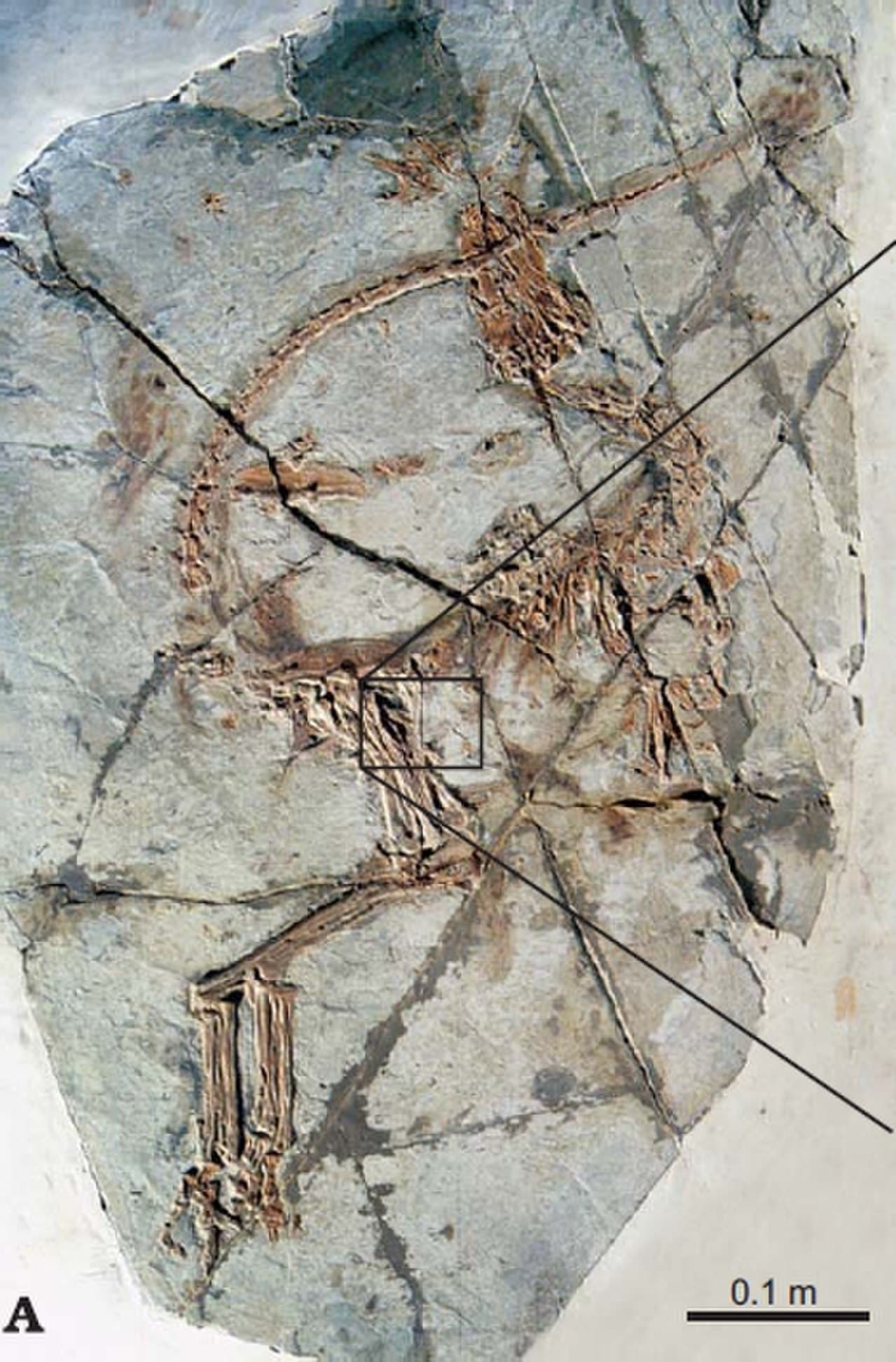
The debate over the avian connection to dinosaurs was irrevocably altered by discoveries emerging from the Yixian Formation in Liaoning, northeastern China, in the late 20th century. In 1996, a small theropod named Sinosauropteryx was unearthed, its body adorned with clear traces of filamentous structures — the earliest known 'feathers'. This find, documented by Chen, Dong, and Zhen in 1998, challenged long-standing notions about dinosaur integument and opened new avenues for understanding the evolution of feathers.
The Yixian Formation proved to be a treasure trove of feathered dinosaurs, preserving remarkable details of ancient life. Among these were Caudipteryx, discovered in 1998 with bona fide vaned feathers, and Microraptor, a four-winged dromaeosaur capable of gliding, unearthed in 2000. Anchiornis, another feathered marvel, was found in 2009 with melanosomes so well-preserved that researchers, including Li et al. in their 2010 study, could reconstruct its coloration — black and white plumage punctuated by a striking red crest. These discoveries have made the transition from non-avian theropods to birds almost tangible, offering a visual narrative that corroborates the cladistic connections.
What 'feathers' actually were
The advent of feathers in theropod dinosaurs was not initially tied to flight. The primitive feathers found on early theropods like Sinosauropteryx were simple filaments, likely serving functions such as insulation or display, rather than aerodynamics. As evolution progressed, feather complexity increased through several stages: from singular filaments to tufted forms, to planar branched structures, eventually culminating in the true asymmetric vaned feathers seen in later fossils.
Animals like Caudipteryx and Anchiornis, which sported these vaned feathers, did not possess the ability to fly, underscoring the notion that flight was a secondary adaptation. This evolutionary pathway suggests that feathers were co-opted for flight only after serving other functions for millions of years, illustrating a broader principle of evolution — the repurposing of structures for new functions.
When birds became 'birds'
Understanding when birds became 'birds' depends on our definitions. If one defines birds as the clade Aves, consisting of modern birds and their immediate ancestors, then their origins can be traced back to approximately 150 million years ago in the late Jurassic period, with key fossils like Archaeopteryx marking this transitional phase. However, if one adopts a broader definition, including Avialae — all creatures closer to modern birds than to dromaeosaurs — then the origin stretches somewhat further back in time.
The transition from non-avian theropods to birds was a gradual one, without a singular fossil marking the exact emergence of what we now call birds. By the late Cretaceous, about 80 million years ago, there were already diverse lineages of avian dinosaurs, both ground dwellers and fliers, thriving alongside their non-avian counterparts. The catastrophic event at the end of the Cretaceous, known as the KPg impact, led to the extinction of non-avian dinosaurs but spared a fraction of bird lineages. These survivors became the progenitors of today's avian biodiversity.
What modern birds inherited
Today's birds carry a legacy of features inherited from their theropod ancestors. These include a bipedal posture, three-toed feet, and hollow bones, all contributing to their lightweight and agile form. The furcula, or wishbone, a fused sacrum, and an asymmetrical foot are other theropod traits evident in modern avians. Additionally, birds possess an S-shaped neck, rapid bone growth patterns confirmed through bone histology, and large brains relative to their body size.
Their uniquely efficient respiratory system, characterized by a flow-through lung ventilation, is another inheritance likely originating from theropods. The four-chambered heart, essential for sustaining high metabolic rates, probably predates birds, having been present in their dinosaurian forebears. Feathers for insulation and brooding behaviour are also ancient traits; fossils of theropods like Citipati and Troodon depict them in nurturing postures reminiscent of modern birds, sitting atop nests of eggs in a protective manner.
The claim that a chicken is a dinosaur is not merely a fanciful turn of phrase but a scientifically accurate assertion. Within the framework of cladistics, it is as precise as labelling a whale a mammal. The extinction event 66 million years ago may have marked the end of the non-avian dinosaurs, but the avian dinosaurs, which we observe as birds, continued to thrive. Today, with approximately 10,000 species worldwide, birds surpass mammals in diversity, sitting in trees as a testament to their enduring lineage, having outlasted their dinosaur cousins by millions of years.
References
- Ostrom, J. H. (1976). Archaeopteryx and the origin of birds. Biological Journal of the Linnean Society, 8(2), 91–182.
- Chen, P. J., Dong, Z. M., & Zhen, S. N. (1998). An exceptionally well-preserved theropod dinosaur from the Yixian Formation of China. Nature, 391, 147–152.
- Li, Q., et al. (2010). Plumage color patterns of an extinct dinosaur. Science, 327(5971), 1369–1372.
- Brusatte, S. L., O'Connor, J. K., & Jarvis, E. D. (2015). The origin and diversification of birds. Current Biology, 25(19), R888–R898.