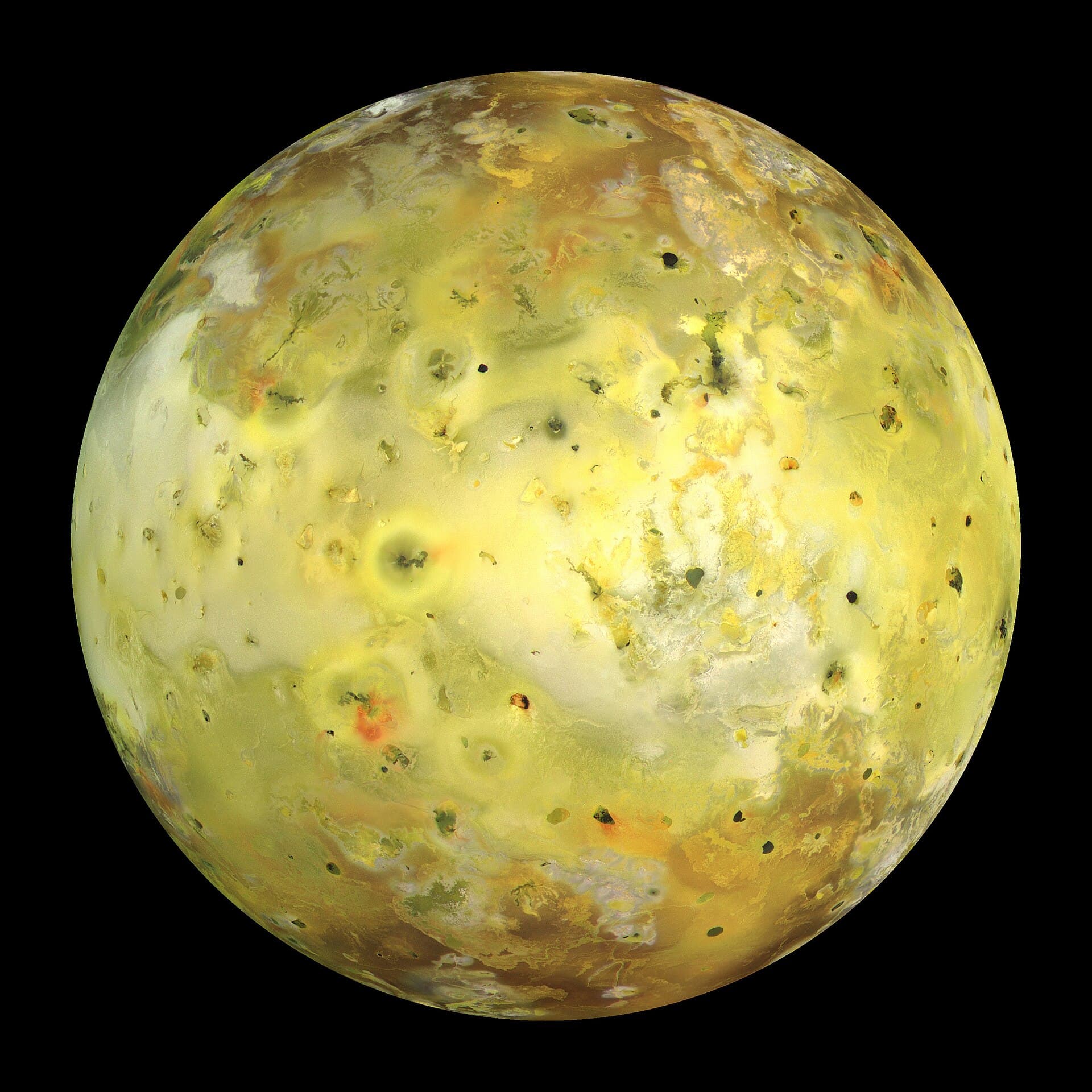
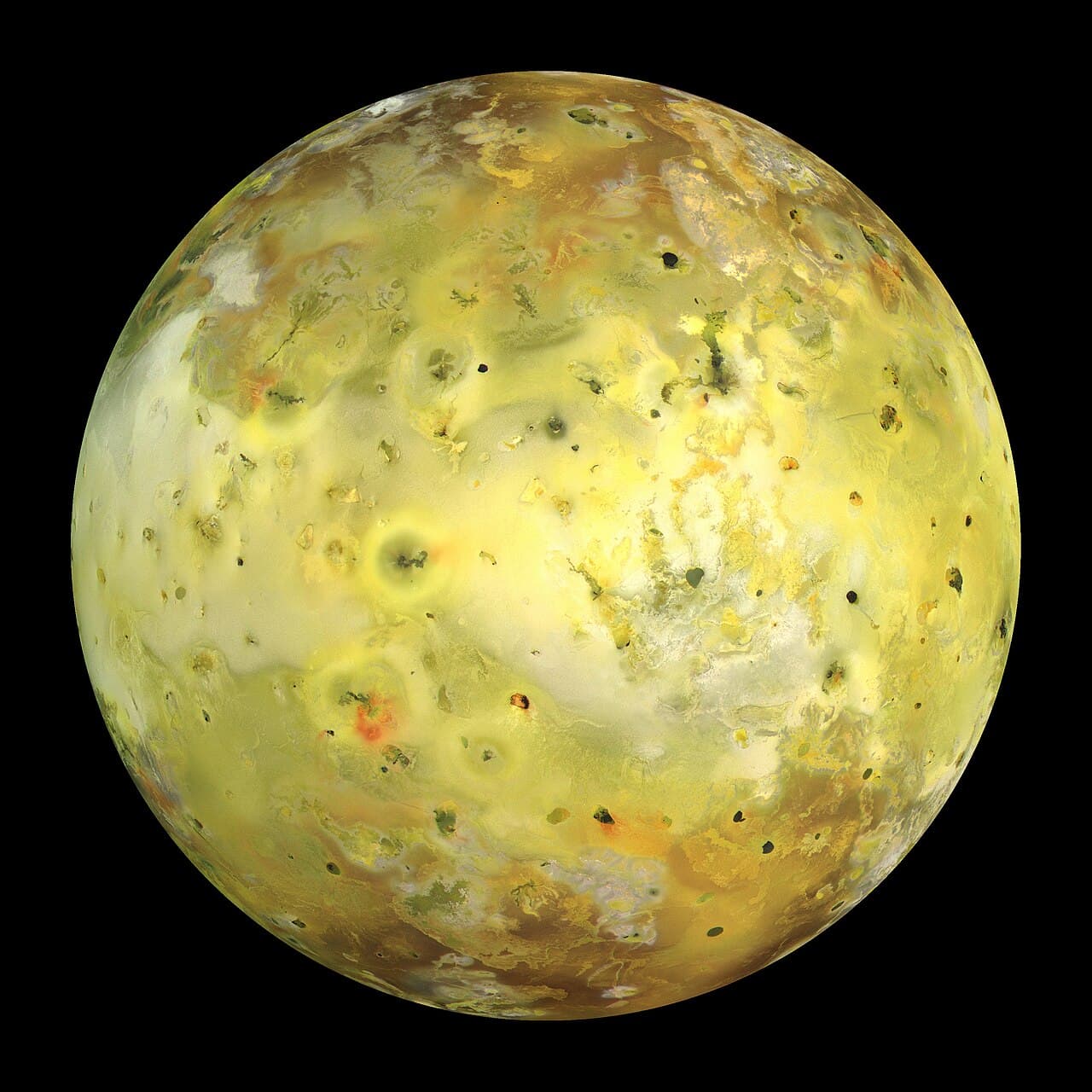
On 5 March 1979, as Voyager 1 made its historic flyby of Jupiter's moon Io, a routine navigation image revealed an unanticipated anomaly. Linda Morabito, an engineer working on the mission, identified the image three days later on 8 March. What she saw was an extraordinary plume rising 300 kilometres above the moon's surface. It was a volcanic eruption, a revelation that changed our understanding of celestial bodies. Until that moment, Earth was the only known object in the solar system with active volcanism. The source of this immense plume was a volcano named Pele, marking a pivotal moment in planetary science. The discovery of Pele not only confirmed Io as a volcanically active world but also raised questions about the forces driving such activity on a moon so far from the sun.
Io's predicament
Io, similar in size to our Moon, finds itself in a perpetual state of geological turmoil due to its interaction with its larger neighbour, Jupiter. Unlike our Moon, Io experiences intense tidal forces caused by its participation in a gravitational dance known as the Laplace resonance. This 4:2:1 resonance involves Io, Europa, and Ganymede, Jupiter’s three largest moons. The gravitational pull from Europa and Ganymede keeps Io's orbit slightly elliptical, causing its distance from Jupiter to fluctuate. This orbital eccentricity results in the moon being constantly stretched and compressed by Jupiter’s immense gravity, a process that generates immense internal heat.
The heat produced from this tidal flexing is enough to melt large portions of Io’s interior, leading to the most intense volcanic activity in the solar system. Io is peppered with hundreds of volcanoes, some of which are active at any given moment. This activity is so vigorous that new lava flows are visible with each spacecraft pass. Unlike Earth, where tectonic movements are the primary drivers of volcanic activity, Io's eruptions are predominantly driven by these tidal forces, giving us a unique insight into an alternative geological process. This unending source of internal heat keeps Io's volcanoes in a constant state of activity, making it a fascinating natural laboratory for studying planetary volcanism.
Loki Patera
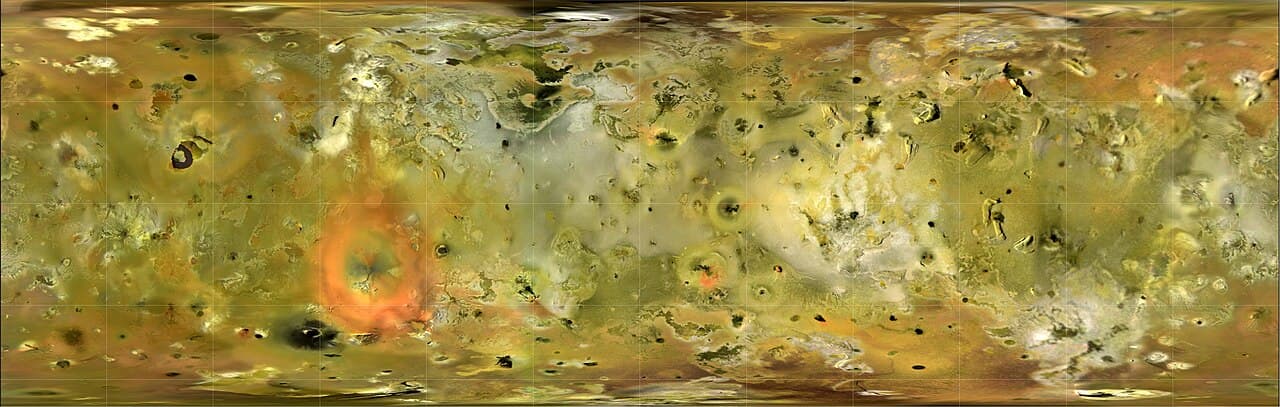
Within Io's volatile landscape, one feature stands out: Loki Patera. Spanning approximately 200 kilometres in width, it is the largest single volcanic feature in the solar system. Unlike a typical volcano with a singular vent, Loki Patera is a vast lava lake. This lake exhibits an intriguing phenomenon where its surface periodically overturns, a process that refreshes its appearance and radiates heat. The lake’s surface crusts over and then sinks back into the molten interior, releasing fresh, hot material.
Infrared telescopes on Earth, including the Keck Observatory with its adaptive optics system, have been observing Loki Patera’s radiance for over four decades, confirming its persistent heat signature. This remarkable stability suggests a continuous supply of molten material beneath its crust, a feature that has fascinated scientists since its discovery. The ability to monitor such a feature from Earth, despite its vast distance, is a testament to the advancements in astronomical observation techniques. The ongoing activity at Loki Patera offers a continuous, real-time case study of a large-scale volcanic process that contrasts with the episodic nature of similar phenomena on Earth.
The overturning cycle
The behaviour of Loki Patera is characterised by a cycle of surface renewal that occurs roughly every 540 days. Julie Rathbun and her colleagues were instrumental in identifying this pattern using infrared data dating back to the 1990s. The cycle begins with the thickening of the lake’s crust, which eventually becomes unstable and sinks, revealing fresh, hot lava. This cycle of crust formation and subduction is a critical part of what maintains Loki's enduring heat.
The Galileo spacecraft, which orbited Jupiter from 1995 to 2003, provided direct images of these crustal changes, allowing scientists to observe the dynamic processes occurring on Io's surface. More recently, the Juno mission, which arrived at Jupiter in 2016, has been conducting close flybys of Io since 2023, with some passes coming within 1,500 kilometres of the moon's surface. These observations offer unprecedented detail and enhance our understanding of the processes driving Io’s unique volcanic activity. Each new mission builds upon our understanding, providing insights into the complex interplay of forces that make Loki Patera a focal point of planetary volcanology.
What's coming out
Io’s volcanic ejecta primarily consists of basaltic material, similar to that found on Earth, but with a significant twist. The moon's surface is heavily laden with sulfur and sulfur dioxide, which accounts for its striking yellow and red hues, often compared to a pizza's appearance in spacecraft images. This sulphurous coating is the result of continuous volcanic activity depositing these materials across Io’s surface.
The relentless pace of volcanic resurfacing on Io means that its current surface is relatively young, geologically speaking. Estimates suggest it is less than a million years old and could be much younger. This rapid resurfacing obscures older features, constantly renewing the moon’s appearance and contributing to the dynamic volcanic landscape that attracts ongoing scientific interest. The presence of sulfur and sulfur dioxide not only influences Io's appearance but also plays a significant role in the moon's geology and volcanic processes, offering a stark contrast to the silicate-dominated volcanism observed on Earth.
Why this matters
The significance of Io's incessant volcanic activity extends beyond mere curiosity. Firstly, the concept of tidal heating — the mechanism driving Io's volcanism — has profound implications for understanding energy sources in planetary systems. This same mechanism is believed to keep the subsurface oceans of moons like Europa and Enceladus in a liquid state, making them prime candidates in the search for extraterrestrial life.
Secondly, Io offers a natural laboratory for studying geological processes that are difficult to observe on Earth. The continuous activity at Loki Patera, in particular, provides insights into the behaviour of large lava lakes and the evolution of silicate volcanism over extended periods. Earth’s comparatively slower geological pace cannot replicate these conditions, making Io invaluable for comparative planetology.
Lastly, the discovery of active volcanism on Io challenges the historical Earth-centric view of geological processes. Observing a body other than Earth exhibiting such active volcanism forces a broader perspective, pushing scientists to reconsider assumptions about other celestial bodies. This paradigm shift underscores the importance of studying other worlds, not just as curiosities, but as integral parts of a larger cosmic story.
As of this writing, Loki Patera has maintained its vigorous volcanic activity for at least 45 years, a period during which it has been continuously observed to be hot. This activity likely extends far beyond our observation window, predating human technology capable of observing it. By the time Juno concludes its mission, Io will have undergone several more cycles of overturning at Loki Patera, with each cycle offering the potential for new insights.
In the coming decades, a dedicated mission to Io could provide the opportunity to witness one of these volcanic cycles up close, offering a direct glimpse into the dynamics of the largest active volcano in the solar system. Until then, every clear night presents a chance for telescopes, like those atop Mauna Kea, to observe this distant, fiery world from over 600 million kilometres away, continuing our quest to understand the mysteries of the cosmos.
References
- Morabito, L. A., et al. (1979). Discovery of currently active extraterrestrial volcanism. Science, 204(4396), 972.
- Rathbun, J. A., et al. (2002). Loki, Io: a periodic volcano. Geophysical Research Letters, 29(10).
- NASA Juno mission Io flyby coverage.
- Lopes, R. M. C., & Spencer, J. R. (Eds.). (2007). Io After Galileo: A New View of Jupiter's Volcanic Moon. Springer.