
Every night, like clockwork, the brain enters a peculiar state that has intrigued scientists for decades. Rapid-eye-movement sleep, or REM, characterized by the darting motion of the eyes under closed lids, was first identified in 1953 by Eugene Aserinsky and Nathaniel Kleitman at the University of Chicago. During this phase, neuronal activity nearly matches the waking state, yet the large muscles are paralysed, a mechanism originating in the brainstem that prevents us from acting out our dreams. It is during this time that we experience a plethora of narratives—vivid, emotional, sometimes coherent, other times bizarre. This state occurs four to five times a night, with each cycle growing longer, culminating in the most vivid dreams as dawn approaches. Despite seven decades of research into this physiological marvel, what remains elusive in 2026 is the true function of dreams—what they are for.
The old story
Throughout the late 20th century, a dominant narrative took hold in neuroscience: that REM sleep was vital for memory consolidation, with dreams merely serving as a cognitive byproduct of this process. This view was encapsulated in the 'activation-synthesis hypothesis', proposed in 1977 by Allan Hobson and Robert McCarley. According to this hypothesis, dreams were the brain's attempt to weave coherent stories from essentially random activations initiated by the brainstem during REM. In this framework, the content of dreams was considered devoid of intrinsic meaning, a mere side effect of the cortex striving to make sense of neural noise.
Sigmund Freud's earlier notions of dreams as wish-fulfilment were largely dismissed within mainstream neuroscience circles, deemed unscientific. Freud's ideas of latent and manifest content were replaced by a more mechanistic view. Dreams, according to the prevailing theory through the 1990s, were intriguing but meaningless side effects of the brain's nocturnal housekeeping. The important work was what the brain accomplished during REM, not the hallucinatory narratives it spun.
What changed
Since the early 2000s, several key findings have shifted this perspective. Notably, the assumption that dreams are confined to REM sleep was challenged. Research led by Tore Nielsen at Université de Montréal demonstrated that vivid dreams can occur during non-REM sleep, particularly during slow-wave sleep, which is characterised by deep, delta-wave activity. By the mid-2000s, it was established that dreaming spans the entire sleep cycle, not just REM.
Simultaneously, the memory-consolidation role of sleep became more nuanced. Robert Stickgold's research at Harvard Medical School highlighted that different sleep stages contribute distinctively to memory processing. Slow-wave sleep appears crucial for consolidating declarative memories—facts and events—while REM is pivotal for procedural memory—skills—and emotional regulation. The transitions between these stages also play a vital role in memory consolidation, debunking the simplistic 'REM equals consolidation' model.
Moreover, the randomness of dream content came under scrutiny. Empirical studies suggested that dream narratives exhibit structure and biases that imply the brain is not merely reacting to random stimuli. Dreams in healthy individuals seem to serve specific purposes, challenging the older view of dreams as meaningless byproducts.
The Hoel hypothesis and the rest
In recent years, several compelling theories about the purpose of dreams have emerged. Erik Hoel's 'overfitted brain' hypothesis, posited in 2021, suggests that dreams function as an evolutionary mechanism to combat overfitting—a concept borrowed from machine learning. In this scenario, dreams introduce bizarre, statistically improbable content to prevent the brain from becoming too entrenched in its waking-life experiences, thereby enhancing cognitive flexibility.
Another prominent theory is Antti Revonsuo's 'threat simulation theory', which suggests that dreams evolved as rehearsals for threatening situations. This theory is bolstered by the observation that dreams often involve scenarios like being chased or falling. There is empirical evidence supporting this theory, indicating that dream content frequently includes threat themes, potentially serving as a preparatory tool for real-life dangers.
The 'continuity hypothesis', advocated by G. William Domhoff, posits that dreams directly reflect an individual's waking-life concerns and do not require specialized explanations. Meanwhile, the 'social simulation hypothesis', advanced by researchers like Anne-Sophie Reiriz, proposes that dreams provide practice for social interactions. Despite the varying focus of these theories, none has definitively outpaced the others, and each has empirical support.
What the imaging shows
Functional imaging of the dreaming brain has been a challenging pursuit, yet significant progress has been made. Although many subjects struggle to maintain a stable dream state within a scanner, several studies have yielded valuable insights. During REM dreaming, the brain exhibits high activity in the visual association cortex, particularly in regions V2 and V3, accounting for the vividness of dream imagery, while primary visual cortex V1 remains relatively inactive.
Moreover, the amygdala shows heightened activity, correlating with the emotional intensity often experienced in dreams. The dorsolateral prefrontal cortex, which is involved in logical reasoning and self-monitoring, is notably suppressed, explaining the frequent illogical sequences and lack of self-awareness in dreams. Conversely, the medial prefrontal cortex and posterior cingulate are highly active, regions associated with self-referential processing. This pattern indicates a brain engaged in narrative creation and emotional processing, albeit with selective dysregulation of higher-order executive functions.
Lucid dreams and the experiment problem
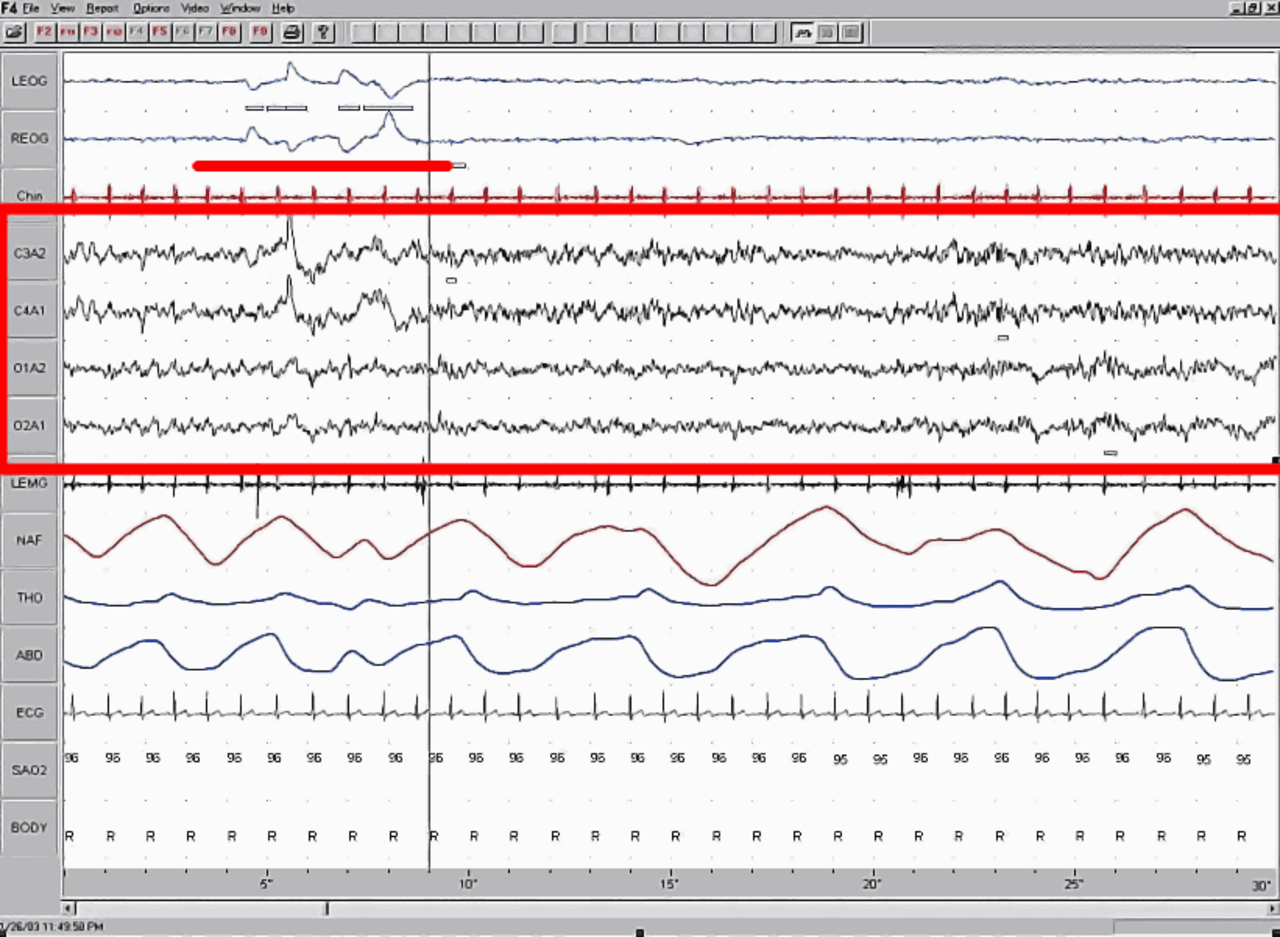
Lucid dreaming, where individuals become conscious within their dreams and may exert control over them, was once regarded with skepticism. However, the groundbreaking work of Stephen LaBerge at Stanford University in the early 1980s established its legitimacy. LaBerge designed experiments where lucid dreamers signalled their state by performing pre-arranged eye movements during REM sleep, detectable through electrooculography (EOG) and electroencephalography (EEG) readings. This demonstrated that dreamers could consciously interact with the waking world while asleep.
More recently, research by Karen Konkoly and Ken Paller at Northwestern University in 2021 further expanded the potential of lucid dreaming in scientific inquiry. Their subjects, while lucid, answered simple questions and performed basic calculations, communicating their responses through trained eye and facial movements. This opens the door to a new realm of empirical research, enabling scientists to interrogate dream content in real-time, possibly transforming our understanding of the dream state in the coming years.
What dreams might be for
As of now, the candid answer to the question 'What are dreams for?' is that they likely serve multiple functions, with their significance varying among individuals and across different life stages. Dreams are a tapestry woven from memory consolidation, threat rehearsal, emotional processing, and possibly even the brain's strategy to guard against overfitting. Some elements likely pertain to social cognition, while others may be incidental byproducts of these processes.
The notion that dreams are for a singular purpose is overly simplistic. The clearest empirical consensus is that REM sleep is indispensable for maintaining normal cognitive function, as evidenced by the deficits observed with REM deprivation. Dreams, as the subjective experience of vivid narratives during sleep, are a window into—but not identical with—the underlying neural processes. Thus, while dreams are something the brain does, their purpose is multifaceted, resisting neat categorisation as merely fulfilling one function.
You dreamed last night. The details may have eluded you upon waking, leaving only fragmented images or emotions behind. These remnants are but a small, potentially skewed sampling of what your brain generated through the night. The scenes could have involved familiar faces in peculiar scenarios, or perhaps they transformed your daily preoccupations into something surreal. Across species, from rats dreaming of mazes to fish exhibiting what might be feeding dreams, a consensus is forming that these nightly episodes are more than just neural housekeeping.
Despite our growing understanding, the enigma of dreams persists. They are not merely the random firings once proposed by the textbooks of the early 1990s. The precise nature of their function remains an open question, but it is clear that something crucial happens every night, in the brains of nearly every vertebrate, that transcends mere byproduct status. The true role of dreams continues to elude us, but whatever they are, you will inevitably experience them again tonight.
References
- Aserinsky, E., & Kleitman, N. (1953). Regularly Occurring Periods of Eye Motility, and Concomitant Phenomena, During Sleep. Science, 118(3062), 273–274.
- Stickgold, R., & Walker, M. P. (2013). Sleep-dependent memory triage: evolving generalization through selective processing. Nature Neuroscience, 16(2), 139–145.
- Hoel, E. (2021). The overfitted brain: Dreams evolved to assist generalization. Patterns, 2(5), 100244.
- Konkoly, K. R., et al. (2021). Real-time dialogue between experimenters and dreamers during REM sleep. Current Biology, 31(7), 1417–1427.