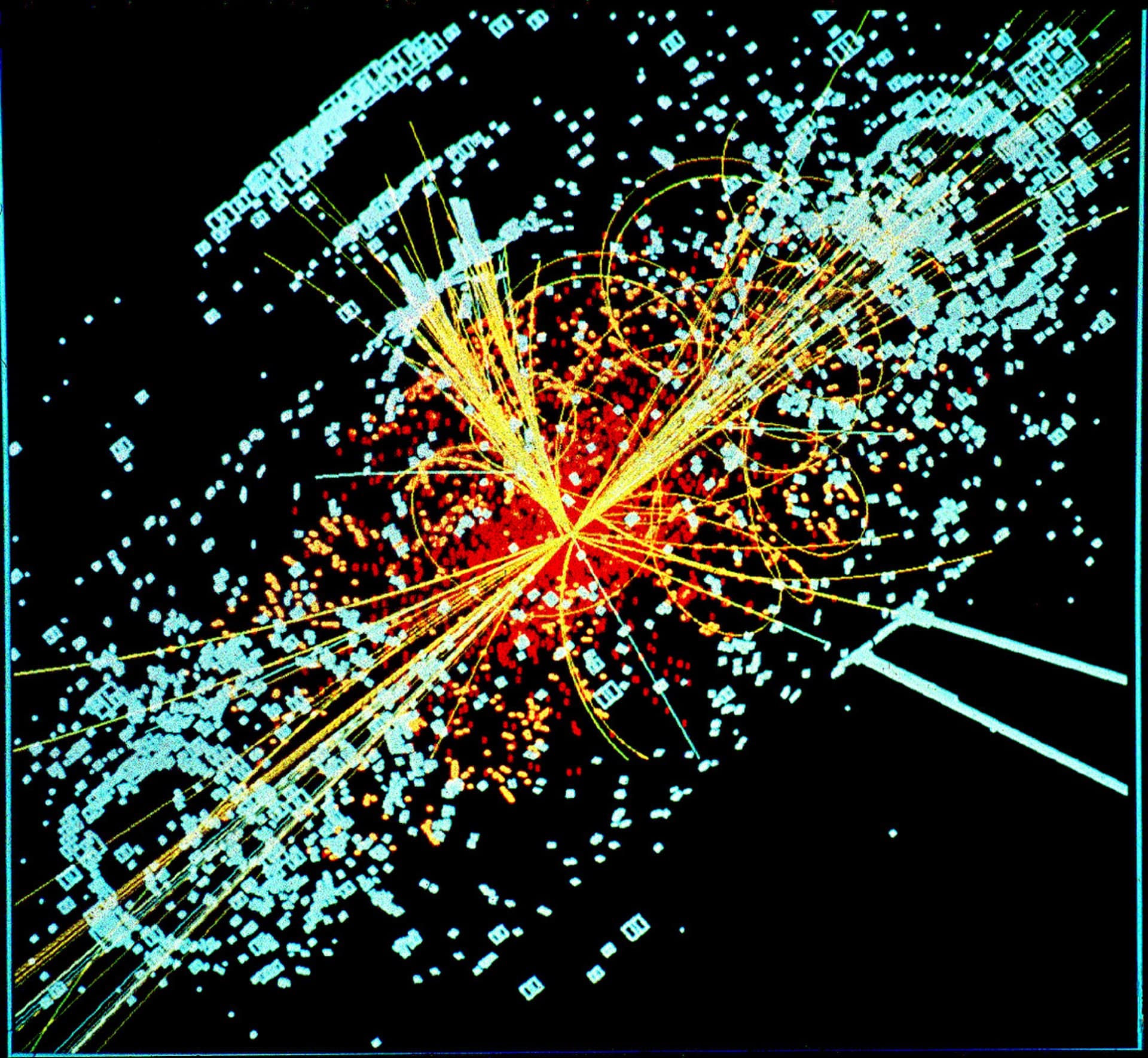
At precisely 9 a.m. on 4 July 2012, the main auditorium at CERN's headquarters in Meyrin, just outside Geneva, was filled to capacity, with an overflow room also buzzing with anticipation. The event, streamed live to physics communities worldwide, marked a pivotal moment in the history of science. Two leading figures in experimental physics, Fabiola Gianotti and Joe Incandela, took the stage to present findings from their respective experiments, ATLAS and CMS, at the Large Hadron Collider (LHC). Both teams independently reported the discovery of a new particle with a mass of approximately 125 gigaelectronvolts (GeV/c²) — a mass about 130 times that of a proton. This new particle exhibited decay patterns consistent with those predicted for a Higgs boson. The combined statistical significance of the findings reached five sigma, the threshold required in particle physics to declare a discovery. Among the attendees sat Peter Higgs, the British theoretical physicist whose work in 1964 had forecasted this particle's existence. As the auditorium erupted into applause, Higgs, visibly emotional, wept quietly. The Standard Model of particle physics had reached a momentous completion with the confirmation of the mechanism that elucidates how particles acquire mass.
What the theory was trying to fix
By the dawn of the 1960s, a major theoretical endeavour was underway to unify electromagnetism with the weak nuclear force. Physicists Sheldon Glashow, Abdus Salam, and Steven Weinberg were in the throes of developing what would become known as the electroweak theory, a framework that elegantly treated both forces as manifestations of a single underlying principle. However, this theoretical construct had a glaring inconsistency. The framework operated seamlessly under the condition that all carrier particles, like the photon for electromagnetism and the W and Z bosons for the weak force, were massless. However, empirical data conclusively indicated that the W and Z bosons were indeed massive, approximately 80 times the mass of a proton. Incorporating these masses directly into the theory shattered its mathematical integrity, rendering it non-renormalisable and leading to divergent predictions.

The crux of the problem lay in maintaining the symmetry essential for the theory's functionality while explaining the observed masses of the W and Z bosons. What the field needed was a mechanism that could impart mass to these particles without disrupting the underlying symmetry of the equations. It was this theoretical impasse that the proposal from Higgs and his contemporaries sought to resolve. They provided a path forward that preserved the elegance of the theory while accommodating the stubborn facts of experimental reality. This was the very mechanism proposed in 1964 by Higgs and others, which later came to be known as the Higgs mechanism.
The 1964 papers
The year 1964 was a watershed moment in theoretical physics, marked by the publication of pivotal papers by six physicists. François Englert and Robert Brout from Belgium, Peter Higgs from Edinburgh, and the trio of Gerald Guralnik, Carl Hagen, and Tom Kibble at Imperial College London independently formulated theories that would collectively bear immense significance. Englert and Brout were the first to publish in August 1964, but it was Higgs's paper, first received in July and published in October, that introduced the concept of a new physical particle, a 'massive scalar boson', a crucial component of the proposed mechanism.
The Guralnik-Hagen-Kibble paper, appearing in November 1964, further expanded the theoretical framework. This suite of proposals, now collectively known as the Brout-Englert-Higgs mechanism, postulated that space is filled with a scalar field — the Higgs field — which has a constant non-zero value throughout the universe. This omnipresent field interacts variably with different particles, bestowing mass upon those that engage with it, such as the W and Z bosons, while leaving others, like the photon, unaffected and thus massless. This innovation preserved the crucial symmetry of the equations and accounted for the mass of observed particles. The necessity of this field implied the existence of an associated quantum excitation: the Higgs boson.
What it was going to take to find it
From the late 1960s onward, the Higgs mechanism dominated as the theoretical cornerstone for understanding particle masses, propelling the Higgs boson into the limelight of experimental physics objectives. However, the quest was fraught with challenges. The Higgs boson's mass was a free parameter in the theory — not specified by the equations themselves, thus necessitating empirical measurement. While theoretical constraints and indirect experimental evidence narrowed the expected mass range to approximately 100 to 200 GeV/c², the exact figure remained elusive.
Existing accelerators, such as Fermilab's Tevatron and CERN's Large Electron-Positron Collider, had scoured the lower-mass regions by the late 1990s, eliminating possibilities below roughly 115 GeV. Higher mass searches, however, required more powerful collision energies, prompting the approval of the Large Hadron Collider in 1994. Construction ensued, harnessing the existing LEP tunnel and incorporating state-of-the-art proton-proton collision technology, with total costs reaching around $9 billion, funded by CERN member states and international partners. Despite early operational setbacks, the LHC reached full capacity in 2009-2010, crafted explicitly to uncover or dismiss the existence of the Higgs boson.
How the detection actually worked
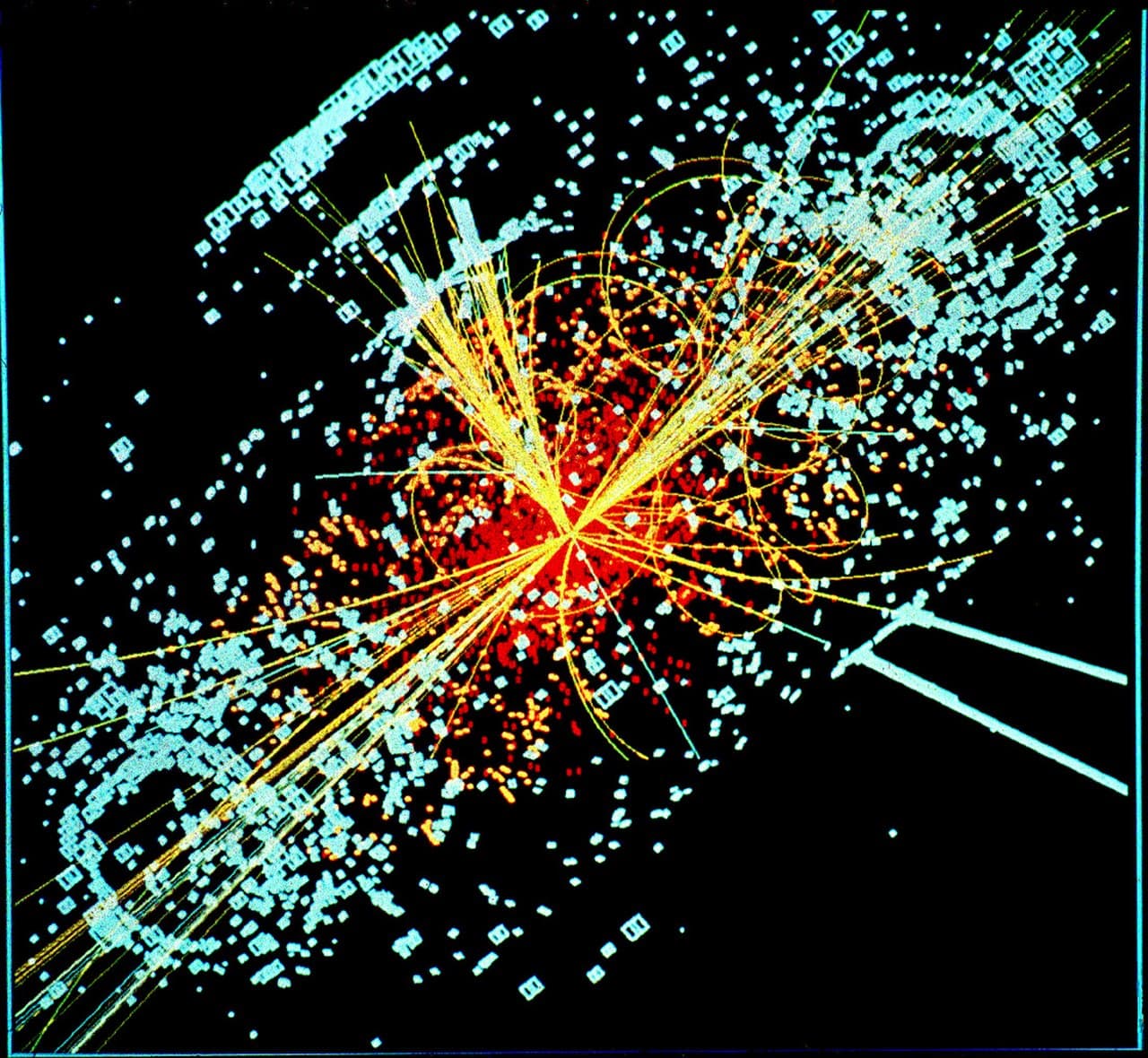
At the LHC, protons collide at unprecedented energies — 7 TeV in 2011 and 8 TeV in 2012 — creating an environment where, occasionally, a Higgs boson may emerge from one in a billion collisions. The Higgs boson is inherently unstable, decaying almost instantaneously into more stable particles. Its decay channels are numerous: it can transform into two photons, two Z bosons, two W bosons, two bottom quarks, two tau leptons, among others. The ATLAS and CMS detectors, meticulously engineered, trace these decay products, piecing together their energies and trajectories to infer the original particle's mass.
The two-photon decay channel, despite its rarity, presents one of the cleanest signals. This is due to the precision with which the photons can be measured and the relatively low background interference. By the summer of 2012, data from both ATLAS and CMS had amassed to a point where, in the two-photon and four-lepton channels, a subtle yet statistically significant excess of events was observed at a mass of 125 GeV. The statistical confidence for the combined data from both detectors surpassed the five sigma threshold in late June. The subsequent announcement on 4 July was a formal declaration of this landmark discovery.
What had to be confirmed afterward
The announcement on 4 July 2012 was cautiously worded: "We have observed a new boson with mass approximately 125 GeV/c² whose properties are consistent with the Standard Model Higgs." This precision in language highlighted that while the detection was robust, full confirmation that it was indeed the Higgs boson required further verification. Over the next four years, ATLAS and CMS embarked on an extensive campaign to amass additional data, exploring a wider array of decay channels and scrutinising the particle's properties in detail.
Key attributes such as the particle's spin, measured to be zero as predicted for the Higgs, and its parity, confirmed as even, had to be painstakingly validated. The coupling of this new particle with other particles was also a crucial aspect, expected to correlate with their masses, which the experiments successfully measured across multiple channels. By 2016, the cumulative evidence unmistakably aligned with the Standard Model's predictions for the Higgs boson. The theoretical and empirical synergy culminated in the 2013 Nobel Prize in Physics being awarded to François Englert and Peter Higgs, recognising their theoretical contribution to understanding the origin of mass in subatomic particles, as confirmed by the LHC's discoveries.
What it changed and what it didn't
With the confirmation of the Higgs boson, the Standard Model achieved closure. Every particle that the model predicted had been observed, affirming the framework's predictive prowess. This was an extraordinary achievement, underscoring the model as the most rigorously vetted framework in the annals of physics, especially given that the Higgs particle was predicted nearly half a century before its actual observation, within the anticipated mass range and with expected decay characteristics.
Yet, the discovery left many questions unanswered. The Higgs mass itself remains enigmatic, posing the 'hierarchy problem', wherein quantum corrections suggest a naturally higher mass unless finely tuned interventions occur. Further, the nature of the Higgs field — whether fundamental or composite — remains to be fully understood. Moreover, questions surrounding the dominance of matter over antimatter, the nature of dark matter, and the mysterious force of dark energy persist. While the Higgs boson was a monumental step in confirming the Standard Model, it also highlighted its limitations, propelling the scientific community to seek evidence for physics beyond this established framework. Subsequent experiments have yet to yield definitive answers, underscoring that while the Standard Model is correct within its scope, it is incomplete.
The audience's ovation on 4 July 2012 was for the culmination of decades of anticipation and persistent inquiry. Peter Higgs, who had retired from the University of Edinburgh in 1996, had long resigned himself to the possibility that he might not live to see his theoretical work experimentally confirmed. Reports from the early 2000s noted his waning optimism, though he harboured hope. On that July day, as he watched the announcement, his reaction was a tapestry of relief, gratitude, and the quiet dignity of a scientist who had devoted his life to an idea that, for decades, existed only in the realm of theoretical possibility.
Higgs was not alone in witnessing this historic moment. François Englert also attended, though Robert Brout, his collaborator, had passed away in 2011. The recognition of their collective work was bittersweet, underlined by the Nobel Prize's restriction to living recipients and a maximum of three laureates, which left out Guralnik, Hagen, and Kibble. For Higgs, the discovery was the longest-delayed experimental verification of a significant theoretical prediction in 20th-century physics. The years of waiting, a testament to the rigorous demands of particle physics, were finally vindicated. Peter Higgs passed away in April 2024 at the age of 94, leaving behind a legacy inextricably linked with the particle that bears his name.
References
- ATLAS Collaboration. (2012). Observation of a new particle in the search for the Standard Model Higgs boson with the ATLAS detector at the LHC. Physics Letters B, 716(1), 1–29.
- CMS Collaboration. (2012). Observation of a new boson at a mass of 125 GeV with the CMS experiment at the LHC. Physics Letters B, 716(1), 30–61.
- Higgs, P. W. (1964). Broken symmetries and the masses of gauge bosons. Physical Review Letters, 13(16), 508–509.
- Englert, F., & Brout, R. (1964). Broken Symmetry and the Mass of Gauge Vector Mesons. Physical Review Letters, 13(9), 321–323.