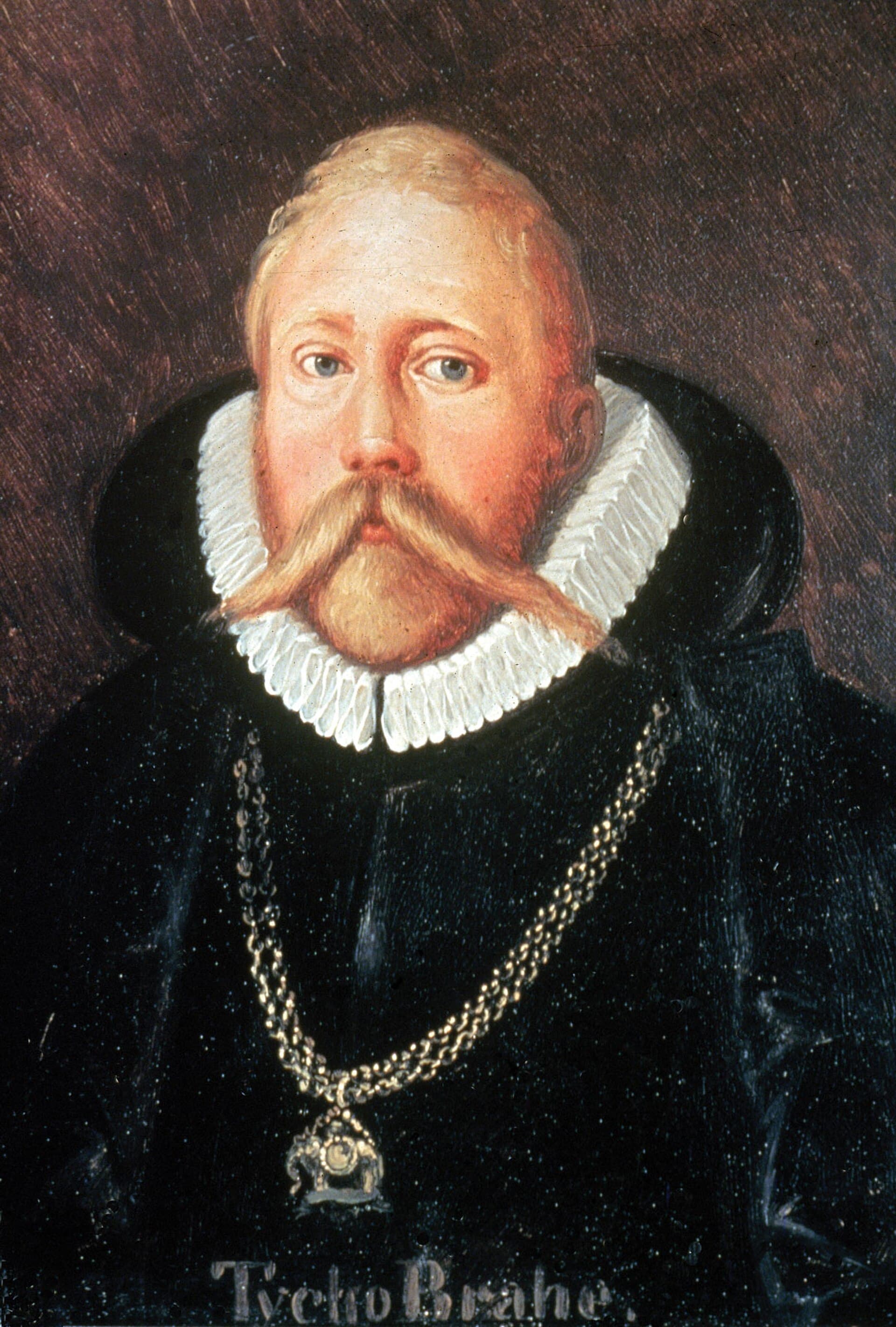
On 29 December 1566, at the University of Rostock, a seemingly trivial argument turned into a fateful event that would mark the life of Tyge Ottesen Brahe, known to history as Tycho Brahe. At the age of 20, this Danish nobleman found himself embroiled in a heated debate with his third cousin, Manderup Parsberg. The subject of their dispute was not politics, money, or family honour, but rather mathematics — specifically, which of them was the superior mathematician. As was perhaps fitting for two young men of high birth and even higher tempers, the argument escalated into a duel fought in the dark with rapiers. The outcome of this nocturnal skirmish was disastrous for Tycho: he lost his nose. The wound, severe as it was, eventually healed. For the rest of his life, he wore a prosthetic nose made of metal — brass for everyday use, gold and silver for formal occasions. A mixture of paste, possibly beeswax, kept the prosthesis in place. In a curious twist of fate, a 2010 examination of Tycho's tomb in Prague confirmed the presence of copper and zinc in his nasal cavity, supporting the historical accounts of his brass appendage.
Why he mattered as an astronomer
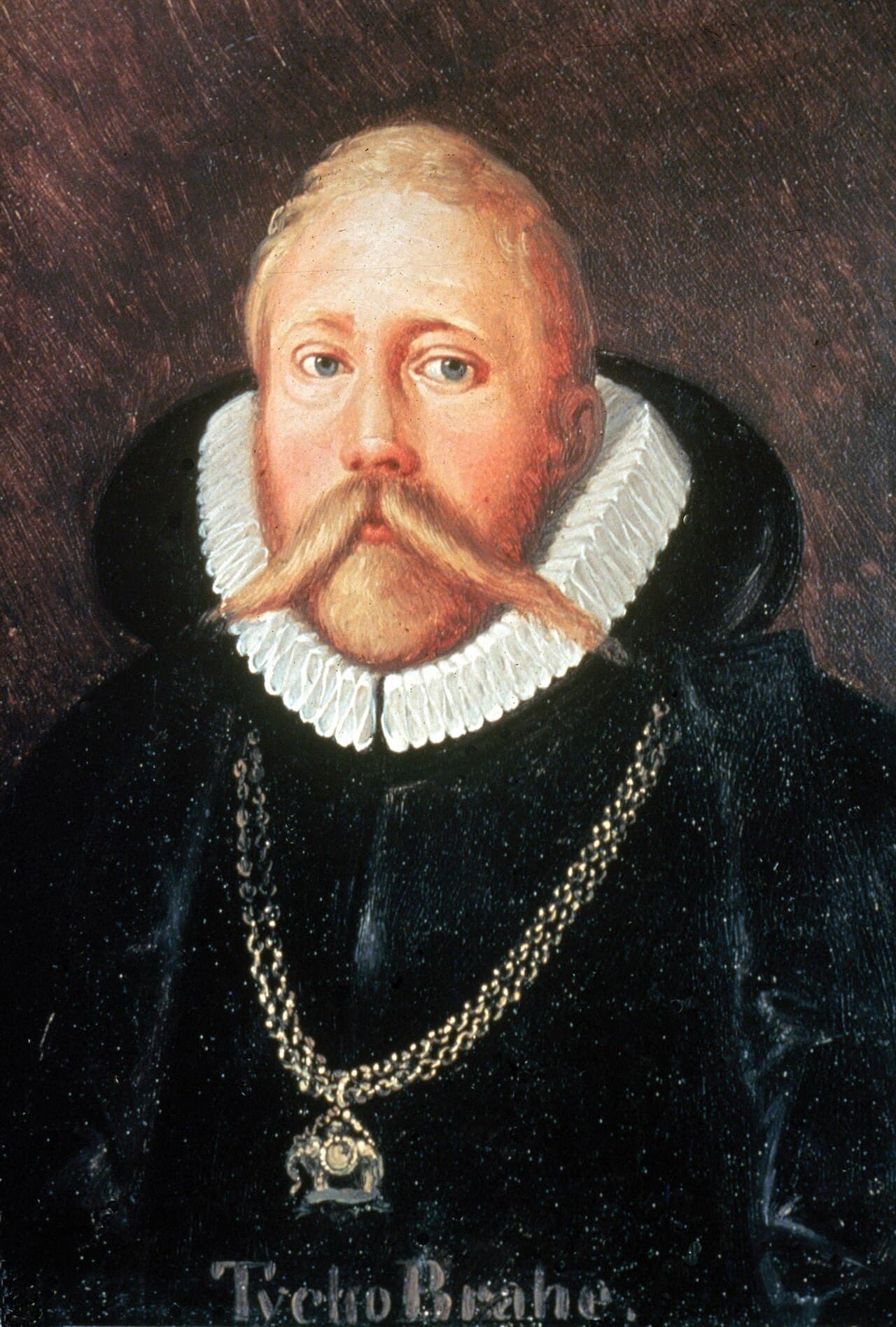
While Tycho Brahe's lost nose and penchant for eccentric pets have captured the popular imagination, his true significance lies in the realm of astronomical observation. Between approximately 1576 and 1597, Tycho produced the most precise stellar and planetary measurements of the pre-telescopic era. His measurements were accurate to about one arc minute — the finest detail that the human eye unaided could discern. For context, previous observations by the likes of Hipparchus and Ulugh Beg were ten times less precise. This leap in accuracy was not merely a technical achievement but a pivotal moment in the history of science. The precision of Tycho's data allowed Johannes Kepler to derive the three laws of planetary motion, a cornerstone of modern astrophysics.
Tycho's contributions were unparalleled at the time. His meticulous recordings of planetary positions laid the groundwork for a new understanding of the cosmos. Despite the absence of a telescope, which was yet to be invented, Tycho's instruments and methods yielded a wealth of data, unprecedented in their accuracy. His work marked the culmination of observational techniques developed over millennia and set the stage for the revolution that was to follow. The implications of Tycho's observations transcended the precise measurements themselves; they became the empirical backbone for Kepler's theories, which in turn paved the way for Newton's laws of motion and universal gravitation. As Victor E. Thoren details in 'The Lord of Uraniborg', Tycho's insistence on precise measurement transformed astronomy from a qualitative pursuit to a quantitative science.
Uraniborg
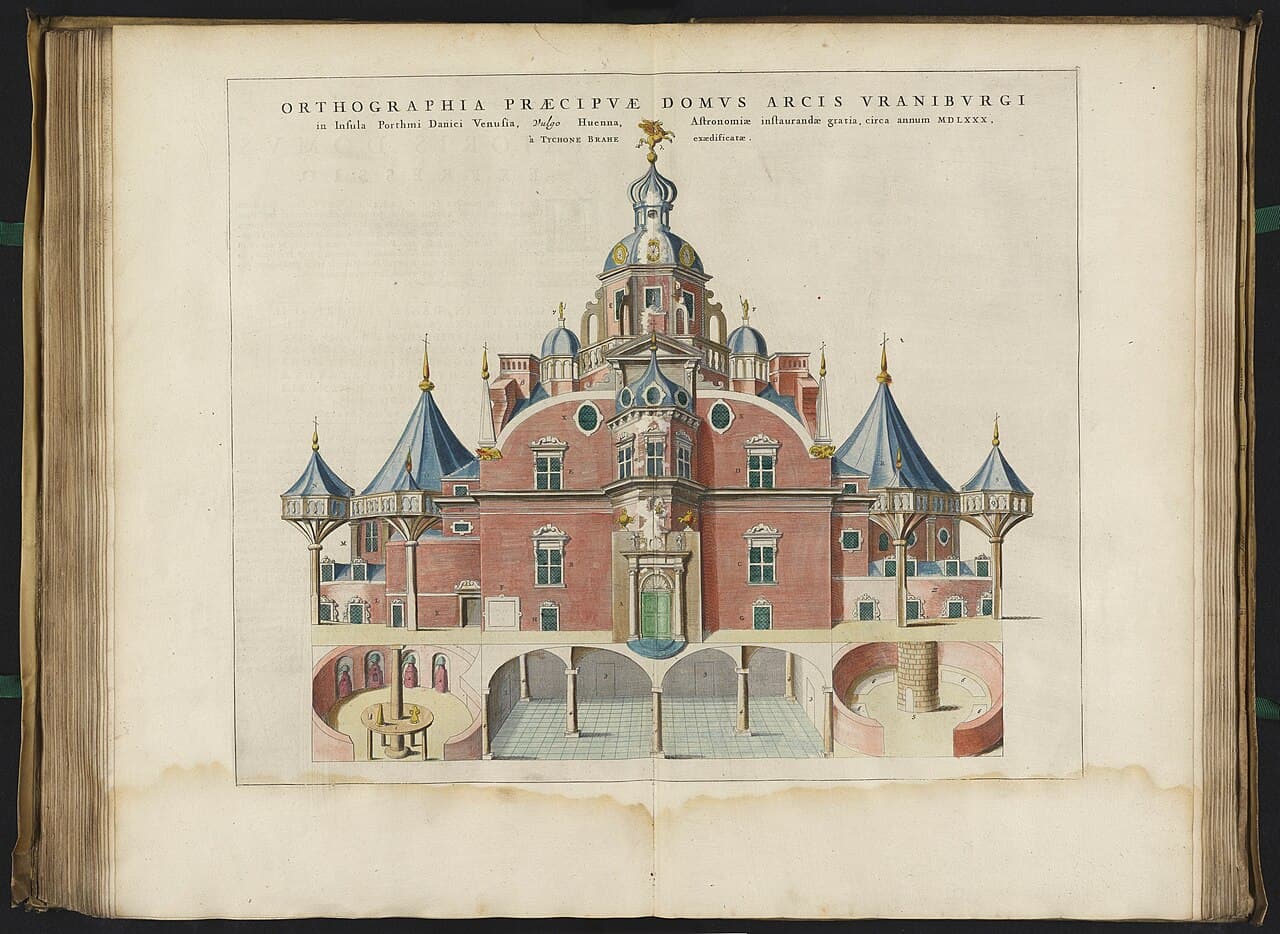
In 1576, Tycho Brahe was granted the island of Hven by King Frederick II of Denmark, a testament to the monarch's commitment to scientific advancement. This small island, nestled in the Øresund strait between Denmark and Sweden, became the site of Uraniborg, the most sophisticated observatory of its time. Completed in 1580, Uraniborg was a Renaissance villa of three stories, equipped with custom-built quadrants, sextants, and armillary spheres. Its grandeur and scientific ambition reflected both Tycho's vision and Frederick's patronage. Designed not just as an observatory, Uraniborg was a scientific hub, housing laboratories and a paper mill — a complete ecosystem dedicated to the pursuit of knowledge.
The success of Uraniborg was such that it demanded a second observatory, Stjerneborg, which was completed in 1584. Uniquely, Stjerneborg was built underground, a decision aimed at stabilising the instruments against the wind's interference. At its zenith, Tycho's enterprise employed about 100 people, all contributing to his astronomical endeavours. The observatory's annual budget was a staggering 1% of Denmark's entire revenue, underscoring the scale of investment and expectation placed upon Tycho's shoulders. As detailed in J. R. Christianson's 'On Tycho's Island', Uraniborg was a microcosm of scientific inquiry and innovation, a place where the celestial and the earthly intertwined to expand the horizons of human understanding.
What he saw
Among Tycho Brahe's many observations, three stand out for their lasting impact on astronomy. In November 1572, a new star appeared in the constellation Cassiopeia, outshining Venus for several weeks. Tycho meticulously measured its position and found no detectable parallax, implying it lay beyond the Moon — a finding that directly contradicted the Aristotelian belief in the immutable heavens. This event, which we now know was a supernova, is referred to as SN 1572 or Tycho's Supernova. Its significance lay not only in the observational data but in the challenge it posed to the existing cosmological models.
Then, in 1577, Tycho observed a Great Comet, again finding no measurable parallax and thereby challenging the Aristotelian view that comets were atmospheric phenomena. Tycho's observations demonstrated that the comet was further away than the Moon, cementing his reputation as a revolutionary thinker in astronomy. During the 1580s and 1590s, Tycho conducted meticulous studies of Mars, recording its positions with unprecedented accuracy. These detailed observations later enabled Johannes Kepler to discern that Mars's orbit was elliptical rather than circular, an insight that revolutionised the understanding of planetary motion. Tycho's work effectively dismantled long-held beliefs and opened the door to a new era of scientific inquiry.
The moose, the dwarf, and the household at Uraniborg
Tycho Brahe's life on Hven was as remarkable for its scientific output as it was for its peculiar domestic arrangements. Among the inhabitants of Uraniborg was an elk, a creature Tycho kept as a pet. This elk, or moose as it would be known in North America, met a rather unusual fate. According to letters from Tycho's contemporary, Wilhelm IV of Hesse-Kassel, the elk died after falling down stairs at Wilhelm's castle, having consumed too much beer. This odd tale adds a layer of human eccentricity to the portrait of a man often perceived only through the lens of his scientific achievements.
Tycho's household also included a court dwarf named Jepp, whom Tycho believed possessed prophetic abilities. Jepp was a permanent fixture at Tycho's table, albeit dining underneath it. The unconventionality of Tycho's domestic life did not end there; his wife, Kirsten Jørgensdatter, was of a lower social standing, a fact that caused friction with Tycho's noble family. Nevertheless, Tycho ran his island estate with the discipline of a small principality, with his scientific pursuits acting as the realm's central enterprise. This blend of eccentricity and brilliance defined his approach to life and work, illustrating that the personal and the scientific were deeply intertwined in the fabric of Tycho's existence.
Why he left Denmark
The death of King Frederick II in 1588 marked the beginning of the end for Tycho Brahe's tenure on Hven. The new king, Christian IV, was considerably less supportive of Tycho's extravagant scientific endeavours and was further antagonised by Tycho's notorious arrogance, particularly his treatment of the local peasantry. In 1597, Tycho's stipend was reduced, prompting him to leave Denmark in search of more favourable circumstances. By 1599, he had relocated to Prague, where he was welcomed by Emperor Rudolf II, who appointed him Imperial Mathematician. This new position allowed Tycho to continue his work, undeterred by the political and financial restraints he had faced in Denmark.
Tycho's move to Prague marked a new chapter in his scientific career. Among his first actions was the hiring of Johannes Kepler in 1600, a young mathematician whose own work would soon come to eclipse even Tycho's. Kepler was brought on primarily to assist with calculations concerning the planet Mars, a task of monumental importance that Tycho had already devoted much effort to. This collaboration, albeit fraught with tension and differing scientific philosophies, would prove pivotal. Tycho's comprehensive records of planetary positions provided the raw data that Kepler needed to formulate his groundbreaking theories of planetary motion, which would ultimately redefine the celestial mechanics.
The strange death
The end of Tycho Brahe's life was as unusual as the rest of it. On 13 October 1601, during a state banquet in Prague, Tycho, following courtly etiquette, refrained from leaving the table to relieve himself before his host. This decision led to urinary retention, a condition that became fatal over the subsequent days. He succumbed to complications on 24 October 1601, at the age of 54. His death was long shrouded in speculation, with some rumours suggesting mercury poisoning, possibly at the hands of his assistant Kepler. However, the 2010 examination of his remains dispelled these theories, attributing his demise to a more mundane cause of bladder failure.
Tycho's final words, recorded by Kepler, were a poignant reflection on his life's work: 'Let me not seem to have lived in vain.' These words echoed the enduring impact of his astronomical endeavours and his yearning for enduring recognition in the annals of science. Despite the eccentricity of his death, Tycho's legacy remained intact, a testament to the indelible mark he left on the field of astronomy. His passing marked not the end of his influence but rather a transition, as his life's work became the foundation upon which future scientific revolutions were built.
Kepler's inheritance of Tycho's extensive observational logs was a significant turning point in the history of astronomy. Over the following decade, Kepler meticulously analysed the data, focusing particularly on the orbit of Mars. In 1609, Kepler published 'Astronomia Nova', in which he unveiled his first two laws of planetary motion: planets travel in elliptical orbits with the Sun at one focus, and a line segment joining a planet and the Sun sweeps out equal areas during equal intervals of time. These revolutionary insights owed much to Tycho's accuracy, a fact that Kepler readily acknowledged. Without Tycho's painstaking work, Kepler might not have been able to derive these laws, which would later enable Isaac Newton to formulate the theory of universal gravitation. The chain of scientific discovery, from a Danish island observatory to the laws of celestial mechanics, illustrates the profound interconnectedness of human knowledge.
References
- Christianson, J. R. (2000). On Tycho's Island: Tycho Brahe, Science, and Culture in the Sixteenth Century. Cambridge University Press.
- Thoren, V. E. (1990). The Lord of Uraniborg: A Biography of Tycho Brahe. Cambridge University Press.
- Vellev, J., et al. (2012). Tycho Brahe — research project on his remains (2010 exhumation in Prague).
- Kepler, J. (1609). Astronomia Nova. Pragae [Prague].