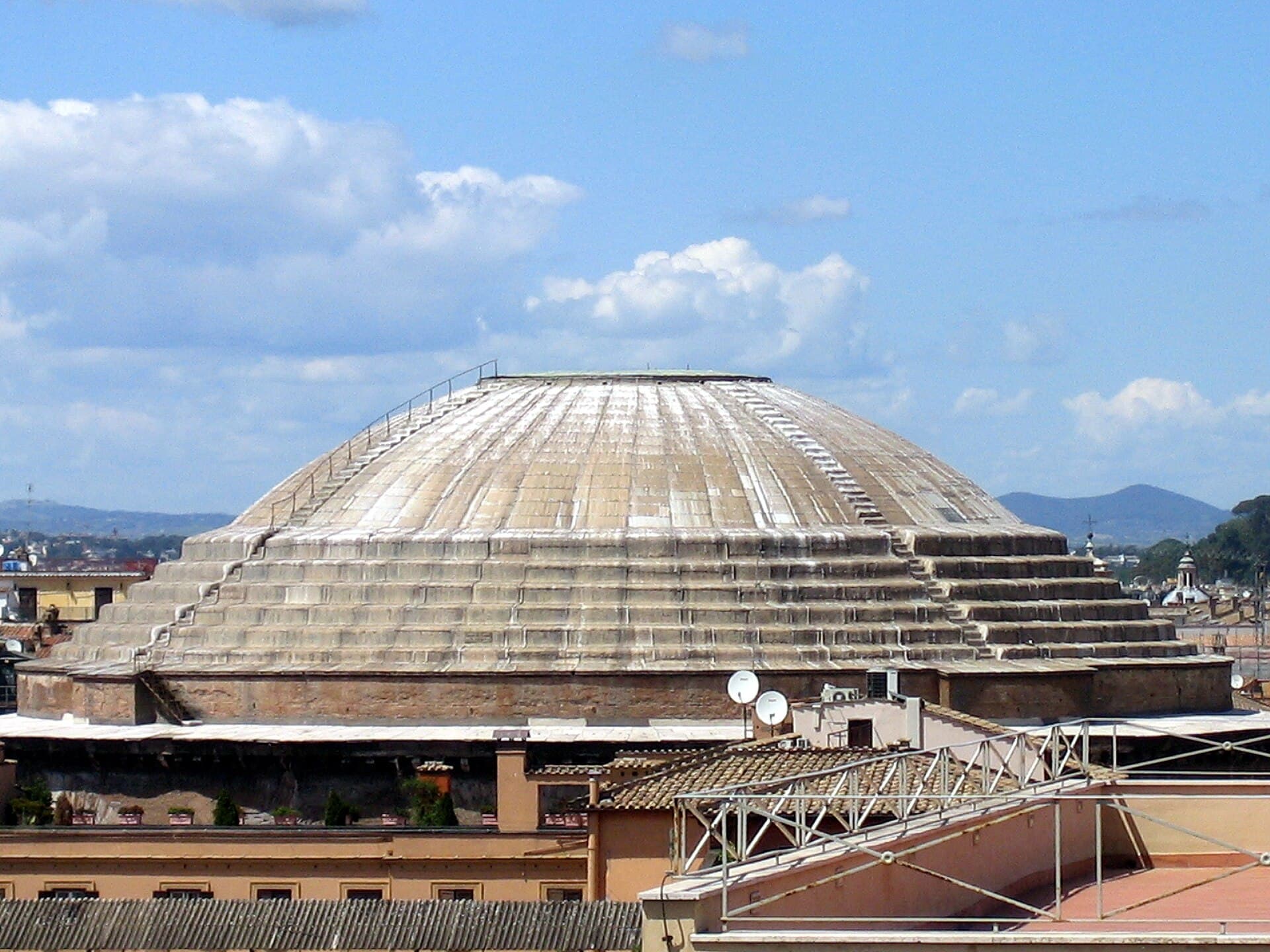
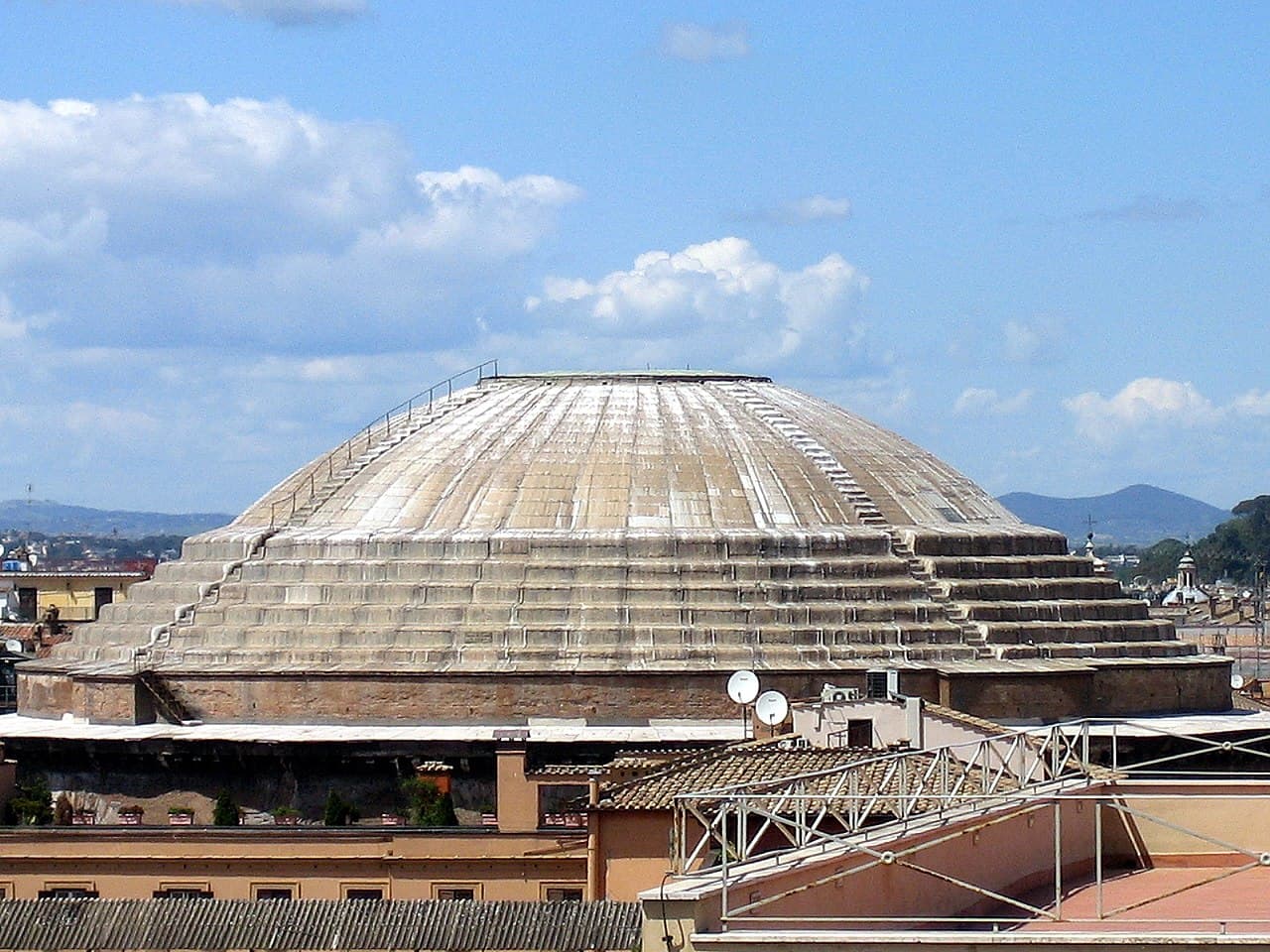
The Pantheon in Rome, with its unyielding dome casting shadows that have stretched over millennia, stands as a testament to the engineering prowess of ancient Rome. Completed in 126 CE during the reign of Emperor Hadrian, the dome spans an astonishing 43.3 metres and features a central oculus 8.7 metres in diameter. Despite its monumental size, it remains the largest unreinforced concrete dome in the world, a title it has held for nearly two thousand years. By comparison, the modern world has struggled to replicate this feat; the largest contemporary unreinforced concrete dome, completed in the 1960s, spans merely 30 metres. How did the Romans achieve such enduring mastery over concrete, a material we claim to know well but rarely employ to such lasting effect?
What concrete is
Concrete, in its essence, is a composite material composed of an aggregate of sand, gravel, or broken stone, bound together by a paste of cement and water. This cement paste hardens through a chemical reaction known as hydration. Modern concrete primarily uses Portland cement, invented by Joseph Aspdin in 1824. Aspdin's method involved firing limestone and clay at high temperatures to produce calcium silicates. The resulting concrete is dense and strong, with a quick setting time, often reaching most of its strength within the first month. However, this rapid strength gain comes with trade-offs: it is notably brittle, susceptible to damage from thermal expansion and contraction, and vulnerable to chloride ion penetration, which is particularly damaging in marine environments.
Structures built with modern Portland cement are not known for their longevity under harsh conditions. Typically, these structures begin to degrade within fifty to a hundred years, especially when exposed to seawater. Despite being designed for a fifty-year service life, many such structures require significant repair or replacement after only three decades. This raises questions about the material's suitability for long-term applications, particularly in marine settings.
What Roman concrete was
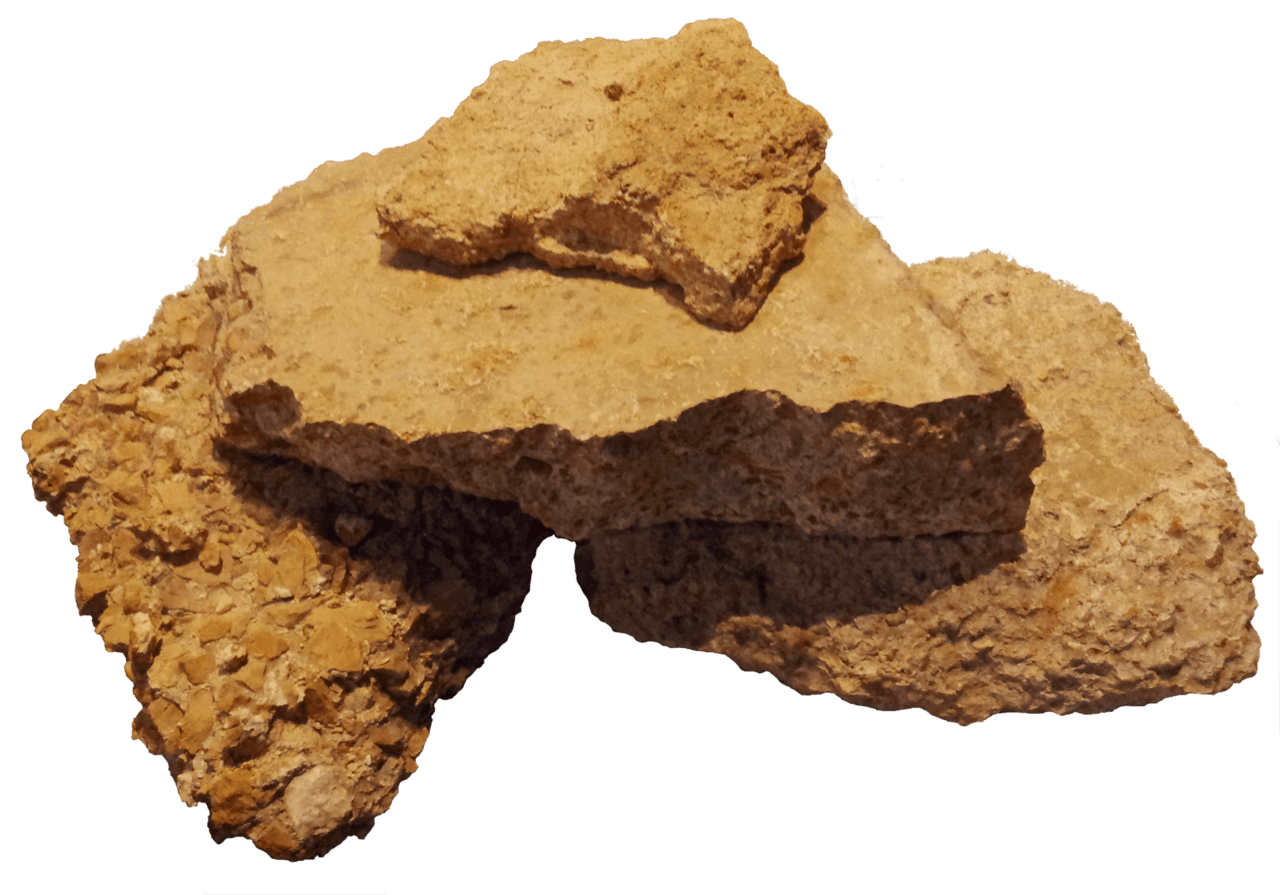
The Romans employed a markedly different approach to concrete, using opus caementicium. This ancient concrete differed fundamentally in its composition, relying on a binder made from a mixture of slaked lime (calcium hydroxide) and volcanic ash. The volcanic ash, particularly that sourced from the Pozzuoli region near Naples, was rich in reactive aluminosilicates. These components, when combined with water, underwent a pozzolanic reaction, forming complex calcium-aluminium-silicate-hydrate phases that contributed to the material’s enduring strength.
Unlike modern concrete, which achieves most of its strength relatively quickly, Roman concrete gains strength gradually over years and even decades. This slow and steady increase in durability contrasts sharply with the modern material, which begins to degrade not long after its initial curing period. The pozzolanic reaction, slower but more enduring, was a hallmark of Roman engineering.
The seawater experiments
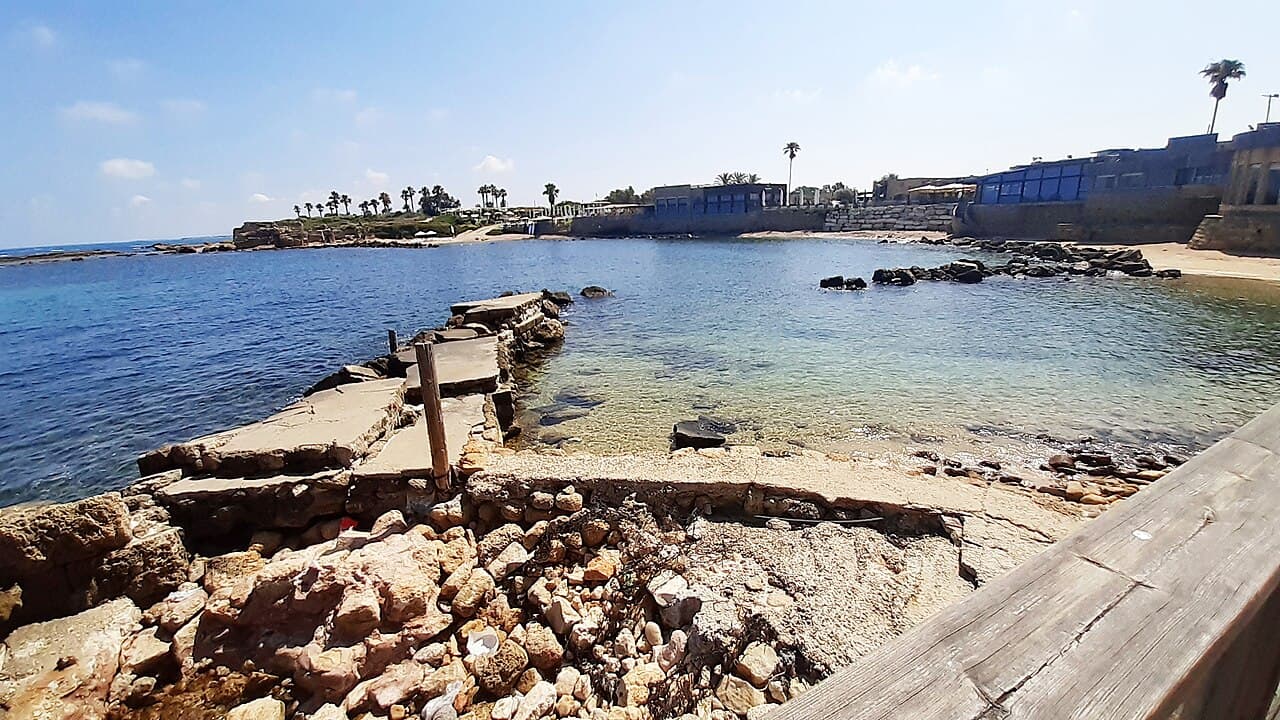
Roman structures such as the harbours at Caesarea Maritima and Portus offer compelling evidence of the material's resilience. These harbours, constructed under the reign of Herod the Great and later expanded, have withstood the ravages of seawater for over two millennia. Modern concrete, in similar conditions, often succumbs to degradation within decades. The mystery of this longevity was addressed by a 2017 study led by Marie Jackson, which analyzed cores drilled from Roman marine concrete.
Jackson's team discovered that the pozzolanic concrete used by the Romans actually becomes stronger over time due to interactions with seawater. The calcium-aluminium-silicate-hydrate gel in the concrete continues to react, forming minerals such as aluminous tobermorite and phillipsite crystals within the microcracks of the material. These crystals effectively fill and seal the cracks, not only resisting the seawater's erosive effects but actually strengthening the concrete. In essence, the seawater catalyses a self-reinforcing cycle, a phenomenon unseen in modern Portland cement.
The self-healing finding
Recent research led by Admir Masic, Linda Seymour, and Marie Jackson, published in Science Advances in 2023, has further elucidated the unique properties of Roman concrete. Their study focused on 'lime clasts', small white inclusions found in many Roman concretes. Traditionally, these were thought to be the result of poor mixing. However, the research proposes that lime clasts are intentional, serving as reservoirs of unreacted lime dispersed throughout the concrete matrix.
When microcracks form in the concrete, water infiltrates and dissolves a portion of lime from these clasts. This creates a calcium-rich solution which then precipitates as calcium carbonate, effectively sealing the crack. This self-healing mechanism was demonstrated in laboratory replications of Roman-style hot-mixing. The lime clasts provide a source of material that, when needed, can react to repair the structure, showcasing Roman concrete as a self-repairing material.
Why we don't use Roman concrete now
Despite its durability, Roman concrete is rarely used in modern construction. There are several reasons for this. Firstly, pozzolanic concrete sets slowly, which is incompatible with the rapid timelines of contemporary construction projects. The economic drive for fast turnover means waiting weeks or months for a column to become load-bearing is often impractical. Secondly, the Roman approach to concrete was empirical, relying on local materials and techniques that varied from site to site. This lack of standardisation makes it difficult to incorporate into modern engineering practices that depend heavily on predictable, uniform materials.
Furthermore, while Roman concrete may be long-lasting, modern Portland cement offers a more consistently strong and predictable short-term solution. It is this predictability and strength that has made Portland cement the go-to choice for construction in the last two centuries. However, the tide is turning: modern engineers are increasingly investigating pozzolanic blends, sometimes substituting volcanic ash with fly ash from coal plants, for projects where longevity trumps rapid build speed.
What was actually lost
The so-called 'lost secret' of Roman concrete is both a myth and a truth. While texts such as Vitruvius's 'De Architectura' provide detailed descriptions of mixing ratios and material sources, the nuanced, empirical knowledge of which materials and methods yielded optimal results faded with the dissolution of Roman administration in the West. The medieval period saw the use of inferior lime mortars and masonry, and the true scale of concrete construction did not re-emerge until the 18th century with different materials altogether.
Thus, while the scientific underpinnings of Roman concrete are now understood, the empirical knowledge that was finely tuned over centuries was indeed lost. This disconnect between ancient practice and modern understanding partly explains why such methods were not rediscovered sooner. The narrative of a 'lost secret' captures the imagination, yet the reality is both more mundane and more complex.
In contemporary contexts, the lessons of Roman concrete are becoming increasingly relevant. The 2023 paper on lime clasts began with a striking image of the Pantheon, a structure that, even today, commands awe. Its endurance is not a stroke of luck but the result of chemical fortitude suited to its era. As modern society seeks to build structures intended to last more than a single human lifetime, especially in challenging environments like marine and nuclear settings, Roman insights are resurging. The Romans may not have been better engineers; they simply answered different questions. Their priorities, focused on enduring legacy, offer us a window into sustainable construction practices that could well inform future endeavours.
References
- Jackson, M. D., et al. (2017). Phillipsite and Al-tobermorite mineral cements produced through low-temperature water–rock reactions in Roman marine concrete. American Mineralogist, 102(7), 1435–1450.
- Seymour, L. M., Maragh, J., Sabatini, P., Di Tommaso, M., Weaver, J. C., & Masic, A. (2023). Hot mixing: Mechanistic insights into the durability of ancient Roman concrete. Science Advances, 9(1).
- Vitruvius. (c. 25 BCE). De Architectura, Book II, Chapter 6 (on pozzolana).
- Brandon, C. J., Hohlfelder, R. L., Jackson, M. D., & Oleson, J. P. (2014). Building for Eternity: The History and Technology of Roman Concrete Engineering in the Sea. Oxbow Books.