
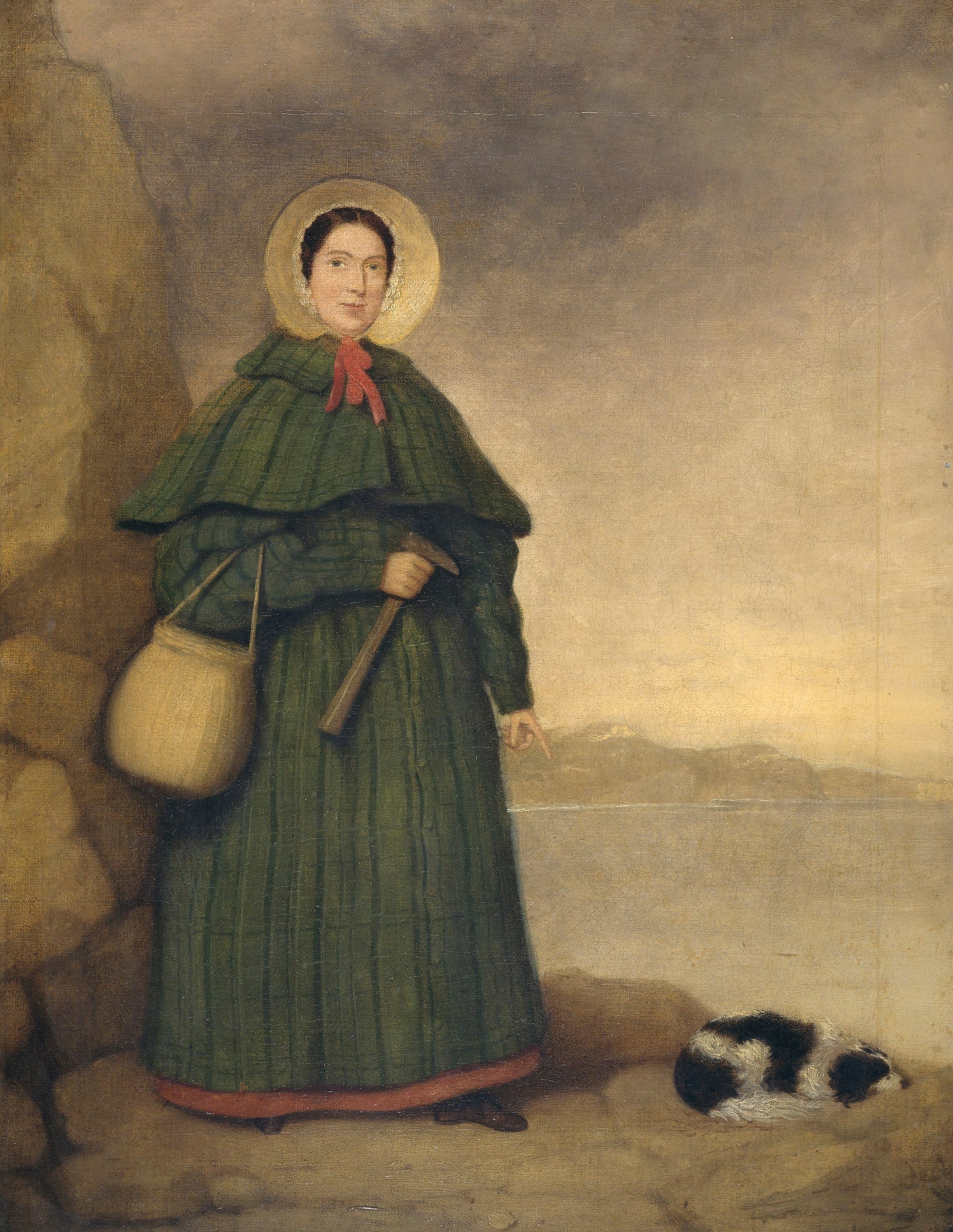
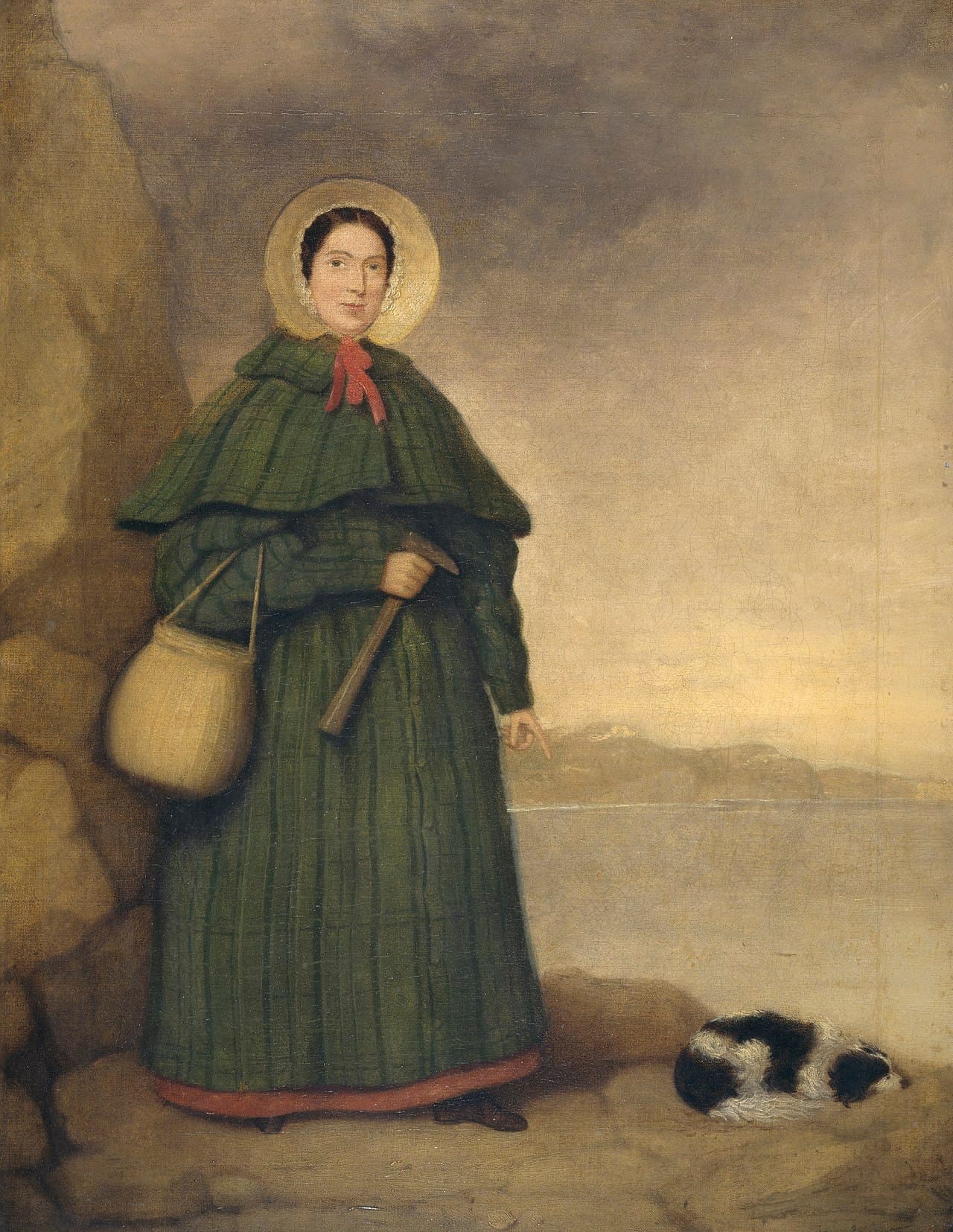
In the chill of a winter morning in 1810 or 1811, Mary Anning and her brother Joseph navigated the rugged beach of Lyme Regis, a small town on the Dorset coast known today as part of England’s Jurassic Coast. Just below the towering Black Ven cliffs, the siblings spotted something remarkable: vertebrae protruding from the cliff face. Joseph, older and slightly more experienced, managed to chip out a skull nearly a metre in length. But it was Mary, only eleven or twelve years old, who would dedicate months to painstakingly uncovering the rest of the four-metre skeleton embedded in the unstable Jurassic-age sediment. This skeleton, later identified as an ichthyosaur, or 'fish-lizard,' was a previously unknown marine reptile. It changed hands multiple times before ending up in the British Museum in 1819. The Annings had sold it for around twenty-three pounds, a significant sum for a family struggling with poverty. Thus began Mary Anning's lifelong vocation in palaeontology, one dictated not by scholarly pursuits but by sheer necessity.
Lyme Regis and the cliffs
The cliffs of the Dorset Jurassic Coast are a rare geological formation, composed of late Triassic and early Jurassic marine deposits, approximately 190 to 200 million years old. Each winter, storms batter these cliffs, causing sections to collapse and revealing fresh fossils embedded within the rock. Lyme Regis, once a bustling port, had diminished into a modest town by the turn of the 19th century. For the Anning family, the fossils exposed by these natural forces were not mere curiosities; they were a means of survival. Richard Anning, Mary's father, was a cabinetmaker, but the family found themselves in dire financial straits after his death in 1810. Mary, born in 1799, was left with little choice but to continue the family’s involvement in the marginal trade of fossil-collecting. Selling to London’s curiosity-cabinet market, Mary and her family eked out a living, driven by necessity and natural curiosity.
Mary's entry into the world of fossil discovery was marked by personal loss and economic necessity. Her family lived in poverty, and she lost nine of her eleven siblings to childhood diseases, a common tragedy in the era. The region's rich geological resources became her classroom, and she quickly developed a keen eye for the ancient relics that would become her life's work. The skills she honed would later position her as a pivotal figure in the nascent field of palaeontology, even if she would not immediately receive the recognition she deserved.
What she found
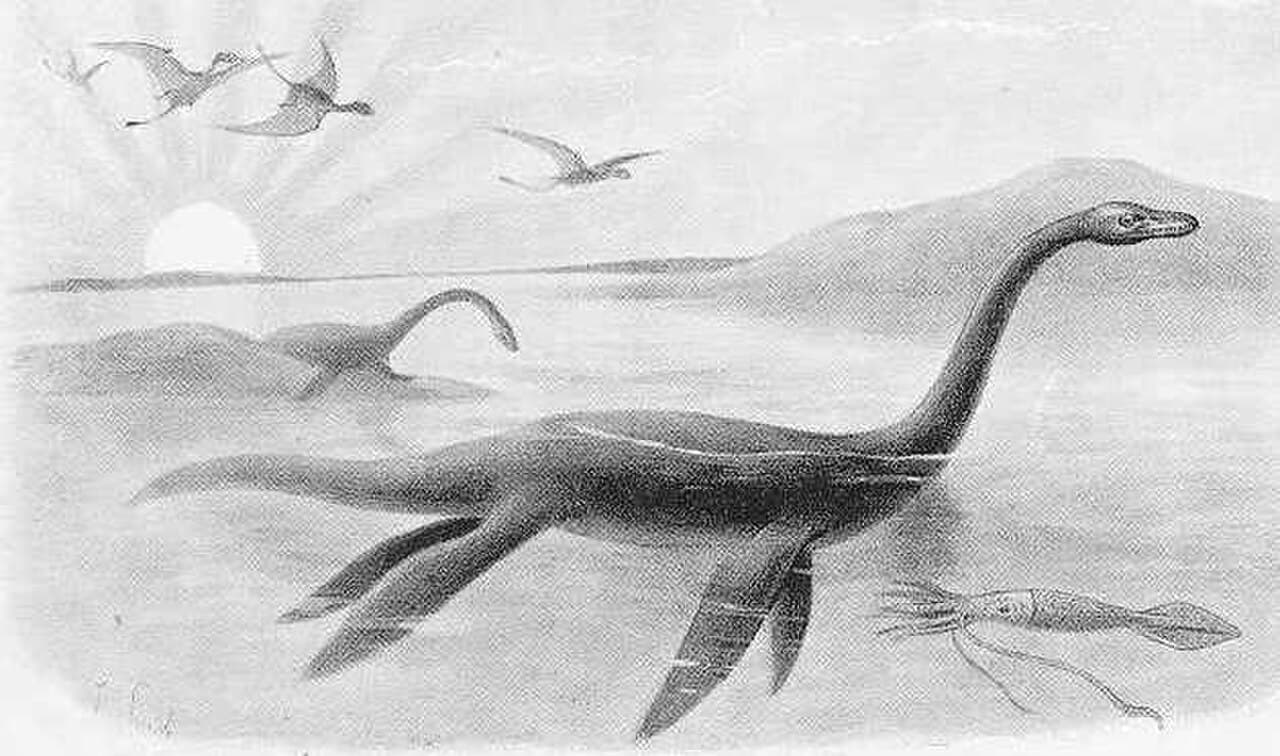
The discovery of the ichthyosaur in 1811 marked only the beginning of Anning’s remarkable contributions to palaeontology. In 1823, she unearthed the first complete plesiosaur skeleton. This discovery was particularly significant; the long-necked marine reptile had been named by William Conybeare based on incomplete specimens. When Anning presented a complete skeleton, it was so unlike any known creature that Georges Cuvier, the esteemed French naturalist, initially dismissed it as a forgery. Only after diplomatic correspondence and careful scrutiny did Cuvier accept its authenticity. Conybeare's work, which would have been impossible without Anning’s contributions, was presented at the Geological Society of London, a meeting Anning herself was barred from attending due to her gender.
Her discoveries continued with the first British pterosaur in 1828 and the first Squaloraja, a fossil fish, in 1829. Anning demonstrated that coprolites, or fossilised faeces, were the remnants of ichthyosaurs’ digestive processes, identifying their prey from the contents. She showed that belemnites, extinct squid-like creatures, had ink sacs that could still be used to write or draw. Through her diligent work, she amassed a significant collection of marine reptile fossils, which provided a foundation for British palaeontology, informing and challenging contemporary understandings of life’s history on Earth.
How she worked and what she knew
Mary Anning was largely self-taught, a testament to her determination and intellectual curiosity. In a town with limited resources, she devoured the available literature, much of it in Latin or French, languages she taught herself to read. She corresponded extensively with leading scientists of her time, including William Buckland, Henry De la Beche, and Charles Lyell, establishing herself as an expert in her field. Anning’s expertise in identifying and preparing fossils was acknowledged by those who consulted her, even if formal recognition was scant.
Her field skills were unparalleled; she understood the nuances of the Dorset coast, knowing exactly which beds would yield fossils after a storm. Her innovative techniques in fossil preparation were ahead of their time, producing specimens that were 'museum-grade' in quality. Her dog, Tray, often accompanied her, and tragically died in a cliff collapse in 1833 that nearly claimed Anning’s life as well. Modern palaeontologists who examine her sites continue to marvel at her ability to extract and preserve delicate fossil structures without the aid of contemporary tools.
Credit and its absence
Despite her contributions, Mary Anning’s name often went unmentioned in the scientific papers that described her discoveries. In 1824, William Buckland published a paper on the megalosaur, the first dinosaur to be named scientifically, crediting Anning only indirectly. Similarly, Conybeare's 1824 paper on the plesiosaur did not mention her at all. Even when her ichthyosaur was acquired by the Bristol Institution in 1823, she received no formal acknowledgment in their catalogue.
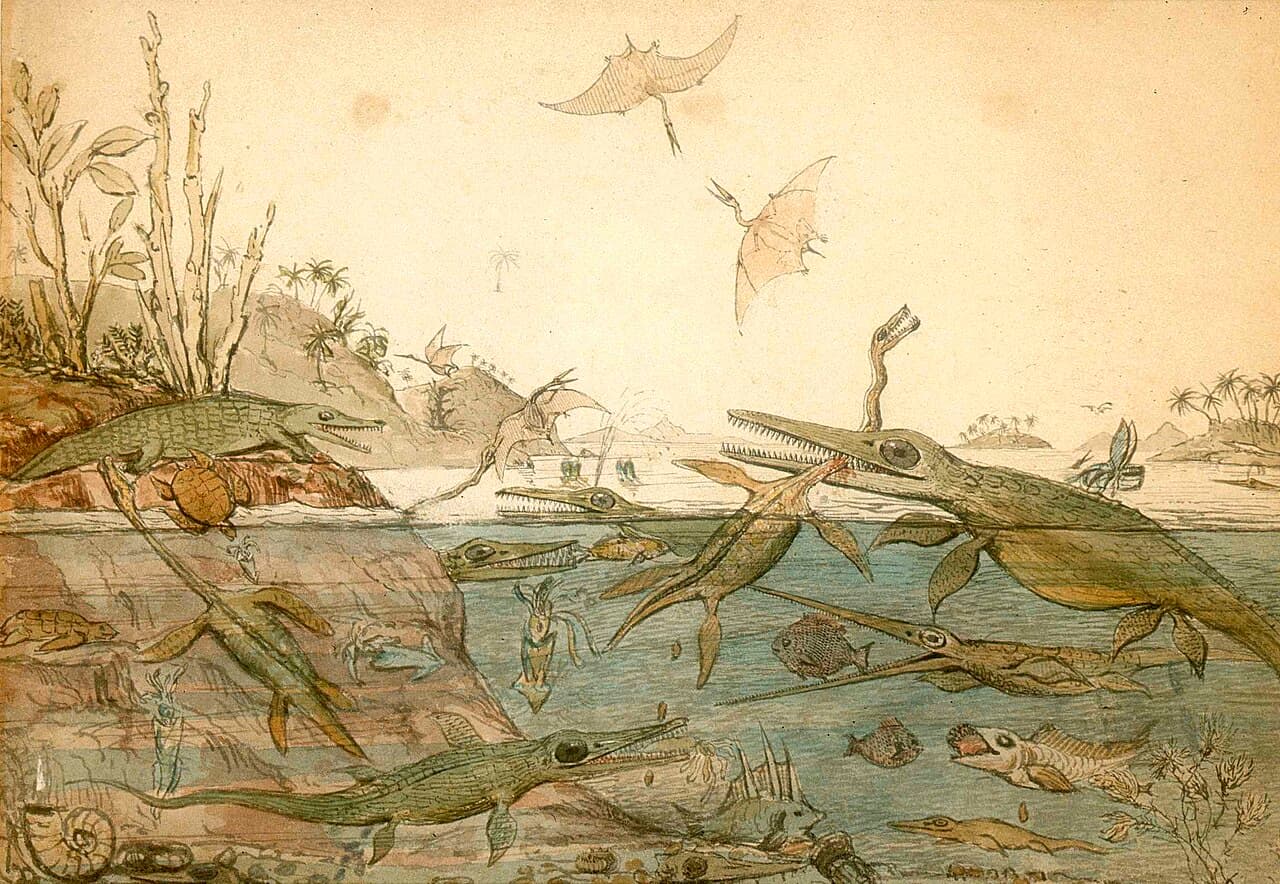
Henry De la Beche, a lifelong friend, was one of the few exceptions. He created 'Duria Antiquior' — an imaginative reconstruction of Jurassic marine life based on Anning's finds — and shared the proceeds with her, providing her some financial relief. Despite her undeniable impact on the field, Anning never received an invitation to join the Geological Society of London, which only began admitting women in 1904. However, she was honoured by the Geological Society of Cornwall as an honorary member, a rare recognition of her expertise.
Class, religion, and money
Mary Anning's life was marked by the intersecting barriers of class, religion, and gender. As a Dissenter, she was outside the established Anglican Church, which held significant sway over educational and scientific institutions. Her formal education ended early, and her family’s financial situation remained precarious. While a public subscription led by Buckland and the British Association for the Advancement of Science eventually granted her a modest annuity in the 1830s, she still relied heavily on her shop in Lyme Regis, selling fossils and curiosities to tourists.
The tongue-twister 'she sells sea-shells on the sea-shore' is believed to be inspired by Anning’s endeavours. Her death from breast cancer in 1847 at the age of 47 was marked by a eulogy from De la Beche at the Geological Society of London, the first tribute of its kind to a woman. Her passing underscored the vulnerability of those who, despite their contributions, remained at society’s margins.
What changed because of her
Mary Anning’s fossils became the bedrock of pre-Darwinian palaeontology in Britain. The ichthyosaurs and plesiosaurs she discovered provided irrefutable evidence of extinct marine reptiles, challenging the prevailing notions of a static, unchanging natural world. Her work supported Georges Cuvier’s theory of extinction, bringing the concept into focus for British scientists. Anning’s finds contributed to foundational geological work by figures like William Smith and Charles Lyell, influencing the way stratified rock layers were understood and documented.
Although Charles Darwin never met Anning, he was familiar with her discoveries and owned a plaster cast of one of her ichthyosaur finds while at Cambridge. Her contributions laid the groundwork for the Natural History Museum in South Kensington, which opened its doors in 1881, long after her death. Many of its early exhibits featured specimens purchased from her shop, a testament to her lasting impact on the field.
Today, the significance of Mary Anning's work is more widely recognised than it was during her lifetime. In 2014, Lyme Regis celebrated its first Mary Anning Day, a belated acknowledgment of her contributions. A statue commemorating her was unveiled on the Lyme Regis seafront in May 2022, the result of a crowdfunding campaign led by eleven-year-old Evie Swire. This contemporary recognition reflects a shift in how historical narratives are constructed and whose stories are told. It is a correction long overdue, driven by the efforts of historians like Hugh Torrens, whose 1995 paper and Shelley Emling's 2009 biography have been instrumental in bringing Anning’s story into the light. Her legacy is not merely in the specimens she left behind but in the insistence on acknowledging those who, against all odds, forged paths in science.
References
- Torrens, H. S. (1995). Mary Anning (1799–1847) of Lyme: 'The Greatest Fossilist the World Ever Knew'. British Journal for the History of Science, 28(3), 257–284.
- Emling, S. (2009). The Fossil Hunter: Dinosaurs, Evolution, and the Woman Whose Discoveries Changed the World. Palgrave Macmillan.
- Natural History Museum, London. Mary Anning: the unsung hero of fossil discovery.
- Pierce, P. (2014). Jurassic Mary: Mary Anning and the Primeval Monsters. The History Press.


