
On the island of Thera, now known as Santorini, a cataclysmic event occurred around 1600 BCE that would forever alter the landscape and hide an entire civilisation beneath layers of volcanic ash. The Thera eruption, the largest Mediterranean event of the second millennium BCE, was a colossal force—six to eight times the magnitude of the 1815 Tambora eruption. This eruption buried the central part of the island under a staggering thirty to sixty metres of pumice and ash, resulting in the collapse of the island's centre and forming the caldera we see today. In the days or weeks leading up to the eruption, the inhabitants of Akrotiri, a bustling town on the island, evacuated. Remarkably, almost no human remains were left behind. What was preserved, sealed beneath the pumice, were the town's structures, pottery, bronze tools, imported goods from Egypt and the Levant, and the exquisite painted frescoes adorning the walls of the more affluent homes. Unearthed beginning in 1967 by the Greek archaeologist Spyridon Marinatos, these frescoes offer a glimpse into a civilisation with a visual sensibility distinct from its contemporaries in the Bronze Age.
The eruption and its date
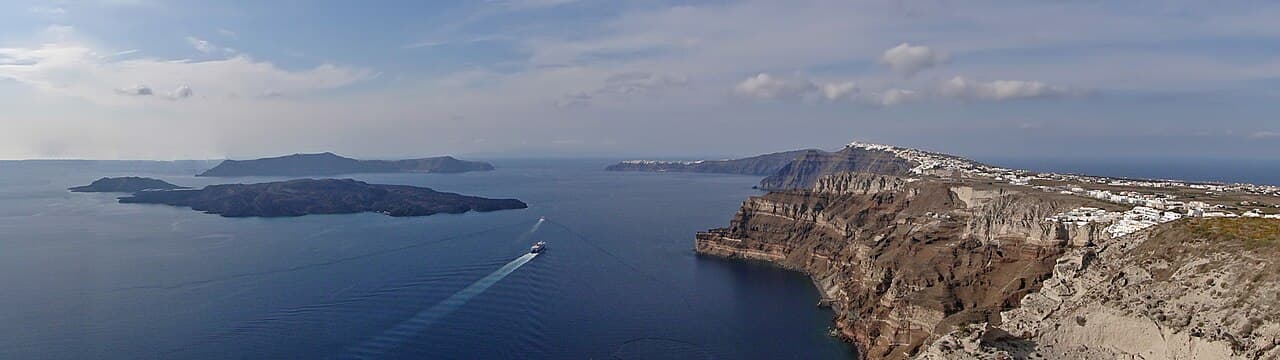
The Thera eruption, often referred to as the Minoan eruption due to its connection with Minoan civilisation, stands out as one of the largest volcanic events of the Holocene epoch. Estimates place the volume of material ejected by the eruption between 30 to 86 cubic kilometres of dense rock equivalent. For context, the 1980 eruption of Mount St. Helens expelled roughly 10 cubic kilometres, while the Tambora eruption in 1815 released about 100 cubic kilometres. The event unfolded in multiple phases, beginning with an initial pumice fall that lasted several days, followed by pyroclastic surges and culminating in the dramatic collapse of the central caldera. This sequence likely spanned a few days, marking one of the most significant natural catastrophes of its era.
The precise dating of the eruption has been a matter of considerable debate. Radiocarbon analyses of olive branches and seeds buried within the eruption layers consistently point to a timeframe around 1620-1600 BCE. Additionally, sulphate spikes found in the GISP2 ice core from Greenland, dating to approximately 1623 BCE, have been attributed by some researchers to this eruption, though this attribution remains contested. Archaeological sequences from the Eastern Mediterranean initially suggested a later date, around 1500 BCE. This discrepancy between the 'high chronology' based on radiocarbon dating and the 'low chronology' derived from archaeological evidence has sparked ongoing discussions among scholars. As of now, the cautious consensus aligns with a date in the 17th century BCE, bridging the gap between scientific and historical perspectives.
What Akrotiri was
Before its untimely burial, Akrotiri was a thriving maritime trading hub. The town's architecture reflected its prosperity and sophistication—buildings were constructed from dressed stone and timber, rising to two or three storeys. The streets were paved, complete with drainage systems, and the town boasted advanced indoor sanitation facilities, including what are considered the earliest known flushing toilets in the Aegean. Based on the density and size of the buildings, the population was estimated to be between 1,500 and 3,000 inhabitants. Akrotiri was a bustling node within a broader network of trade, evidenced by the array of imported goods discovered within its ruins.
These goods included faience and ostrich-egg vessels from Egypt, cylinder seals and pottery from the Levant, metalwork from Anatolia, and various artefacts from across the Aegean. The pottery found at Akrotiri was a mix of local creations and imports, including distinctive Minoan amphorae from Crete, early Mycenaean wares from the Greek mainland, and Cycladic products. The presence of elaborate frescoes within private residences underscores the town's wealth; these were not merely decorative but indicative of a cultural milieu that valued artistic expression. Although no temples have been uncovered at the site, the cultural influences of the Cycladic and Minoan worlds are unmistakable, reflecting a blend of local traditions and external inspirations from nearby Crete, whose Knossos palace represented the zenith of Aegean architecture at the time.
The frescoes
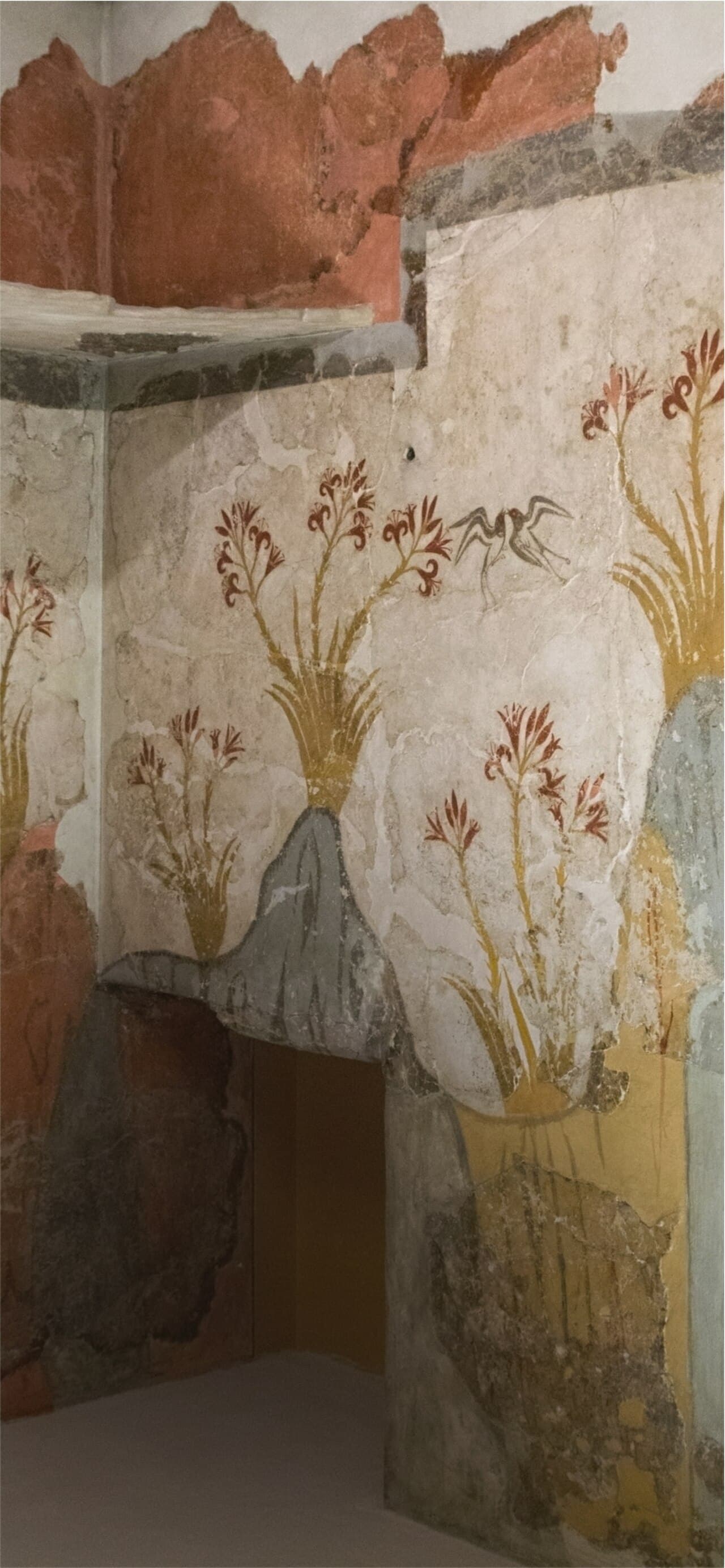
The excavations led by Spyridon Marinatos from 1967 and continued by Christos Doumas from 1974 revealed a town richly adorned with frescoes. Among the most celebrated of these are the 'Spring Fresco', the 'Boxing Boys', the 'Fishermen', and the 'Saffron Gatherers'. The 'Spring Fresco', located in House 2, room 2.5, is a vivid depiction of a rocky landscape abloom with lilies and swallows darting through the air, notable for being the only complete wall fresco from the period to illustrate a pure landscape devoid of human presence. The 'Boxing Boys', discovered in House Beta, captures two young boys with shaved heads engaged in boxing, a scene full of dynamic movement and youthful energy.
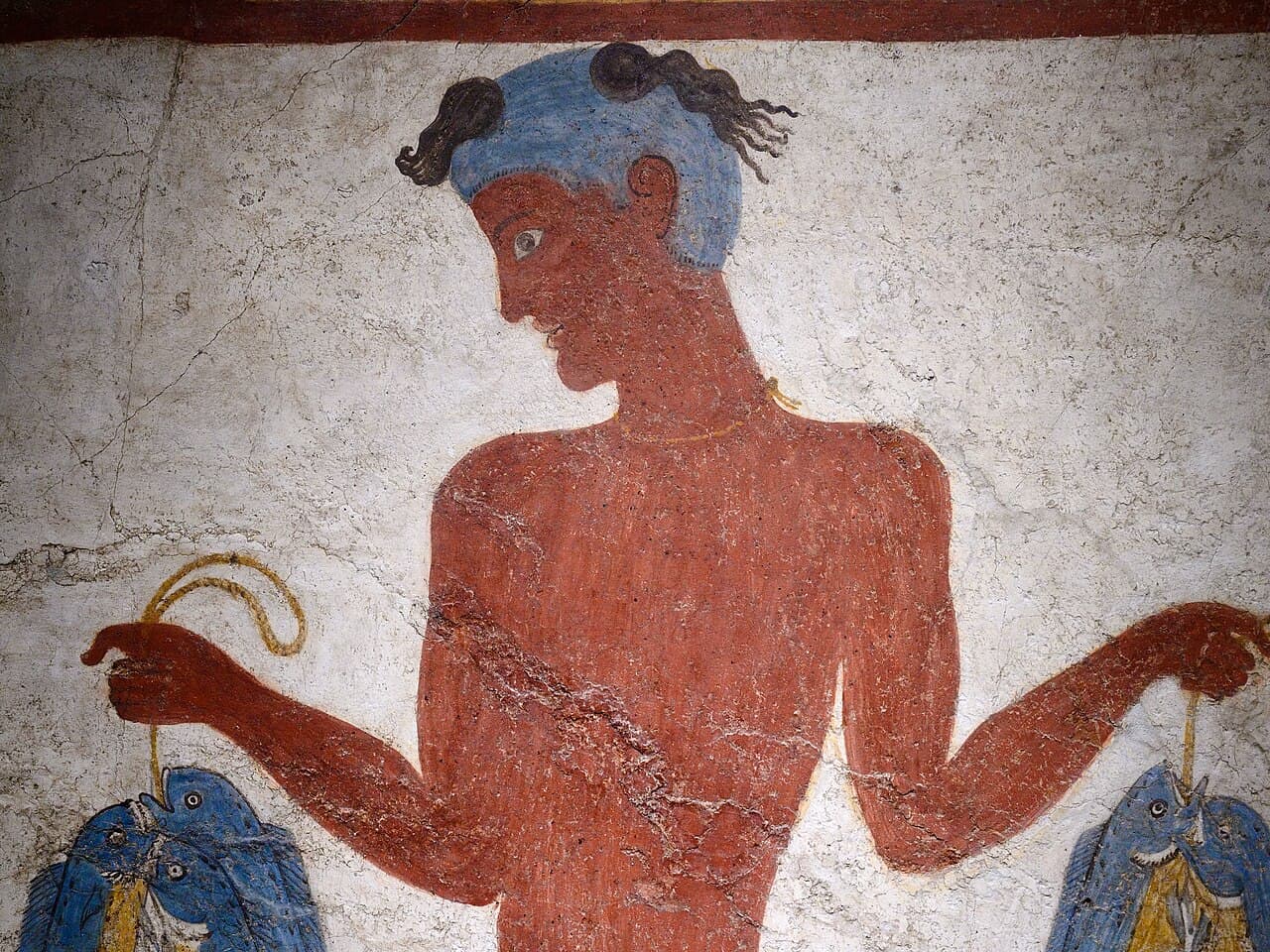
The 'Fishermen' fresco from the West House presents young men proudly bearing strings of mahi-mahi, a testament to the town's maritime culture. The 'Saffron Gatherers', found in Xeste 3, portrays young women in intricately patterned garments collecting saffron crocuses, suggesting both the economic and cultural significance of saffron in Akrotiri. Perhaps the most iconic is the 'Miniature Frieze', also from the West House, which offers a detailed panoramic view of a bustling town, its residents, and a fleet of ships setting sail under calm skies. This frieze is unparalleled in its depiction of everyday life—a marked contrast to the grandiose religious or royal themes common in Egyptian and Mesopotamian art of the same period. The artistic style of these frescoes, characterised by fluid lines, naturalistic detail, and vivid colours, provides a rare glimpse into a society whose artistic priorities were as much about capturing daily life as about glorifying deities or rulers.
What the absence of bodies tells us
The absence of human remains at Akrotiri is a fact as telling as it is haunting. Unlike Pompeii, where approximately 2,000 bodies were found trapped in the pyroclastic flows, Akrotiri's pumice layers have yielded no human remains. This absence suggests that the town's evacuation was almost entirely successful, indicating that the residents had ample warning of the impending disaster. The precursor seismic activity, accompanied by the initial pumice falls, likely provided the inhabitants with the signs they needed to flee.
This effective evacuation implies a community capable of organising and executing a mass departure with extraordinary efficiency. The fact that many valuable items were left behind suggests that the evacuees anticipated returning once the danger had passed. Their fate, however, remains a mystery. Post-eruption, the Aegean trade network persisted, albeit disrupted, and it is plausible that many Akrotiri inhabitants resettled across the Cycladic islands, Crete, or the mainland. Meanwhile, Minoan Crete itself experienced a decline, which some attribute to the eruption's aftereffects, such as tsunamis damaging ports and volcanic ash affecting agriculture. In the following century, dominance in the region shifted to the Mycenaean Greeks on the mainland.
The Atlantis question
The Thera eruption has frequently been linked to the legend of Atlantis, as recounted by Plato in his dialogues 'Timaeus' and 'Critias'. Written around 360 BCE, Plato's account describes a powerful Mediterranean civilisation that was obliterated in 'a single day and night' by seismic and marine cataclysms. This story, attributed to Egyptian priests who supposedly relayed it to the Athenian lawgiver Solon, bears a tantalising resemblance to what we know of Akrotiri—its wealth, maritime prowess, and sudden destruction.
The hypothesis that Akrotiri might be the historical underpinning for Atlantis was most prominently advanced by Angelos Galanopoulos in the 1960s. He suggested that this narrative had been preserved through Egyptian oral traditions until it reached Plato. However, the hypothesis is not without its challenges. Plato described Atlantis as being larger and situated beyond the Pillars of Hercules—modern-day Strait of Gibraltar—whereas Thera is squarely within the Aegean. Despite these inconsistencies, the parallels between the Thera eruption and the Atlantis legend remain a compelling, albeit speculative, component of the discussion surrounding both topics. While the archaeological community maintains a cautious stance, the connection has captured the public imagination and remains part of mainstream Atlantis discourse.
Why this site changes the picture of the Bronze Age
The discoveries at Akrotiri have significantly reshaped our understanding of the Bronze Age in the Aegean region. Prior to these excavations, knowledge of the period was largely derived from the sites of Crete, such as Knossos and Phaistos, and the Mycenaean centres on the Greek mainland. Akrotiri emerged as a crucial third point of reference, providing fresh insights into the cultural and economic dynamics of the time. The frescoes, with their distinctive maritime and naturalistic themes, underscore a broader Aegean cultural sphere that extended beyond Crete's hegemony, suggesting a more interconnected and culturally complex region.
The trade goods found at the site further confirm the extensive networks of commerce that linked Akrotiri to regions as far afield as Egypt, Anatolia, and the broader Mediterranean. The absence of fortifications around the town suggests a period of relative peace, contrasting with the often tumultuous political landscapes of other ancient civilisations. The sophisticated infrastructure, including advanced sanitation systems and emergency preparedness that enabled a successful evacuation, speaks to the inhabitants' organisational competence. Continued excavation at the site, which has only partially revealed its secrets, promises to further enhance our understanding of this pivotal period in human history. Akrotiri challenges older narratives that portrayed the Aegean Bronze Age as primarily dominated by Crete or Mycenaean Greece, offering a more nuanced picture of cultural and commercial interactions across the region.
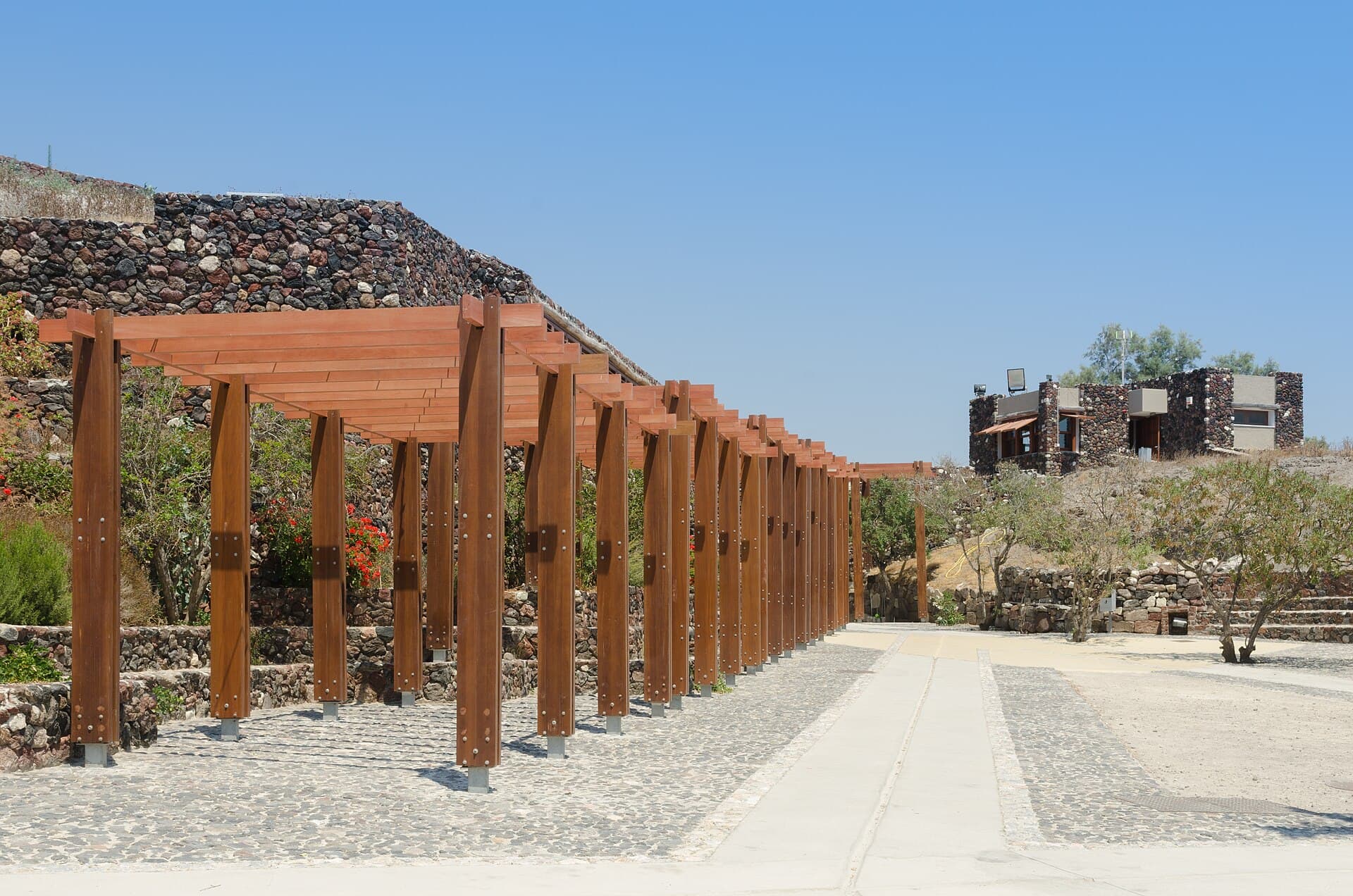
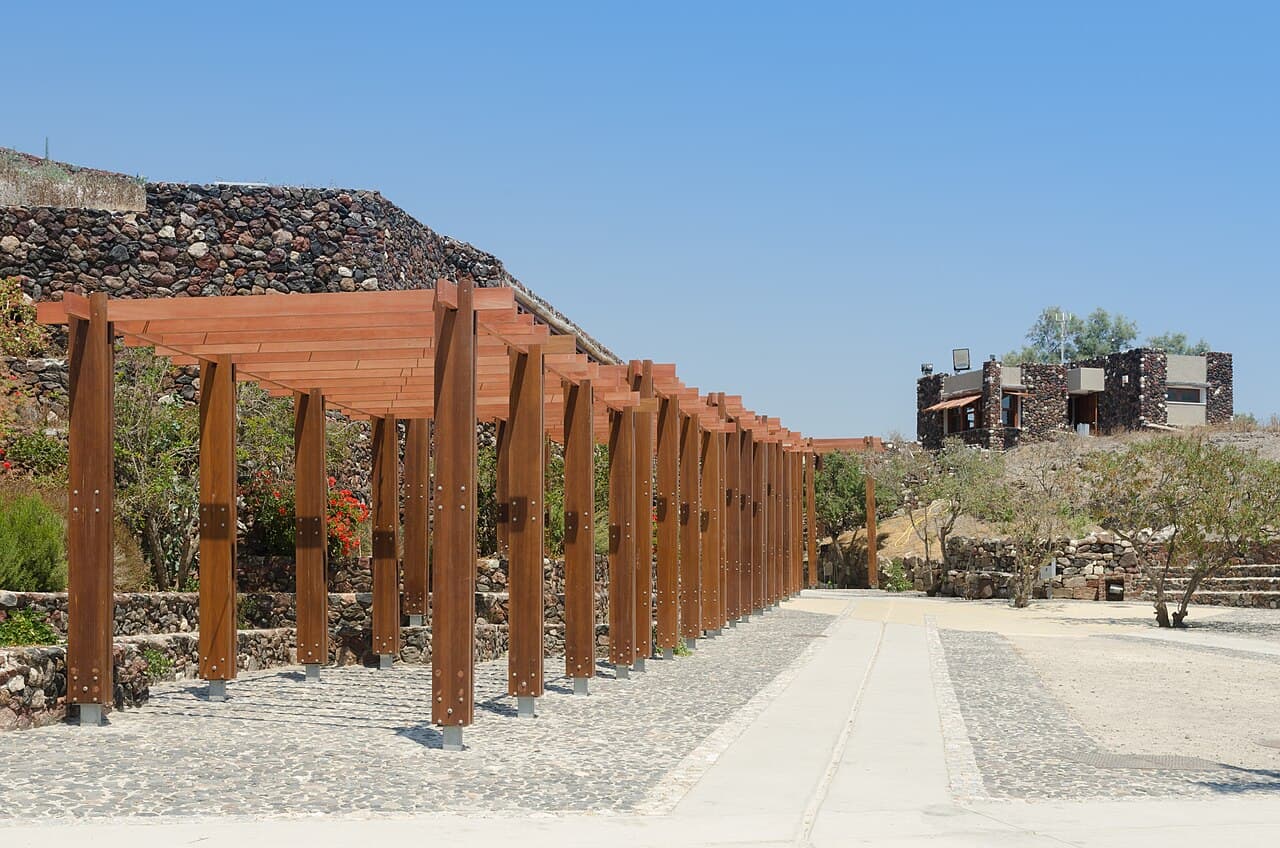
Today, the Akrotiri site is open to the public, protected by a bioclimatic shelter completed in 2012, which preserves the excavation from environmental damage. Visitors can walk along metal catwalks, peering down at the ancient streets and structures once teeming with life. Although the frescoes themselves have been removed and conserved, many can be seen in the National Archaeological Museum of Athens and the Museum of Prehistoric Thera at Fira on Santorini. As archaeologists continue to unearth Akrotiri from its volcanic tomb, the site remains an active testament to a vibrant civilisation that once thrived on the slopes of a mighty volcano. The Santorini caldera, born from the same eruption that buried Akrotiri, continues to captivate as one of the most picturesque landscapes in the Mediterranean. Though the volcano is dormant, recent geological activity reminds us of its latent power, a silent echo of the ancient eruptions that shaped the island's past.
References
- Doumas, C. (1992). The Wall-Paintings of Thera. The Thera Foundation.
- Friedrich, W. L., et al. (2006). Santorini Eruption Radiocarbon Dated to 1627-1600 B.C. Science, 312(5773), 548.
- Marinatos, S. (1968-1976). Excavations at Thera. Athens Archaeological Society.
- Pearson, C. L., et al. (2018). Annual radiocarbon record indicates 16th century BCE date for the Thera eruption. Science Advances, 4(8), eaar8241.


