
On the morning of 28 November 1967, at the Mullard Radio Astronomy Observatory near Cambridge, Jocelyn Bell, a 24-year-old second-year PhD student, examined the chart-recorder output from the Interplanetary Scintillation Array. The array, an expanse of fixed antennas spanning four and a half acres, was a project she had physically helped to construct over the previous two years. The work was meticulous, with the chart paper rolling out at thirty metres a day. Bell had been scrutinising these endless sheets for months, her trained eye attuned to the regular signatures of interplanetary scintillation. But on this particular morning, she detected something unusual—a 'bit of scruff' as she described it—a series of rapid pulses, each lasting about 0.04 seconds, repeating every 1.3373 seconds with remarkable precision. Such signals were unprecedented in astronomy. Over the subsequent months, Bell discovered three more sources across the sky, each possessing its own steady period. These were the first identified pulsars.

How she got there
Jocelyn Bell's path to this groundbreaking discovery was shaped by a series of educational and scientific challenges. Born in Belfast in 1943, her early encounter with gender biases in education nearly derailed her scientific aspirations. Having failed the qualifying examination for science classes, she faced the prospect of joining the domestic science track—a fate typical for girls at her school. However, her father, an architect, intervened, insisting that the school revise its policies. This advocacy allowed Bell to pursue her passion for physics. She subsequently attended the University of Glasgow, where she completed her undergraduate degree in physics before commencing her PhD studies at Cambridge in 1965 under the supervision of Antony Hewish, a prominent radio astronomer.
Hewish's ambitious project aimed to utilise interplanetary scintillation—the twinkling of compact radio sources caused by the solar wind—to pinpoint quasars. Bell's initial role was to assist in the construction of the array, a daunting task involving over two thousand dipole antennas spread across two hectares, all connected by hand. Her meticulous analysis of the output data became integral to the project. After six months of operations, Bell had developed an acute sense for discerning the typical patterns of scintillation; the anomalous 'scruff' she observed stood in stark contrast to these familiar signals.
Two months of detective work
Bell embarked on an exhaustive investigative process to determine the nature of the signal. Her first priority was to eliminate the possibility of terrestrial interference. A signal recurring at the same sidereal time each day—fixed relative to the stars—strongly suggested an astronomical origin. Using a higher-time-resolution recorder, Bell confirmed the peculiarities of the signal: pulses truly were 0.04 seconds wide, recurring every 1.3373 seconds. The regularity was striking, yet inexplicable by known astronomical phenomena.
The unusual characteristics of the pulses led Bell and Hewish to briefly entertain the notion of an extraterrestrial source, whimsically labelling the signal 'LGM-1' for 'Little Green Men'. However, the discovery of a second source in January 1968, with a different period and from a different direction, rendered this hypothesis implausible. The notion of two independent extraterrestrial civilisations sending signals to Earth was quickly dismissed. The signals were natural, not artificial. Their findings were published in the prestigious journal Nature on 24 February 1968, with Bell as the second author of the paper detailing this astonishing discovery.
What pulsars are
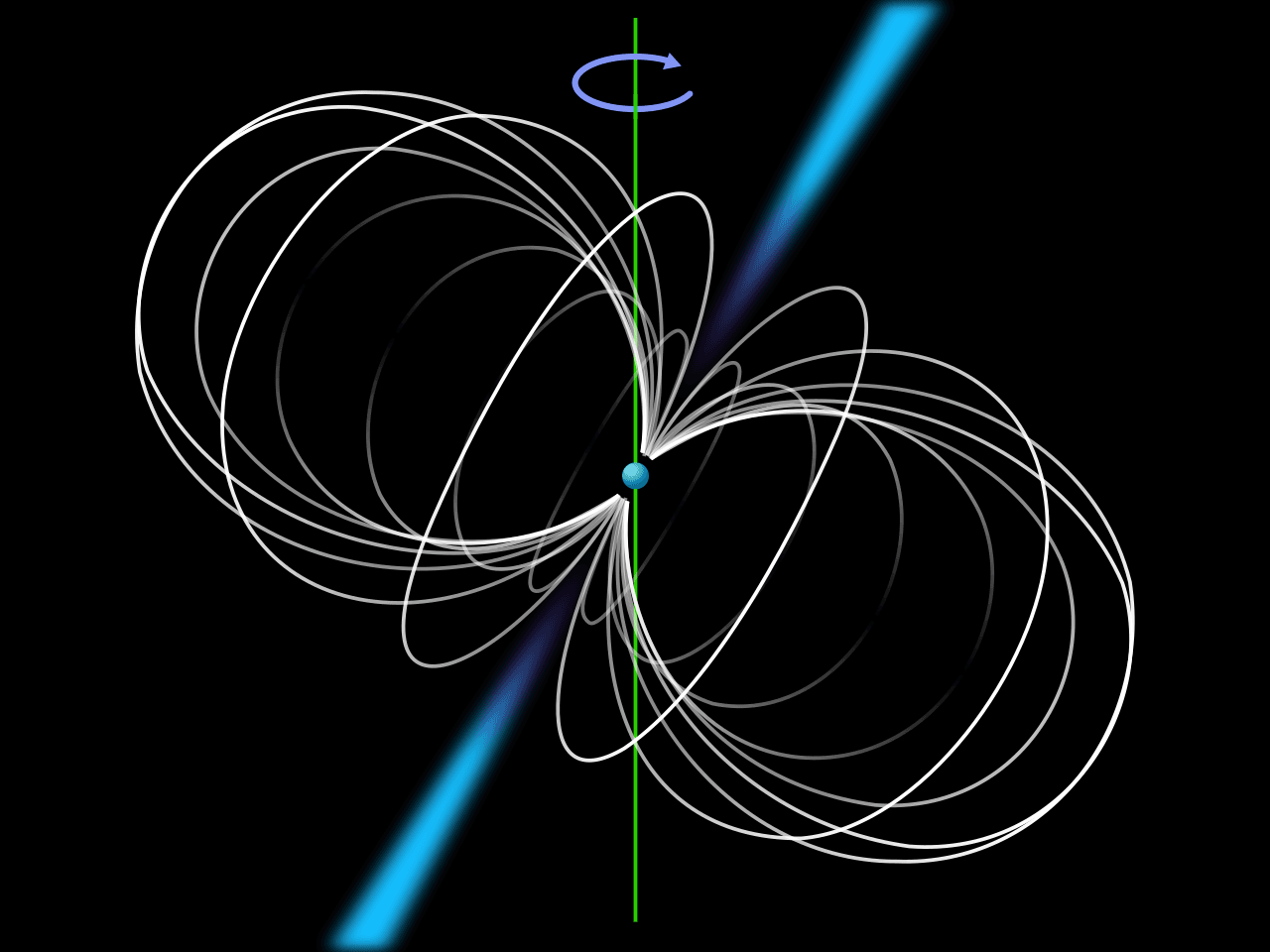
The theoretical explanation for these enigmatic signals came swiftly. Within months, astrophysicists Thomas Gold and Franco Pacini independently formulated a model that identified pulsars as rotating neutron stars. These stellar remnants, the dense cores left behind after supernova explosions, have masses approximately 1.4 times that of the Sun, yet are compressed into a sphere merely twenty kilometres across. Their magnetic fields are immensely powerful—estimated to be around 10^12 times stronger than Earth's—and are misaligned with their rotation axes.
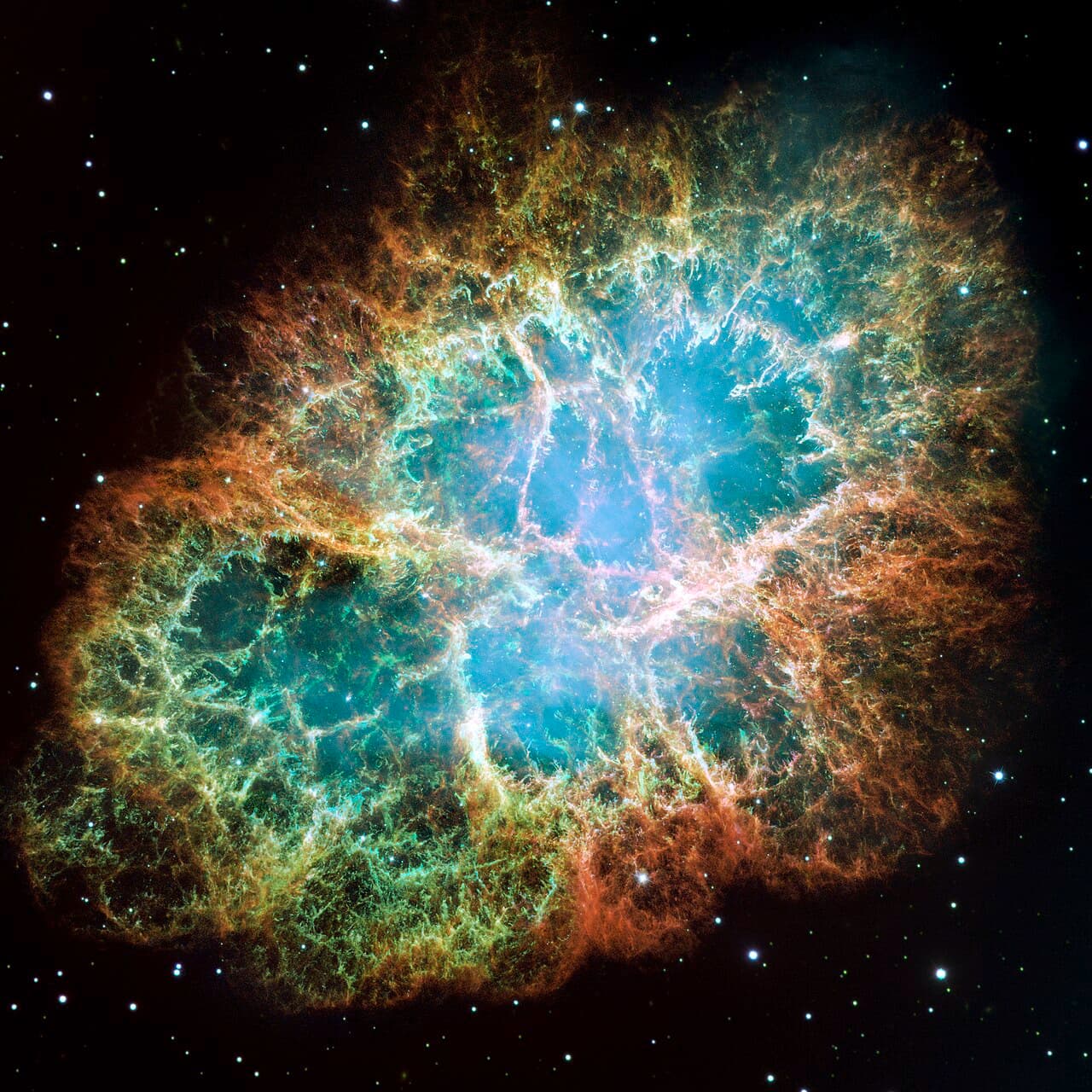
This misalignment results in beams of radio waves being emitted from the magnetic poles. As the star rotates, these beams sweep through space like a lighthouse beam. When one of these beams intersects with Earth, it manifests as a pulse with each rotation. The discovery of the Crab Pulsar within the Crab Nebula—a relic of a supernova observed by Chinese astronomers in 1054—further corroborated this model. Observations showed it pulsing 30 times per second, its period gradually slowing as expected for a rotating body dissipating energy through radiation.
The 1974 Nobel
The Nobel Prize in Physics awarded in 1974 to Antony Hewish, for his 'decisive role in the discovery of pulsars', sparked significant controversy. It marked the first time the Nobel was given for an astronomical discovery. Absent from the award was Jocelyn Bell, whose diligent observation and analysis were central to the discovery. The omission was publicly criticised by figures such as Fred Hoyle, and it sparked debate within the Royal Astronomical Society. Despite the uproar, Bell herself maintained a commendably composed stance, stating her view that as a graduate student, her contributions were rightly considered part of her supervisor's larger project.
Bell's position, articulated with what many describe as remarkable grace, held that the credit reflected the traditional academic structure, where the supervisor receives recognition for the achievements of their research group. She consciously chose not to leverage her experience as part of a broader critique of the scientific establishment. However, the debate over the fairness of the Nobel conventions continued to echo, highlighting the broader issues of recognition and credit within the scientific community.
Her career after
After completing her PhD in 1969, Jocelyn Bell Burnell embarked on a distinguished career in astrophysics. She married Martin Burnell the same year, adopting his surname. Her post-doctoral work led her into various domains of astronomy, including X-ray astronomy at the Mullard Space Science Laboratory, gamma-ray astronomy at the Royal Observatory Edinburgh, and infrared and millimetre astronomy at the James Clerk Maxwell Telescope on Mauna Kea. Bell Burnell's contributions to the field extended beyond research; she served in leadership roles as the President of the Royal Astronomical Society, the Institute of Physics, and the Royal Society of Edinburgh.
In 2018, Bell Burnell received the Special Breakthrough Prize in Fundamental Physics, accompanied by a monetary award of three million dollars. In a move reflective of her commitment to supporting underrepresented groups in science, she donated the entire prize to the Institute of Physics. Her gift established the Bell Burnell Graduate Scholarship Fund, intended to assist women, ethnic-minority, and refugee students pursuing physics at the doctoral level. This fund has since enabled numerous students to advance their academic careers, furthering Bell Burnell's enduring impact on the scientific community.
What pulsars did for physics
The discovery of pulsars opened unprecedented avenues in physics and astronomy. One of the most significant developments occurred in 1974 when Russell Hulse and Joseph Taylor identified the first binary pulsar, PSR B1913+16, consisting of two neutron stars orbiting each other. Their observations revealed the orbit decaying precisely as predicted by Einstein's general relativity for systems emitting gravitational waves. This landmark finding earned Hulse and Taylor the Nobel Prize in Physics in 1993, further validating the foundational work initiated by Bell's detection.
Moreover, millisecond pulsars discovered from 1982 onward proved to be exceptional natural clocks, boasting precision to the nanosecond over extended periods. These pulsars now function as a galaxy-spanning detector array, sensitive to low-frequency gravitational waves, thereby cementing their role in advancing our understanding of the universe. From their humble origins as 'bits of scruff' on Bell's chart paper, pulsars have become indispensable tools in the physicist's toolkit, anchoring contemporary astrophysical research.
The story of Jocelyn Bell Burnell is often reduced to the headline of the Nobel omission, yet its true significance lies in the meticulous science conducted during those critical months of 1967-68. As a second-year graduate student, Bell's work exemplified scientific rigour and perseverance. Her identification of a new class of astronomical objects prompted discoveries that garnered multiple Nobel Prizes and advanced entire fields. While recognition eventually followed, the core of her legacy remains the transformative science she performed. This enduring impact far outweighs the initial oversight, illustrating the profound nature of her contributions to physics and astronomy.
References
- Hewish, A., Bell, S. J., Pilkington, J. D. H., Scott, P. F., & Collins, R. A. (1968). Observation of a Rapidly Pulsating Radio Source. Nature, 217, 709–713.
- Bell Burnell, S. J. (1977). Petit Four. Annals of the New York Academy of Sciences, 302(1), 685–689. [Bell Burnell's own account of the discovery.]
- Gold, T. (1968). Rotating Neutron Stars as the Origin of the Pulsating Radio Sources. Nature, 218, 731–732.
- Special Breakthrough Prize in Fundamental Physics (2018). Citation for Jocelyn Bell Burnell.