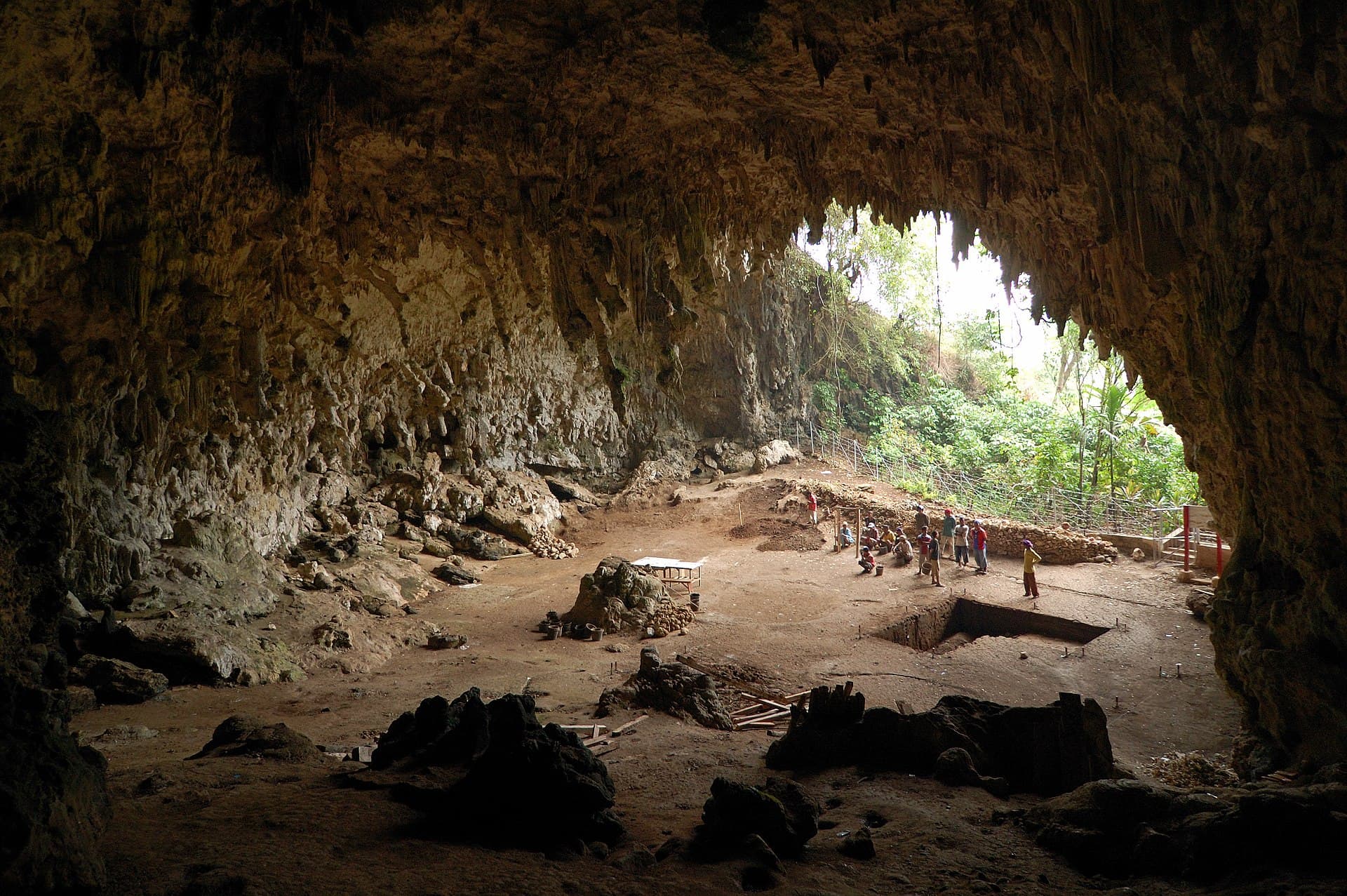
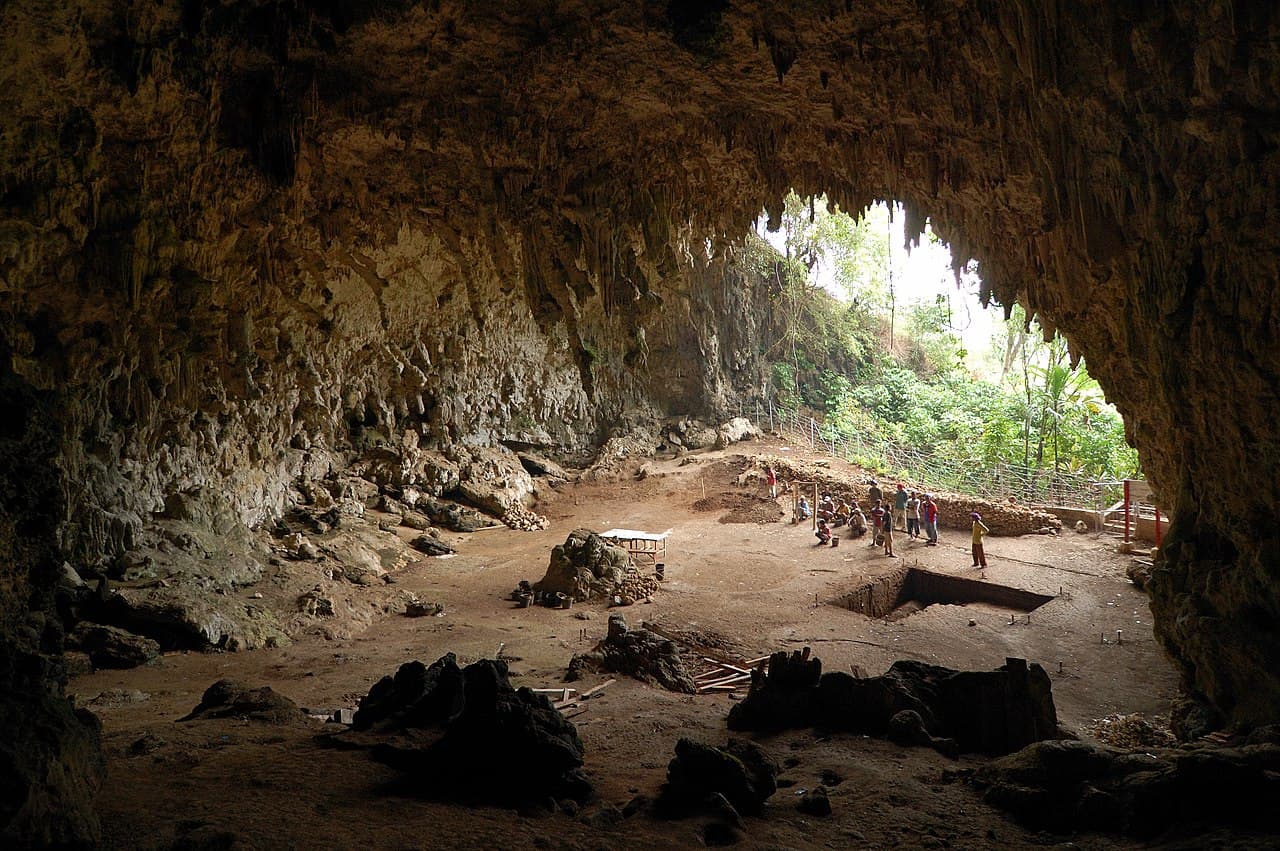
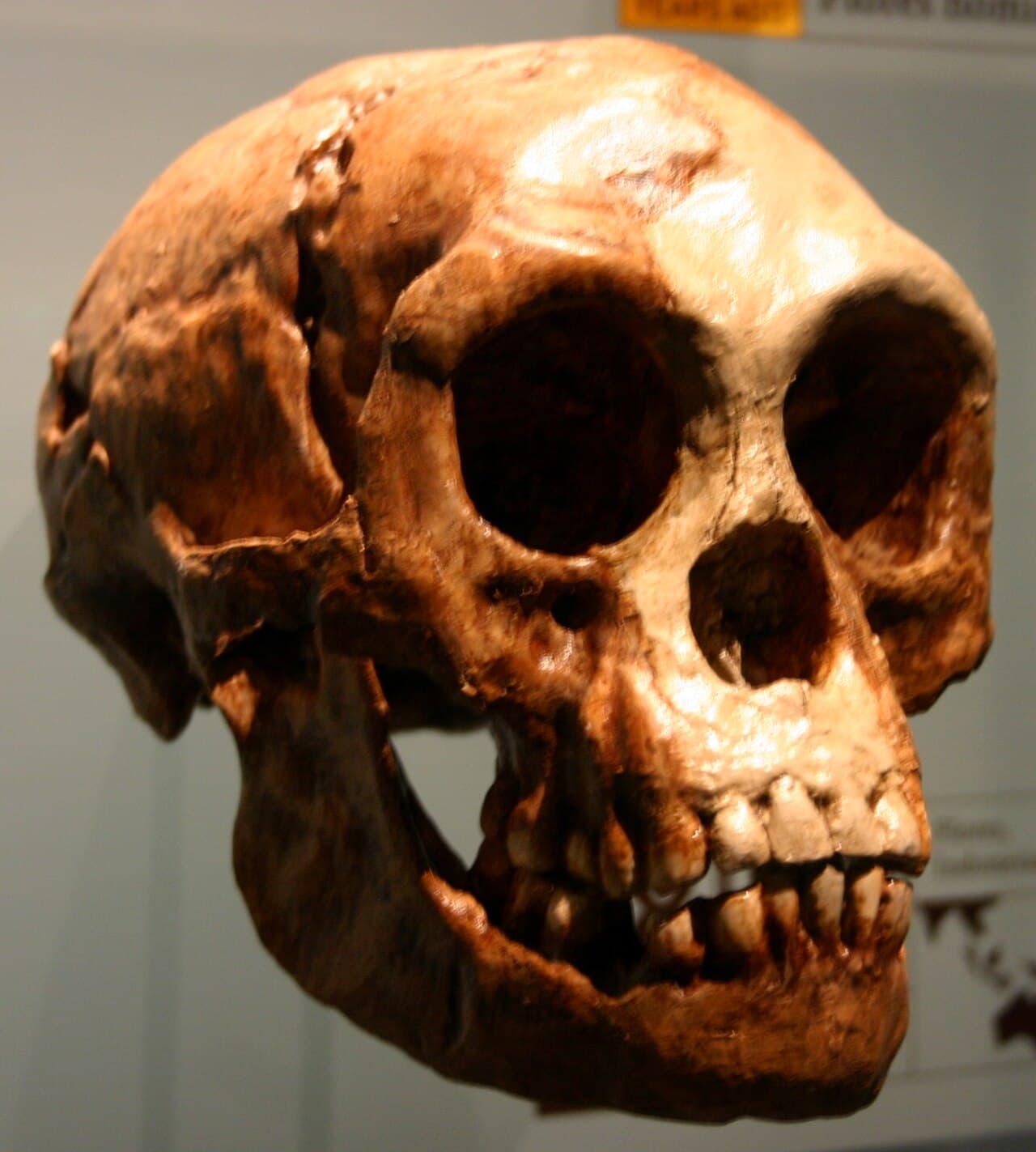
In September 2003, within the dim confines of Liang Bua, a limestone cave situated on the island of Flores in eastern Indonesia, an archaeological team embarked on a task that would eventually reshape our understanding of human evolution. This joint Indonesian-Australian team was led by Mike Morwood and Raden Soejono, who began excavating the cave floor in 2001, driven by a quest to uncover evidence of early human settlement on Flores. The breakthrough came when an Indonesian student named Benyamin Tarus, methodically working six metres beneath the surface, uncovered a hominin skull. The skull was shockingly small, akin in size to a grapefruit, with a cranial capacity measuring approximately 380 cubic centimetres—less than half that of a contemporary human. Over subsequent weeks, the excavation unveiled the rest of the skeleton, designated LB1: a diminutive adult female standing about a metre tall, devoid of a chin or forehead, and possessing disproportionately elongated feet. With growing realisation, the team understood they had stumbled upon a hominin unlike any Homo sapiens.
The interpretation
In October 2004, the team published their findings in two pivotal papers in Nature, formally introducing the world to Homo floresiensis. The distinctive assemblage of traits displayed by the skeleton—primitive cranial features combined with a notably small stature, elongated feet, and tools akin to those made by modern humans—suggested a previously unknown hominin species. The researchers posited that Homo floresiensis could have descended from a Homo erectus population that had reached Flores possibly a million years prior. Through the process of insular dwarfism, common among island-dwelling mammals with limited resources, these hominins may have progressively shrunk. Stone tools found at the site dated back to around 190,000 years ago, while initial dating suggested that the youngest floresiensis remains were approximately 18,000 years old. This implied the species persisted almost into the realm of recorded history, living contemporaneously with early humans.
The notion of such a distinct species surviving until so recently was both revolutionary and controversial. The hypothesis of insular dwarfism provided a plausible evolutionary narrative—one in which isolation and resource scarcity drove a significant morphological divergence from their ancestors. This interpretation, however, required rigorous scrutiny and stood to be a major reconfiguration of the accepted human evolutionary timeline.
The pushback
The interpretation faced immediate contestation, particularly from Teuku Jacob, a leading Indonesian palaeoanthropologist at Gadjah Mada University. Jacob argued that LB1 was a modern human suffering from microcephaly, a developmental disorder leading to reduced cranial size. He was not alone in this line of reasoning; other researchers suggested conditions such as Down syndrome, Laron syndrome, or cretinism might account for the unusual morphology. The controversy escalated when Jacob removed the skeleton from its storage facility in 2004, an act that strained the collaborative nature of the research and led to some bones being damaged during transport.
Despite this, over the following decade, comparative anatomical studies systematically dismantled these alternative diagnoses. LB1's wrist bones, for instance, were found to resemble those of primitive Homo species rather than modern humans. Similarly, the pelvis, foot, and shoulder structures aligned with non-sapiens hominins. By 2016, the scientific consensus had crystallised around the classification of Homo floresiensis as a distinct species, separate from Homo sapiens and undistorted by pathological conditions.
Where they came from
The origins of Homo floresiensis remain a subject of scholarly debate. The initial theory suggested that an ancestral population of Homo erectus might have arrived on Flores via sea—possibly swept there by tsunamis on natural rafts of vegetation—around a million years ago, subsequently undergoing size reduction. This phenomenon of insular dwarfism is well-documented among animals isolated on islands, where ecological niches and resources differ significantly from those on continents.
Alternatively, some scholars propose that Homo floresiensis might have descended from a more primitive hominin species, potentially predating Homo erectus, such as Homo habilis. This hypothesis suggests that floresiensis was never large to begin with. Ambiguity in the skeletal evidence leaves both hypotheses viable. However, the 2016 discovery of older, floresiensis-like remains at Mata Menge, approximately 700,000 years old, lends support to the insular dwarfism model. These remains display certain features that are intermediate between erectus and the LB1 morphology, indicating a gradual evolution on the island.
What they did
The sophistication of the stone tools discovered at Liang Bua challenges the notion of Homo floresiensis as a mere relict of an ancient lineage. These artefacts include sharp flakes, pointed tools, and potential evidence of hafting, indicative of complex tool-making skills. The presence of charred Stegodon bones—belonging to a dwarfed elephant species endemic to Flores—among the same archaeological layers as floresiensis remains, suggests these hominins were capable hunters who used fire in their subsistence strategies. The stone-tool tradition at Liang Bua exhibits continuity with that at Mata Menge, pointing to a long-standing cultural transmission over hundreds of thousands of years.
Homo floresiensis, therefore, represents more than an evolutionary anomaly. These small-brained hominins were competent toolmakers and hunters, successfully exploiting the unique ecological resources of Flores. The ability to create and use tools effectively, alongside the strategic hunting of Stegodon, speaks to a sophisticated adaptation to their environment, contradicting any assumption of primitiveness based solely on cranial capacity.
The 50,000-year revision
In 2016, a landmark study led by Thomas Sutikna and published in Nature, significantly revised the chronology of the Liang Bua findings. This redating adjusted the age of the youngest Homo floresiensis remains to approximately 50,000 years old, rather than the initially proposed 18,000 years. This adjustment was based on more precise dating techniques applied directly to the bones and the undisturbed sediment column of the floresiensis layer itself, correcting earlier errors that had arisen from redeposited sediments.
The revision places the extinction of floresiensis in close temporal proximity to the arrival of Homo sapiens in Southeast Asia. Although there is no direct evidence of interaction between the two species, the timing is suggestive of a broader pattern of hominin replacement or assimilation. This period aligns with the dispersal of modern humans across the Wallacea region—characterised by complex biogeographical barriers—and into Sahul, the combined landmass of Pleistocene Australia and New Guinea, as supported by archaeological sites throughout the area.
What the find changed
Before the discovery of Homo floresiensis, the prevailing model of human evolution depicted Homo sapiens as having replaced Homo neanderthalensis in Europe and the Levant around 40,000 years ago. This model suggested that modern humans had effectively been the sole hominin species for the past 100,000 years. However, post-2003, this narrative has been fundamentally altered. With the presence of floresiensis on Flores until potentially 50,000 years ago, the discovery of Homo luzonensis on Luzon in the Philippines—described in 2019 from remains dating to between 50,000 and 67,000 years ago—and the identification of Denisovans across mainland Asia from genetic material, the evolutionary landscape is now seen as significantly more complex.
These findings collectively dismantle the notion of a straightforward replacement model, highlighting that multiple hominin species coexisted across Eurasia until relatively recently. The genetic evidence of Denisovan admixture in Melanesian populations and traces of archaic lineage-specific genes in some Sub-Saharan African populations further support the view that interbreeding was commonplace among ancient hominins, adding layers of complexity to our understanding of human evolution.
Liang Bua remains an active site of archaeological interest. The excavation continues, with Mata Menge already yielding older fragments of floresiensis-like individuals. New genetic methods promise to enhance our understanding, potentially unlocking the secrets preserved in the Indonesian sediment despite the challenging tropical climate. The discovery at Liang Bua stands as one of the clearest instances in palaeoanthropology of how a single excavation can fundamentally alter established scientific narratives. A diminutive hominin, with a brain the size of a grapefruit, was crafting tools and hunting Stegodon in the lush forests of Flores at the same time that artists in southern France were creating the stunning cave paintings of Chauvet. The human species—more accurately, the genus Homo—has revealed itself to be far more diverse and resilient than previously conceived. Liang Bua is the cave that demonstrated this complexity.
References
- Brown, P., Sutikna, T., Morwood, M. J., et al. (2004). A new small-bodied hominin from the Late Pleistocene of Flores, Indonesia. Nature, 431, 1055–1061.
- Sutikna, T., Tocheri, M. W., Morwood, M. J., et al. (2016). Revised stratigraphy and chronology for Homo floresiensis at Liang Bua in Indonesia. Nature, 532, 366–369.
- Brumm, A., van den Bergh, G. D., Storey, M., et al. (2016). Age and context of the oldest known hominin fossils from Flores. Nature, 534, 249–253.
- Détroit, F., Mijares, A. S., Corny, J., et al. (2019). A new species of Homo from the Late Pleistocene of the Philippines. Nature, 568, 181–186.