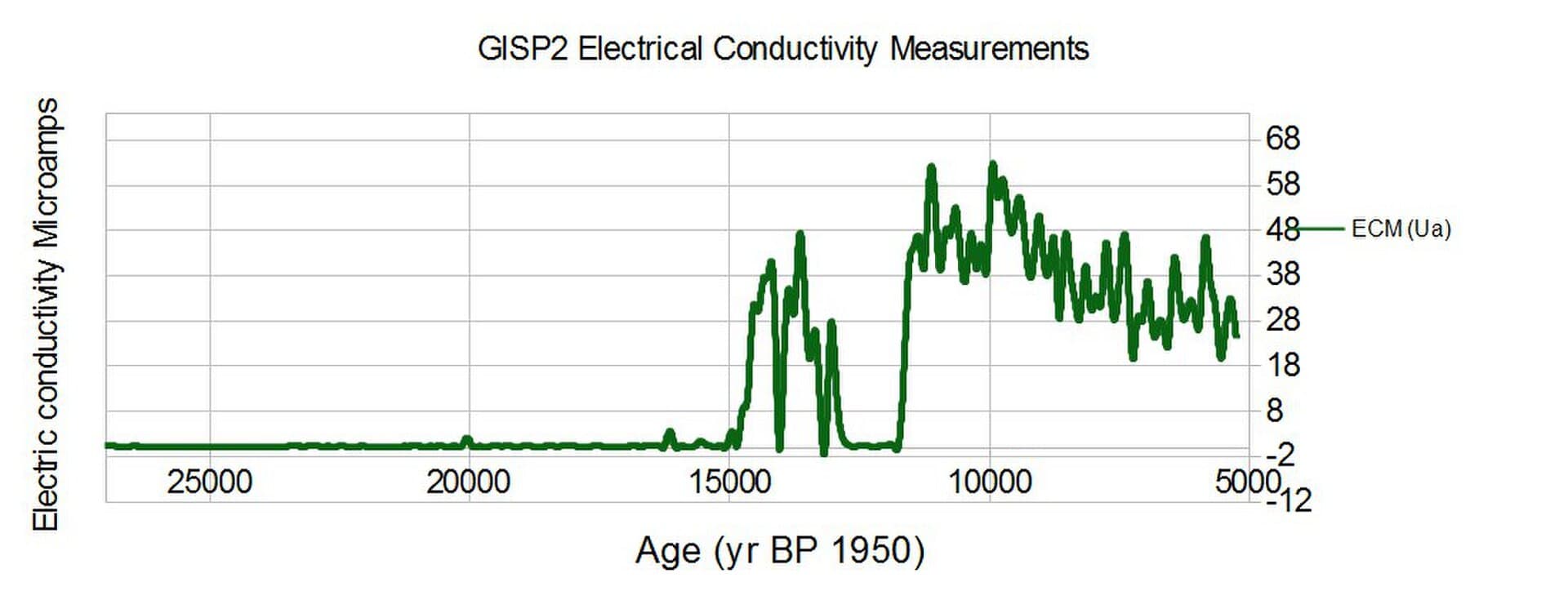
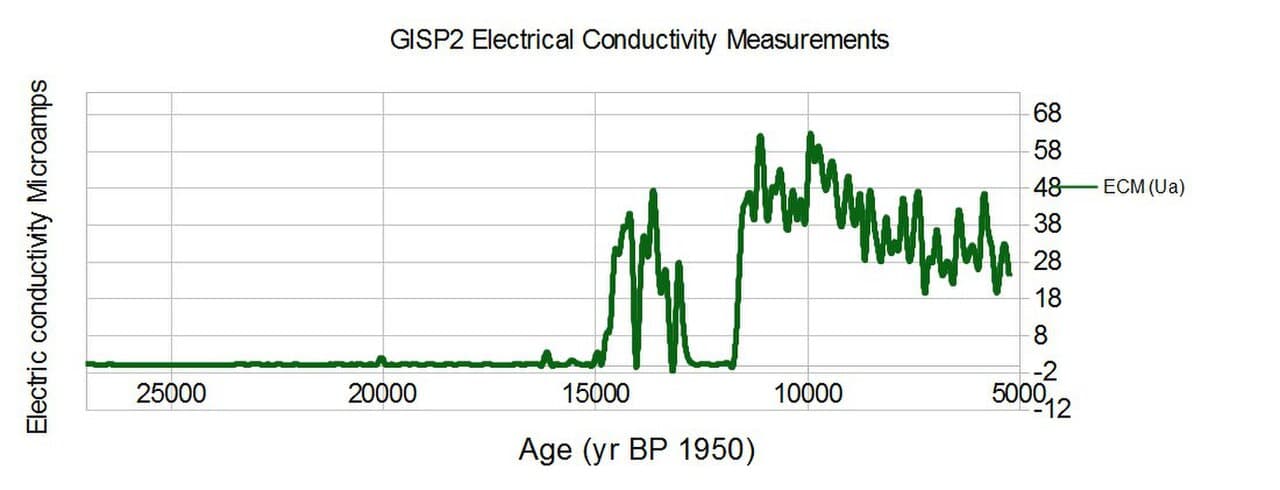
At the bottom of the GISP2 Greenland ice core, preserved at a depth of approximately 1,705 metres, lies a momentous climatic record. This core, a continuous, precisely dated archive of snowfall stretching back 110,000 years, tells a story of abrupt climate change. Each year, a new layer of compressed firn forms, recording temperature fluctuations through oxygen-isotope ratios, and the core's bands of summer and winter ice capture the climatic narrative with exquisite detail. At this specific depth, corresponding to about 12,800 years ago, the record shows a sudden, precipitous drop in Greenland air temperatures by 5-8°C. Unlike gradual cooling periods, this transition occurred over a mere 30 to 50 years—remarkably swift within the span of a single human generation. The climate of the North Atlantic region reverted to nearly glacial conditions, a period that persisted for approximately 1,200 years. It would end as abruptly as it began, with an equally sudden warming occurring in less than a decade. This extraordinary transition is known as the Younger Dryas, one of the most dramatic and well-documented abrupt climate shifts in the geological record.
What was happening before

The Younger Dryas marks an interruption during the late Pleistocene, specifically at the tail end of the great ice ages. From about 18,000 years ago, the vast Laurentide Ice Sheet, which covered much of what is now Canada and the northern United States, was in retreat. This recession was not smooth; it was marked by periods of rapid melting and stagnation. However, the overarching trend pointed to warming, less ice, and rising sea levels. This changing landscape allowed human populations in Europe and North America to expand into previously inhospitable areas. During the Bølling-Allerød warm period, which spanned from approximately 14,700 to 12,800 years ago, Europe experienced significant ecological transformations. Oak forests replaced the tundra, and human settlements expanded in response to the more favourable climate. Yet, this warming phase was sharply interrupted by the Younger Dryas, which reversed these gains almost overnight. By 12,500 years ago, tundra vegetation, including the arctic-alpine flower Dryas octopetala, had returned to dominate the landscape, giving the period its name. Forests receded, megafauna populations dwindled, and human cultures were forced to adapt to these drastic changes.
The leading mechanism: meltwater
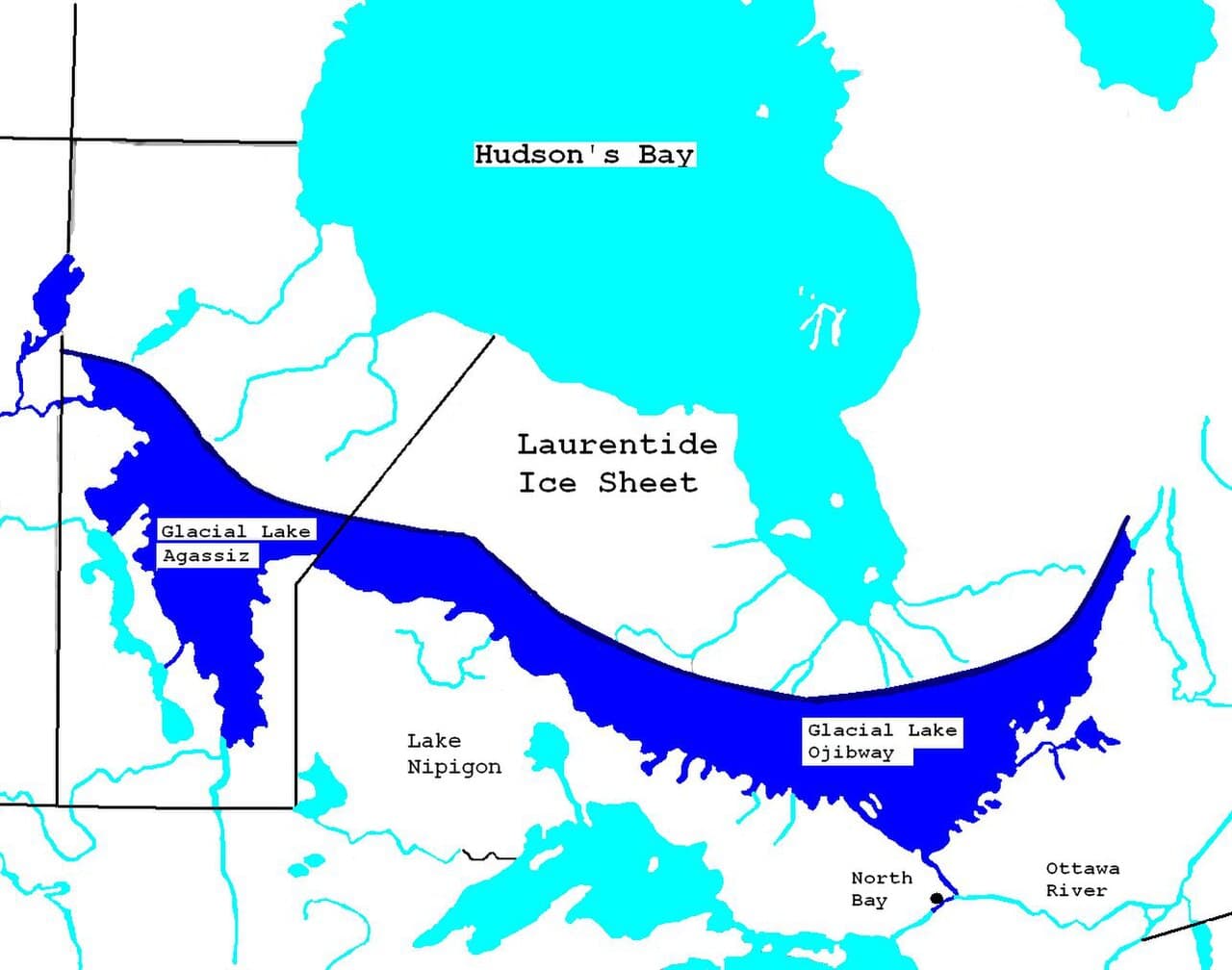
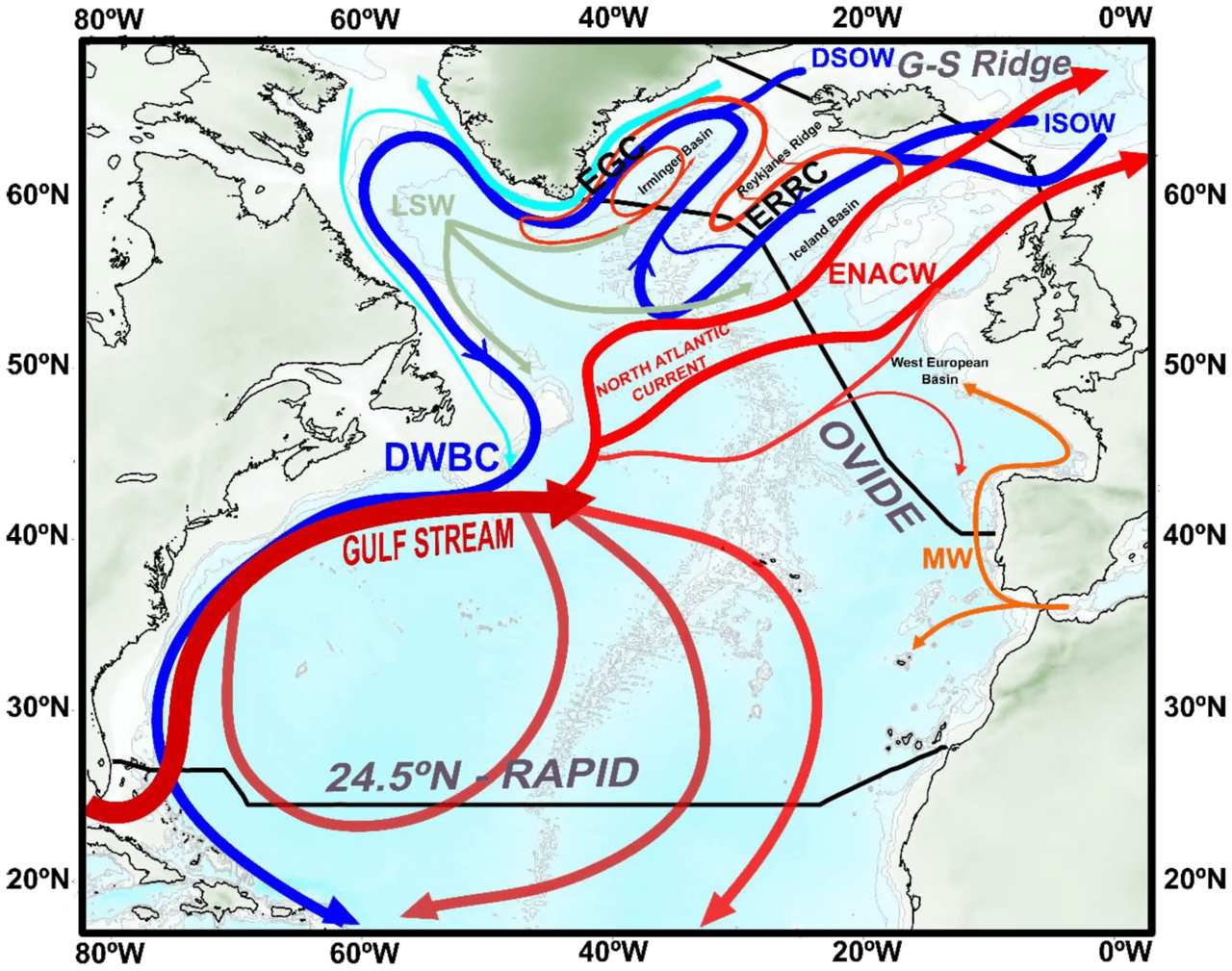
The prevailing explanation for the Younger Dryas is the 'meltwater pulse' hypothesis, prominently developed by Wallace Broecker in the 1980s. As the Laurentide Ice Sheet melted, it fed a massive proglacial lake known as Lake Agassiz, which at its peak, spanned regions of present-day Manitoba, Saskatchewan, North Dakota, and Minnesota. Around 12,800 years ago, the lake's southern outlet became deglaciated, allowing this immense body of freshwater to drain catastrophically. The drainage could have flowed either eastward through the St. Lawrence Valley or northward via Hudson Bay, ultimately releasing hundreds of cubic kilometres of freshwater into the North Atlantic over a relatively short time. This influx significantly disrupted the Atlantic Meridional Overturning Circulation (AMOC), a vital ocean current system that transports warm tropical waters northwards and cold polar waters southwards. With the AMOC slowed or even halted, the North Atlantic was deprived of its principal heat source. The result was a dramatic cooling that reinforced ice growth and sea-ice expansion, creating a self-sustaining colder climate state. Approximately 11,600 years ago, the system reorganised—meltwater inputs reduced, the AMOC reactivated, and the climate reverted to warmer conditions. While this hypothesis enjoys broad acceptance, debates continue regarding the specific drainage routes and exact volume of freshwater responsible for this climatic event.
The contested impact hypothesis
In 2007, Richard Firestone and colleagues proposed a controversial alternative: a comet or asteroid impact event as the Younger Dryas trigger. This hypothesis was based on findings of a distinctive layer containing microspherules, nanodiamonds, and elevated concentrations of platinum-group elements in sediments dated to the onset of the Younger Dryas. These findings were observed across multiple North American sites, suggesting widespread fires (referred to as the 'black mat' layer), concurrent with the extinction of much of the North American megafauna and the disruption of the Clovis cultural tradition. According to this theory, a comet exploded in the atmosphere above the Laurentide Ice Sheet, sparking massive wildfires, accelerating ice sheet melting, and subsequently triggering the climate transition. This 'Younger Dryas Impact Hypothesis' has faced significant skepticism. Supporters have presented additional evidence, such as the notable platinum spike in Greenland ice cores identified in 2013, which aligns temporally with the Younger Dryas onset. However, critics argue that similar microspherules occur in various geological contexts and that the proposed nanodiamonds might be misidentified. They further suggest that the platinum anomaly could have a volcanic origin. As of 2026, the impact hypothesis remains a minority perspective within the scientific community, with the meltwater pulse theory still holding as the leading explanation, though some researchers continue to explore the possibility of a dual trigger involving both mechanisms.
The North American megafauna question
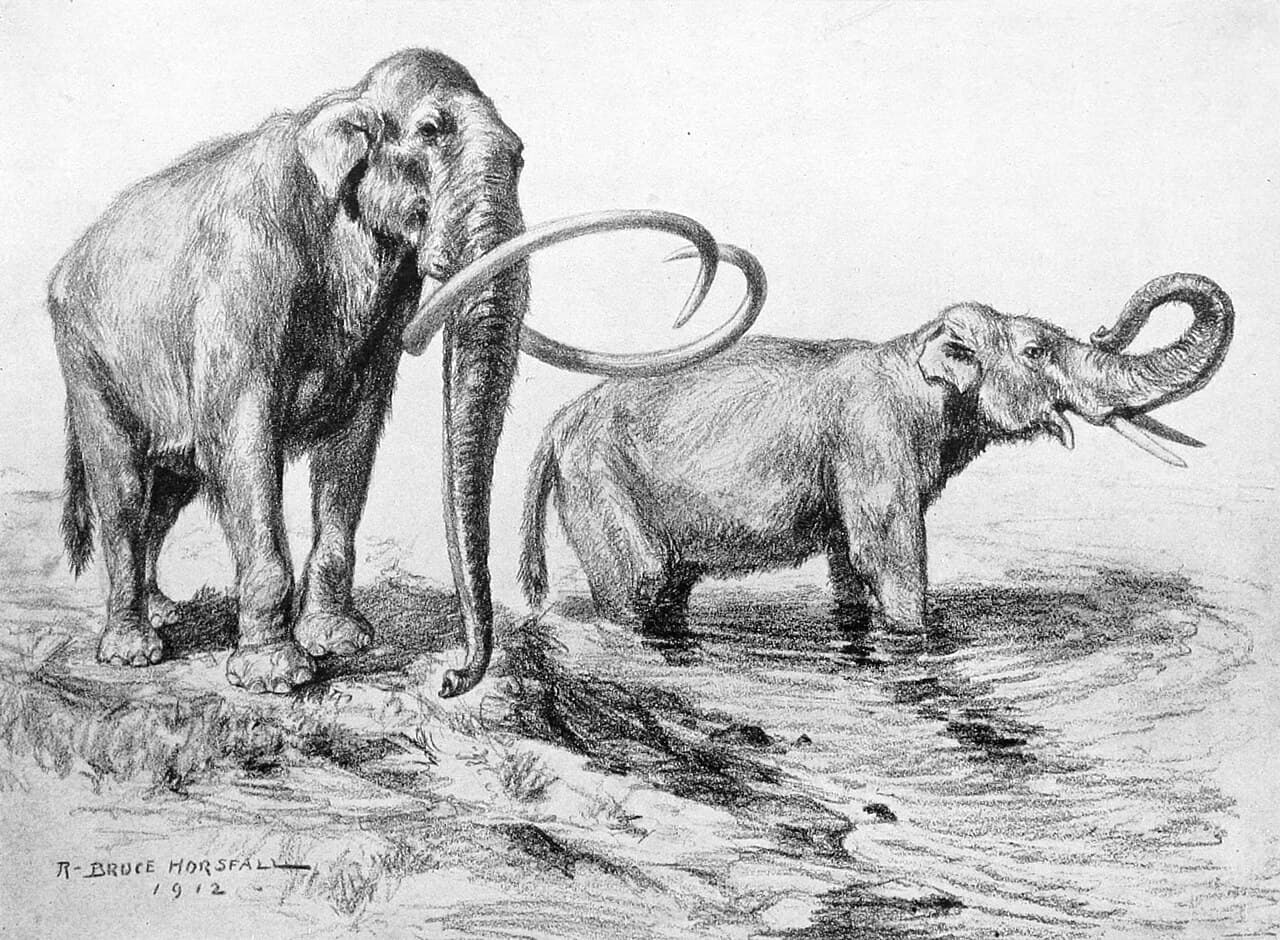
The Younger Dryas aligns closely with the extinction event of numerous North American megafauna species. Mammoths, mastodons, and ground sloths; predators like sabre-toothed cats, dire wolves, and short-faced bears; large herbivores including American camels and horses—these, among approximately 35 genera of large mammals, vanished from the continent between roughly 13,000 and 11,500 years ago. The reasons for these extinctions have long puzzled scientists. Three primary hypotheses dominate the discourse: climate change, human overhunting, or a blend of both. The abrupt climate shift of the Younger Dryas could have severely disrupted habitats, leading to a collapse in the food web. Concurrently, the arrival of the Clovis culture, around 13,400 BP, introduced sophisticated hunting techniques, possibly exerting additional pressure on megafauna. The impact hypothesis introduces a fourth possibility—direct fatalities resulting from impact-induced fires and rapid environmental upheaval. While recent isotopic analyses of bone collagen suggest that these species experienced environmental stressors preceding their disappearance, the exact catalyst—be it climate, anthropogenic factors, or an amalgamation of influences—remains unresolved. Notably, these extinctions starkly contrast with patterns observed in Eurasia and Africa, where similar megafauna persisted, suggesting a unique interplay of factors in North America. The Pleistocene rewilding initiative, which advocates for reintroducing ecological analogues like Asian elephants for mammoths, implicitly supports a human-driven extinction hypothesis, though it remains speculative.
What humans did
The onset of the Younger Dryas profoundly impacted human societies. In Europe, the Magdalenian cultures that prospered during the Bølling-Allerød warm period faced severe contractions; population densities diminished or migrated southward. In the Levant, the Natufian culture, which was on the verge of sedentary settlement, experienced fragmentation. Some groups reverted to a nomadic foraging lifestyle, while others began to experiment with agriculture in response to the changing environment. The emergence of Pre-Pottery Neolithic communities in the Levant coincided with the end of the Younger Dryas, signifying a transition possibly accelerated by climatic pressures. Sites like Tell Abu Hureyra in modern Syria provide evidence of early cereal cultivation around 11,500 BCE, likely prompted by the dwindling availability of wild cereals. While it's debated whether agriculture would have naturally emerged later regardless of climatic changes, the Younger Dryas presented a critical stressor that nudged some human groups from a Paleolithic foraging framework toward a Neolithic agrarian lifestyle. Scholars like Ofer Bar-Yosef and Andrew Moore argue that the Younger Dryas was a catalyst, forcing communities to adapt to declining hunting and gathering yields and laying the groundwork for subsequent developments in agricultural techniques.
Why this matters now
The Younger Dryas serves as an invaluable case study for understanding abrupt climate change. The mechanism believed to have triggered this period—a sudden influx of freshwater into the North Atlantic disrupting the AMOC—parallels modern concerns about climate dynamics. Studies by Boers (2021) and Caesar et al. (2018) have documented a measurable slowdown in the AMOC, attributed to freshwater input from Greenland ice melt. Current observations indicate that the AMOC is slower than at any time in the last millennium, raising questions about future climate stability. While a rapid collapse akin to the Younger Dryas is deemed unlikely in the 21st century, the potential for such an event cannot be dismissed in the longer term. The Younger Dryas exemplifies how relatively minor changes in oceanic and atmospheric systems can lead to profound climate repercussions. Its relevance today underscores the importance of monitoring current climatic shifts, as the mechanisms that once triggered dramatic cooling may still be at play, albeit on a potentially smaller scale.
Closing the loop back to the ice, the GISP2 core, now meticulously preserved in segments at the National Ice Core Laboratory in Lakewood, Colorado, holds the physical evidence of the Younger Dryas within its layers. Each annual deposition is a testament to the era's climatic narrative. The initial descent into cold conditions is etched in the isotopic signatures, mirrored by the equally rapid return to warmth. Spanning roughly 1,200 annual strata, these layers document 1,200 winters in northern Greenland, encapsulating an era colder than any modern summer in the Arctic yet milder than today's central European summer. The individuals who lived through those 1,200 years faced uncertainty about the climate's trajectory. They adapted, migrated, and innovated, laying the groundwork for subsequent societal developments. As the cold receded around 11,600 years ago, it heralded a period of expansion and transformation, setting humanity on a path towards the modern world. The Younger Dryas was the last significant climate crisis we endured as a species. Whatever challenges the future holds, we are descendants of those who withstood its rigours.
References
- Broecker, W. S. (2003). Does the trigger for abrupt climate change reside in the ocean or in the atmosphere? Science, 300(5625), 1519–1522.
- Firestone, R. B., et al. (2007). Evidence for an extraterrestrial impact 12,900 years ago that contributed to the megafaunal extinctions and the Younger Dryas cooling. PNAS, 104(41), 16016–16021.
- Alley, R. B. (2000). The Younger Dryas cold interval as viewed from central Greenland. Quaternary Science Reviews, 19(1-5), 213–226.
- Boers, N. (2021). Observation-based early-warning signals for a collapse of the Atlantic Meridional Overturning Circulation. Nature Climate Change, 11, 680–688.