
The public library is often defended as if its main purpose were nostalgia: shelves of printed books, a quiet childhood memory, a place one hopes will survive because it once mattered. That defense is too small. The stronger argument is that the library remains one of the rare civic institutions designed around access rather than purchase. A person can enter without buying coffee, proving status, paying a subscription, or explaining why time is being spent slowly. In an age when information is abundant but attention is continuously harvested, the library offers something more radical than storage. It offers a public environment in which knowledge can be approached without commercial pressure.
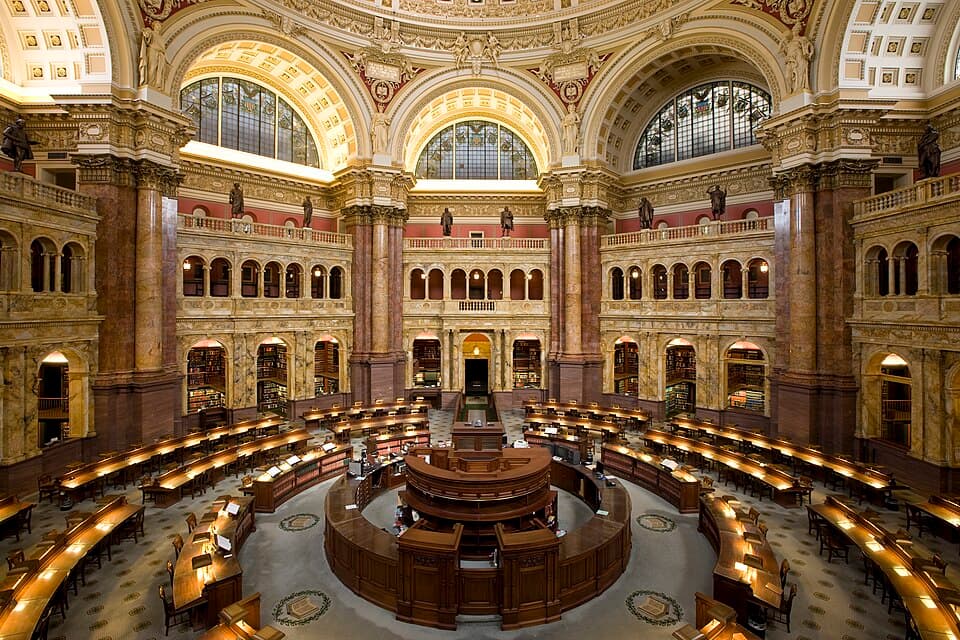
Beyond the warehouse of books
It is easy to underestimate libraries if one imagines them only as warehouses of printed material. Books remain central, but the contemporary library also functions as a guide through complex systems. Librarians help people search databases, apply for jobs, read government forms, evaluate sources, use digital devices, and navigate local services. These tasks may appear practical rather than literary, yet they belong to the same democratic mission: enabling people to participate more fully in society. A library card is modest, but it can open a path to legal information, language learning, internet access, and cultural memory.
This role matters because digital abundance has not produced equal understanding. Search engines provide results, but they do not guarantee judgment. Social platforms circulate information, but they often reward speed, emotion, and repetition. The library stands at a different tempo. It encourages comparison, verification, and patient inquiry. Even when its tools are digital, its ethic is not simply technological. It asks users to slow down enough to distinguish availability from reliability and convenience from comprehension.
The library is not an escape from modern life; it is one of the few public tools for meeting modern life with dignity.
A room without a sales pitch
The social value of the library also lies in its physical atmosphere. Many cities have parks, stations, schools, and shopping centers, but few indoor spaces welcome almost everyone without expecting consumption. This matters for students who need a desk, older residents who need warmth and company, newcomers who need language resources, and workers who need an internet connection between shifts. The library is not free because it costs nothing; it is free because the cost is carried collectively, through the decision to preserve a shared resource.
That shared quality can make libraries politically vulnerable. Their benefits are distributed quietly, and quiet benefits are easy to ignore in budget debates. A branch library rarely produces one dramatic headline. Instead, it produces thousands of small acts of support: a child discovering a series, a job applicant printing a resume, a retired person attending a lecture, a student finding a place to think. These are not sentimental details. They are forms of social infrastructure, and infrastructure is often most visible only after it has been neglected.
The future of attention
The library's future should not be framed as a contest between paper and screens. The deeper issue is whether societies will protect institutions that help people use information well. A library that lends e-books, hosts local history archives, teaches media literacy, and preserves quiet reading rooms is not betraying its original purpose. It is extending it. The continuity lies not in the format of the material but in the public promise: knowledge should not belong only to those who can afford private access.
For this reason, the library rewards careful thought. It connects culture, economics, technology, education, and urban life. It also resists a simple conclusion. Libraries are neither relics nor miracle solutions. They are practical institutions whose value depends on funding, staffing, trust, and use. When they work well, they remind a city that intelligence is not only a private achievement. It is also something a community can make easier for its members to practice.
Academic vocabulary
- civic: related to the duties, institutions, and shared life of a community
- commercial pressure: the expectation that a person must buy or subscribe in order to participate
- media literacy: the ability to find, evaluate, and interpret information from different media sources
- social infrastructure: physical or institutional spaces that support relationships, trust, and participation
Sources and image notes
- Image: LOC Main Reading Room Highsmith, Carol M. Highsmith Archive, Library of Congress, public domain via Wikimedia Commons. https://commons.wikimedia.org/wiki/File:LOC_Main_Reading_Room_Highsmith.jpg
- Original LangCafe editorial essay.


